



**The DDRop Vulnerability: How a $200 Circuit Board Bypasses Cloud Confidential Computing**
A recently revealed hardware exploit named DDRop has exposed critical weaknesses in the confidential computing protections offered by both Intel and AMD. This vulnerability specifically targets cloud environments, where servers encrypt data during processing to keep it private even from the cloud provider itself.
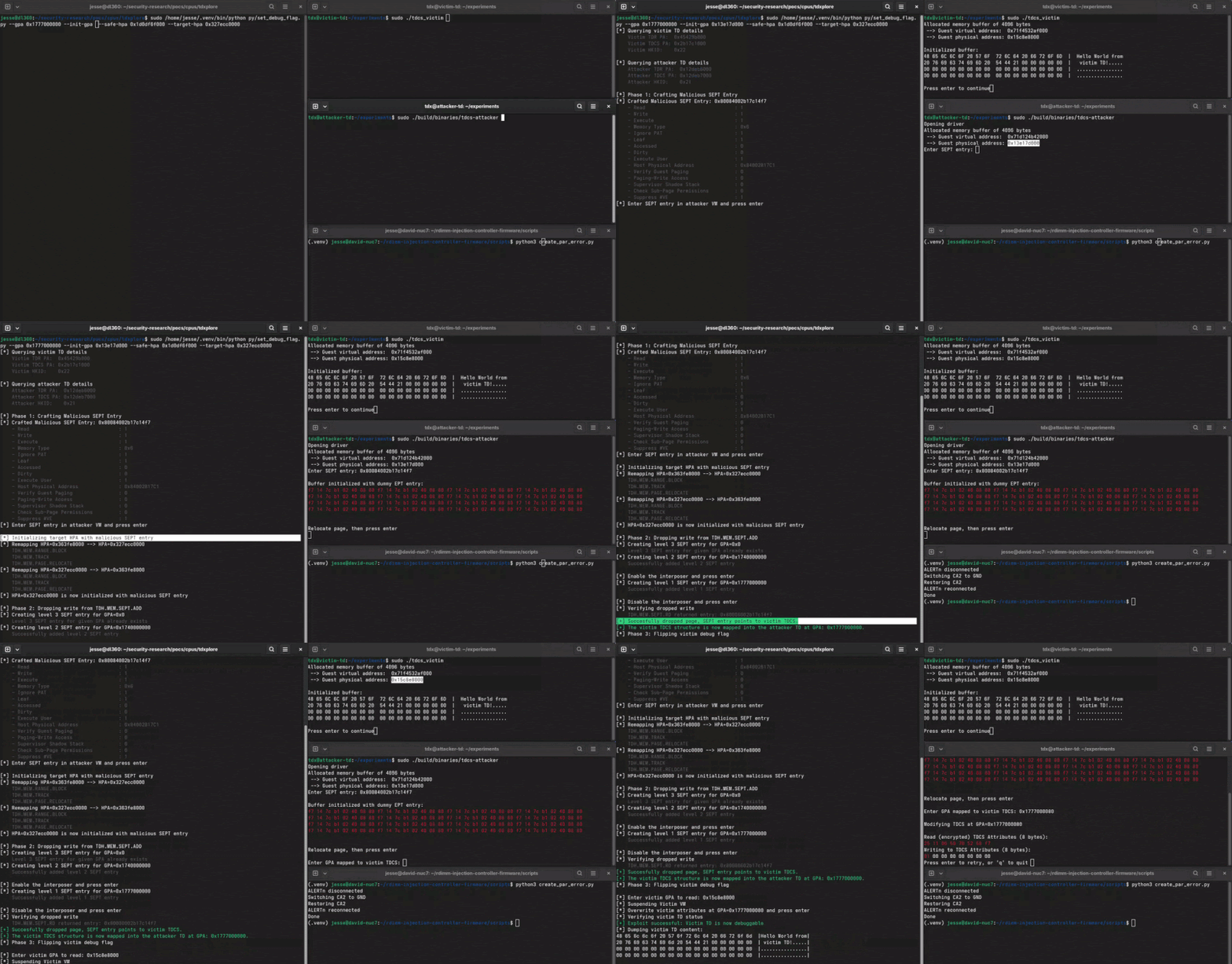
The attack hinges on a small, custom-built device known as an interposer. An adversary who already has software-level control over a target server needs only brief physical access to slip this tiny board between the central processing unit and the system’s memory modules. Once in place, the interposer silently intercepts memory commands and selectively discards write operations. As a result, the processor continues to read outdated, encrypted information, believing it to be the most current data. The memory encryption engine registers no anomalies because the data is technically still encrypted—it’s just the wrong version of that data.
**The Root Cause: Missing Data Freshness**
Modern cloud servers use scalable memory encryption to handle massive data loads efficiently. However, in prioritizing performance and capacity, hardware designers omitted a crucial safeguard: a guarantee of data freshness. Today’s architectures can verify that memory is encrypted, but they cannot easily verify that the data represents the most recently written version. DDRop weaponizes this oversight, allowing an attacker to effectively revert memory states to earlier values by simply preventing new writes from taking effect.
**A New Threat to DDR5**
This method is groundbreaking because it is the first active interposer attack to successfully operate on DDR5 memory, which dominates today’s cloud infrastructure. Previous hardware attacks either passively eavesdropped on the memory bus or relied on tricks used in older DDR4 architectures. DDRop bypasses the newer command formats of modern memory by simply dropping write commands rather than manipulating the data bus directly.
**Cloud-Scale Impact**
On Intel’s Trusted Domain Extensions, the attack can escalate dramatically. By dropping write commands during page table setup, the attacker can map their own virtual machine onto any physical address, effectively reading and altering protected memory belonging to other tenants. Attackers can also toggle debug modes, exposing plaintext memory, and forge attestation reports—tricking customers into believing a compromised virtual machine is secure. While Intel’s stronger cryptographic integrity mode blocks some of these actions, it remains vulnerable to attestation forgery due to the same lack of data freshness checks. AMD’s SEV-SNP faces a narrower but still concerning impact: attackers can copy memory pages from one victim to another during relocation processes.
**The Cost and Ease of Execution**
Constructing the interposer is alarmingly affordable, with components costing roughly $160. The board can be installed in minutes and operated entirely through software commands. The threat scenario involves a rogue data center employee, supply chain interference, or even hardware seized under legal authority. Because the attack requires only a single, brief visit to the physical machine, the barrier to entry is surprisingly low.
**Addressing the Vulnerability**
Unfortunately, closing this gap isn’t a matter of a quick software update. The flaw resides in the fundamental hardware architecture of current memory encryption schemes. Fixing it requires next-generation chips that integrate both integrity and data freshness checks natively. In the interim, software mitigations—such as restricting certain memory management features, verifying critical write operations, and scanning for interposers during server boot—can raise the difficulty bar, but they do not eliminate the root cause. Both chip industry giants have acknowledged the findings, though they maintain that physical access to the machine falls outside their standard threat models.
***
**Frequently Asked Questions (FAQ)**
**Q: What does DDRop stand for?**
A: The name is a combination of DDR, referring to Double Data Rate memory technology, and the word “drop,” referencing the attack’s core method of silently dropping write commands to the memory module.
**Q: Can a simple software patch fix the DDRop vulnerability?**
A: No. Because the root cause is a missing hardware-level verification step for data freshness, no software update can fully resolve the issue. Software can only implement workarounds to make the attack more difficult, but a true fix requires new hardware designs.
**Q: Is my personal computer or smartphone at risk?**
A: No. This attack specifically targets cloud servers that utilize Intel TDX, Intel Scalable SGX, or AMD SEV-SNP. It does not affect standard home computers, laptops, or mobile devices.
**Q: How much does the attacking hardware cost?**
A: The components required to build the interposer board cost approximately $160, making it an inexpensive piece of hardware that can be assembled quickly.
**Q: Has DDRop been used in real-world cyberattacks?**
A: There is currently no evidence that DDRop has been used outside of controlled laboratory environments. Researchers have disclosed the vulnerability to hardware manufacturers so that mitigations can be developed before the attack techniques are widely circulated.
***
**Conclusion**
DDRop serves as a stark reminder that hardware encryption, while essential, has structural blind spots when data freshness is overlooked in favor of performance and scale. As cloud providers continue to expand their confidential computing services, the gap between theoretical security and physical reality becomes harder to ignore. Preventing attacks like this will require a fundamental rethinking of how future processors verify the integrity and recency of the data they handle, ensuring that a cheap circuit board cannot undo the promises of cloud security.
Thank you for reading
