



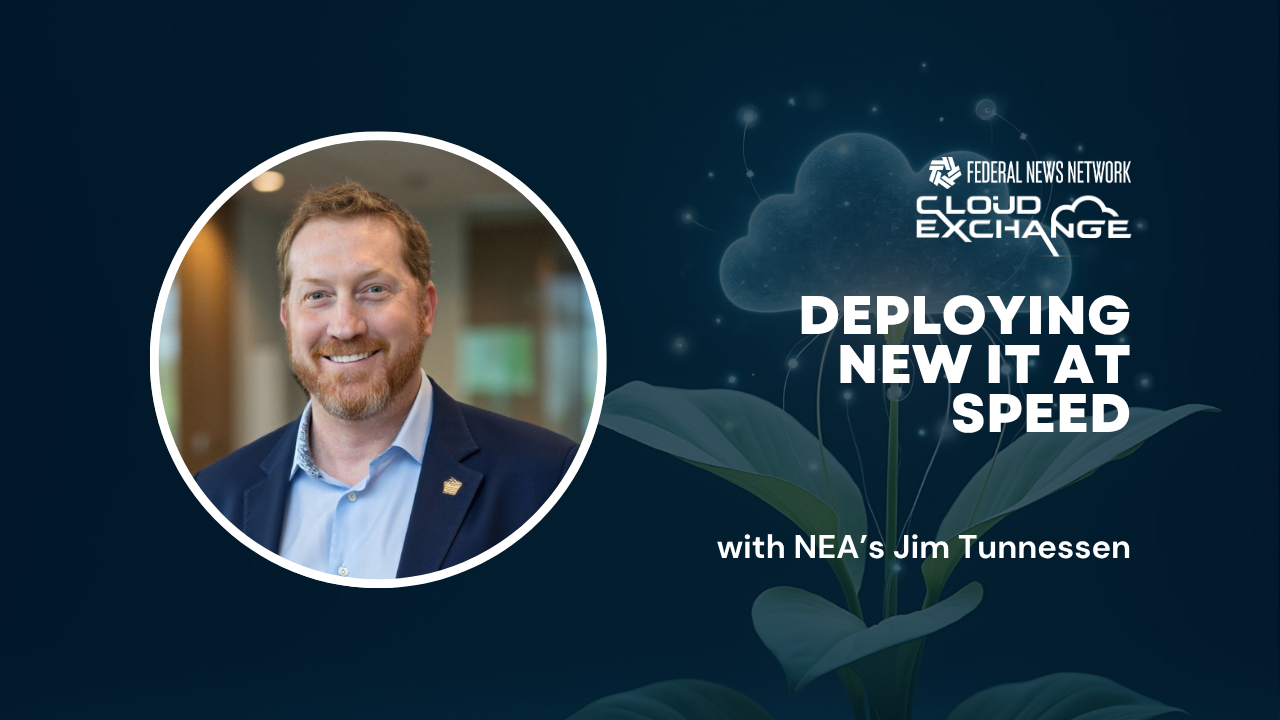
The National Endowment for the Arts is preparing to roll out a brand-new grants platform in the year ahead. What sets this initiative apart isn’t simply that it will take over from a decade-old system the agency had pieced together over time.
What truly distinguishes this new platform is that a single NEA engineer built it with the help of an artificial intelligence agent — and finished the job in just one week.
Jim Tunnessen, who serves as both chief information officer and chief artificial intelligence officer at NEA, explained that within days the engineer produced a fully functional replacement for the grants platform. The new system follows the latest U.S. Web Design System standards and offers a significantly improved experience for users.
Rethinking the NEA grants platform
“Our grants platform wasn’t performing the way it should have — and that’s putting it diplomatically. We had recently lost the lead developer on that project. Once they departed, we were stuck with a system that needed constant attention,” Tunnessen shared during Federal News Network’s Cloud Exchange 2026.
“My deputy CIO approached me and asked, ‘How would you feel about having our AI engineer take a look at this grants management system?’ I replied, ‘Absolutely, let’s see what’s possible.’ I assumed I’d receive a summary after about a week outlining the current state of things and how the system was functioning.”
He said he was anticipating either a breakdown of data issues, a root cause investigation, or perhaps some code cleanup to improve performance. “Instead, within just one week, he delivered a completely built and fully operational replacement system for the entire organization,” Tunnessen recalled.
For NEA, grant-making depends on a relatively compact system. Awarding grants is one of the agency’s core functions, making this application both essential and intricate.
Pushing forward with rapid innovation at NEA
The agency operates on an annual budget of roughly $207 million. Most of that funding flows out through grants and partnerships across the country to bolster arts communities and serve the public.
Tunnessen explained that the grants platform needs to handle application intake, evaluate submissions, and present them to NEA’s leadership team, who ultimately choose the grant recipients.
Although the grants platform is still in development, Tunnessen noted that this has more to do with how NEA collaborates with its grant recipients than with any technical shortcomings of the system itself.
He anticipates wrapping up development, securing an authority to operate, and going live with the new platform by late 2026 or early 2027.
Still, this grants development effort demonstrated two critical takeaways, according to Tunnessen:
- First, NEA is capable of moving at the same pace as private-sector organizations.
- Second, the agency’s more than six-year IT modernization effort is finally delivering on its earlier promises.
“Ultimately, it boils down to establishing the right governance frameworks and leadership support to make it possible. There’s an inherent level of risk that the CIO must be willing to take on and manage within the organization. That’s a crucial consideration across government: creating the conditions that allow this kind of progress to happen,” he said.
“Being a small agency certainly helps us in how we operate and how dramatically we can shorten the development lifecycle — from initial concept through to deployment. We’ve invested heavily in strengthening our cybersecurity posture and modernizing our infrastructure. Now, our primary focus is ensuring that both internal staff and external stakeholders have the digital tools they need to do their best work.”
Managing NEA cloud costs through FinOps
Tunnessen noted that when he joined NEA in 2020, the agency was still running most of its applications on local servers.
The shift to the cloud has been a measured, step-by-step process. He and his IT team started by selecting one external-facing and one internal-facing application to modernize and migrate to a cloud provider. Today, NEA operates in a multicloud environment, with most applications running on an infrastructure as a service model, and the agency is working toward adopting a platform as a service approach.
“We’re focused on optimizing our network, integrating artificial intelligence, and enhancing our digital presence for both the public and our staff — all to build a more streamlined and effective government operation,” he said.
“We’ve also partnered with the chief financial officer’s office to establish financial operations practices that give us clearer visibility into the costs associated with our cloud environment, ensuring we’re getting the most value from our cloud usage.”
Adopting FinOps to oversee and fine-tune NEA’s cloud spending represents a key milestone in Tunnessen’s latest modernization vision: “I want this building I’m sitting in right now to be nothing more than an internet connection — that’s it. That’s all it needs to be. You should be able to log in and get to work, but there shouldn’t be anything physically here that you depend on. You should be able to work from anywhere and handle whatever comes up.”
To reach that goal, NEA has been steadily implementing a zero trust architecture. Tunnessen said the agency’s cybersecurity improvements go hand in hand with its cloud migration work.
“We were able to pinpoint the security controls needed to reach a level where we’re continuously monitoring our systems and constantly advancing our cyber defenses,” he said. “As we transition from IaaS to PaaS, we’re designing everything to work in a plug-and-play fashion. We’re leveraging cyber analysis tools to achieve ATO status.”
NEA is also developing a multiagent solution to support system analysis. The agency has already built a cybersecurity agent capable of scanning the GitHub repository and conducting analyses covering known exploited vulnerabilities, MITRE ATT&CK frameworks, and NIST 800-53 Rev 5 controls.
“All of that produces a detailed report along with a remediation timeline,” Tunnessen said. “We feed it directly into the system’s repository, so the documentation is already in place and the analysis is complete.”
The agent also carries out a Section 508 compliance review and generates a report to help NEA meet accessibility standards.
All of these initiatives are shortening the timelines for cybersecurity and system modernization, which Tunnessen described as NEA’s overarching objective.
Find more articles and videos now on the Cloud Exchange event page.
Copyright
© 2026 Federal News Network. All rights reserved. This website is not intended for users located within the European Economic Area.
