




Begin by setting clear password policies for your Active Directory (AD) accounts, and ensure these rules are applied uniformly across your entire organization. While lax policies expand your vulnerability window, overly complex requirements may tempt users to bypass them — for instance, by jotting passwords on paper, repeating them across various platforms, or simply adding a familiar “!” to their existing password.
The key is striking the right balance between rigorous security standards and user convenience. Implement contemporary, robust password methods without overwhelming your support team with password-related inquiries or irritating those you intend to safeguard. Fortunately, an optimized strategy can simultaneously reinforce your AD password defenses and streamline the experience for end-users.
Prioritize Passphrases Over Complex Passwords
Standard password complexity regulations often prove annoying and might not offer adequate security in the current risk scenario. Requiring symbols, numbers, and varied capitalization forces everyone to fall back on obvious choices like ‘Password!2026’.
Shifting the focus from complexity to length is a superior strategy. Longer passwords composed of several words are simpler for individuals to retain and substantially more resistant to brute-force methods. NIST suggests supporting passwords as lengthy as 64 characters.
Certainly, not everyone will adopt the maximum length, however, increasing the minimum requirement (for example, to at least 15 characters) reinforces your security posture and minimizes reliance on convoluted, mistake-prone credentials.
Prevent Weak and Compromised Passwords
Regardless of enforced length restrictions, some users will still select predictable or easily guessed alternatives. Attackers exploit this tendency through brute-force password attempts; therefore, your company must proactively restrict poor password selections during the creation phase. This is where tools like Specops Password Policy are invaluable:
- Develop customized restricted wordlists: IT departments can curate libraries of forbidden terms tailored to your business background. This blocks frequent vulnerabilities, such as credentials mirroring usernames, aliases, sequential patterns, minor variations, or elements from prior passwords.
- Compromised Password Blocking: Specops Password Policy verifies credentials against an extensive repository exceeding 4 billion recognized compromised records, detecting risky selections immediately and permitting swift mitigation.
Addressing vulnerabilities during registration prevents damage to your infrastructure.

Reconsider Password Rotation Requirements
Forcing frequent credential updates usually leads to minimal changes — a rotated credential with incremental adjustments. Policymakers should abandon mandatory password rotation unless a breach is suspected.
That’s not to say rotation becomes obsolete immediately, particularly where credential repetition remains risky. However, robust credentials paired with robust recovery procedures don’t require frequent rotation as a default.
Length-based aging complements this security model. Connecting expiration timelines to complexity encourages stronger credentials with the reward of extended or even eliminated rotation — until a breach is confirmed.
Insights from Verizon’s investigations show that compromised credentials facilitate 44.7% of security incidents.
Reinforce your Active Directory security using compliant password policies, blocking millions of compromised records, boosting defenses, and simplifying password management!
Get started now
Implement Password Management Tools
A significant risk introduced by strict security rules is credential repetition. Even authenticated personnel sharing access, they’re tempted to repeat their AD credentials due to memory limitations.
An authorized password manager, deployed securely, reduces strain. It enables users to create and — most critically — retain all lengthy, unique credentials necessary for numerous accounts. For technical staff, enterprise-grade tools enhance oversight of collaborative credentials and sensitive permissions. Integrated with passphrase-friendly AD frameworks, security improves while minimizing disruptions.
Enable Self-Service Password Reset
Routine password updates represent a substantial driver of IT support volume in AD environments. When complexity dictates parameters and staff navigates strict requirements, technical teams face mounting requests.
Self-service password recovery reduces burdens. By establishing identity verification using MFA or secondary authentication pathways, staff initiate immediate password corrections, eliminating formal support requests.
Expedited recovery limits exposure, prevents unauthorized access, and boosts user satisfaction. When users recognize swift resolution is available, security measures become more tolerable.
Customizable Alerts
No one anticipates unexpected lockouts or urgent security warnings. These challenges trigger disruptions and generate unnecessary IT interventions.
Transparent, advance communication is essential. Notifying personnel about approaching deadlines and outlining specific criteria facilitates compliance. Robust messaging complements technical safeguards, ensuring users remain informed.
Instant Feedback During Password Setup
Generic “password rejected” errors frustrate users. Effectively enforcing AD guidelines requires precise, actionable guidance when establishing or modifying credentials. Visual indicators, restricted password blocks, and explicit instructions simplify adherence.
When individuals receive immediate, constructive responses, they develop stronger habits. This minor adjustment yields substantial improvements in credential reliability.
How Specops Enhances Security
Modernizing AD password protocols demands equilibrium between protection and practicality. Initiate this process by auditing your infrastructure with Specops Password Auditor. This complimentary utility performs a non-intrusive evaluation of your AD, identifying vulnerabilities and presenting accessible summaries.
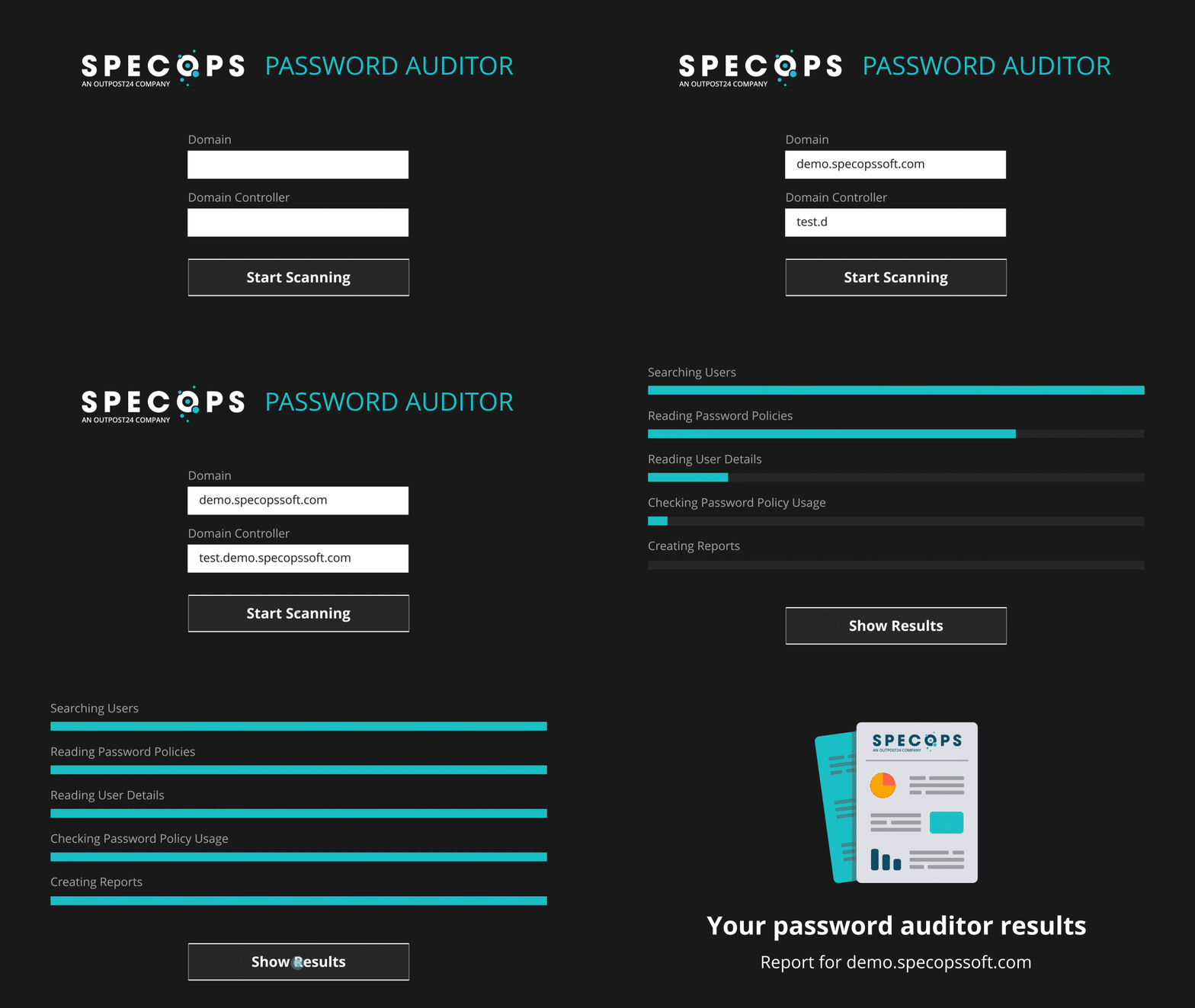
Subsequently, Specops Password Policy assists organizations in resolving identified risks and upholding consistent standards company-wide. This encompasses dynamic threat intelligence, preventing unauthorized access, and facilitating seamless passphrase adoption.
If you’re overhauling your security posture, we support initiatives that reinforce protection while preserving user experience.
Reach out to our team or schedule a demonstration to explore these capabilities.
Sponsored and written by Specops Software.
