



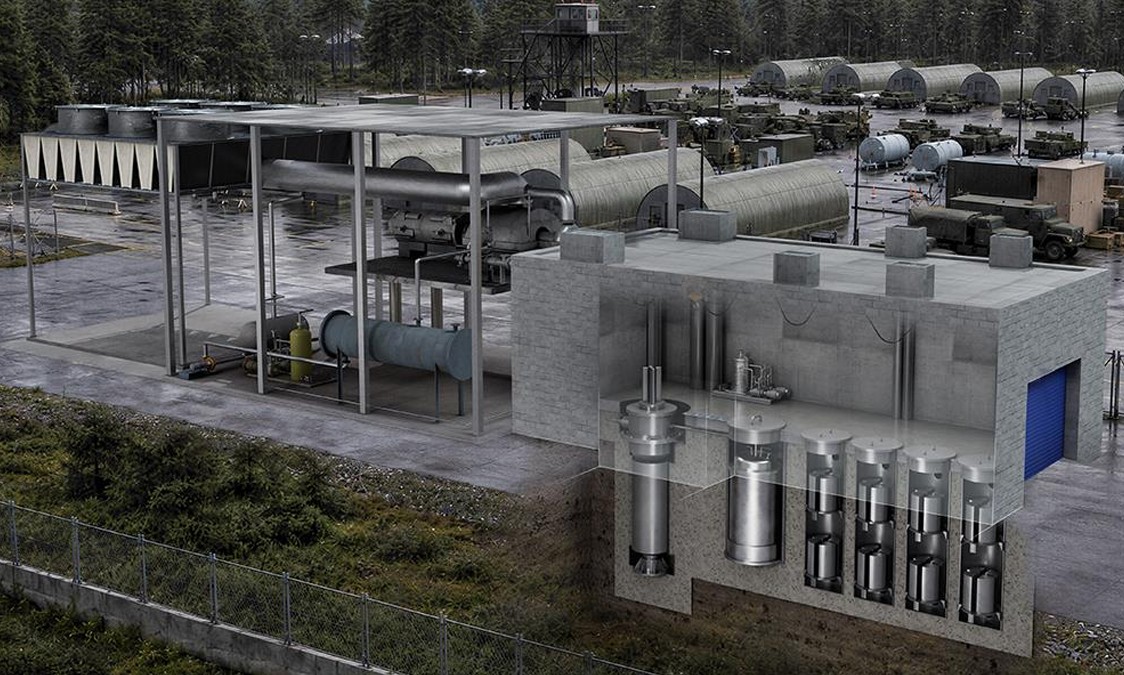
# The Army’s Bold Bet on Nuclear Microreactors: Project Janus Aims to Fortify Military Bases Against Grid Vulnerabilities
The United States Army has announced a sweeping initiative to bring nuclear microreactor technology to its major installations, a move designed to insulate critical military operations from disruptions to the nation’s commercial power infrastructure. Under a program called Project Janus, five companies have been selected to design and construct reactor prototypes at bases across the country, backed by contracts totaling as much as $2.2 billion.
## Why Nuclear Microreactors for the Military?
Military bases depend on a relentless supply of electricity to power everything from communications networks and radar systems to emerging technologies like drones and directed-energy weapons. The commercial electrical grid, while generally reliable, remains susceptible to a range of threats — from cyberattacks and severe weather events to geopolitical disruptions. Project Janus seeks to create a layer of energy independence that ensures the Army’s most vital missions can proceed uninterrupted, even if the civilian power grid goes down.
“We are entering a future where demand for electricity on the battlefield and at home stations is only going to increase,” said Jeff Waksman, the Army’s principal deputy assistant secretary for installations, energy, and environment. “Nuclear energy represents a fundamental shift in how we think about powering our forces.”
## The Five Companies and Their Base Assignments
Each contractor has been paired with a specific Army installation to develop and demonstrate a working reactor prototype. The pairings are as follows:
| Company | Installation |
|—|—|
| Antares Nuclear | Fort Bragg, North Carolina |
| BWXT Advanced Technologies | Fort Campbell, Kentucky |
| General Atomics Electromagnetic Systems | Fort Hood, Texas |
| Radiant Industries | Fort Benning, Georgia |
| Westinghouse Government Services | Fort Drum, New York |
The selection of these bases was not arbitrary. Officials considered a range of factors including site security, the nature of each installation’s mission, and the local seismic risk profile. The goal was to choose locations where a microreactor would deliver the greatest operational value while posing minimal risk to surrounding populations.
## Ambitious Timelines and an Aggressive Deadline
President Trump signed an executive order last year setting a hard deadline: at least one reactor must be operational by the end of September 2028. With the contracts now awarded, the clock is ticking for each company. Waksman described the timeline as “aggressive but plausible,” though he was candid about the difficulty of the challenge.
“No one has ever built a fully operational commercial nuclear microreactor before,” he noted. “That doesn’t mean we can’t do it, but we have to be honest about what we’re taking on.”
## How Funding and Operations Will Work
The contracts are structured as other transaction agreements, a flexible procurement tool often used in partnership with the Defense Innovation Unit. Companies will be paid as they reach specific program milestones. Each firm will own and operate its reactor, while the Army provides technical expertise and support — a model compared by officials to the collaborative relationship between NASA and private industry during the early days of space exploration.
Initial funding covers construction and the first year of operations. Beyond that, the Army will assume ongoing costs. While the total investment could eventually reach into the billions, much of the financing is expected to come from private capital, with Waksman noting that the government’s role is more about enabling the technology than bearing the full cost.
## Building a Commercial Nuclear Industry
Beyond the immediate military need, Project Janus carries a secondary objective: jump-starting a commercial microreactor industry. By subsidizing early development costs on military installations, the program gives participating companies a proven track record that can attract private investment and open the door to broader civilian deployment.
Radiant Industries, for example, has announced plans to eventually deploy 15 reactors for the Army by 2030 and sees military service as a stepping stone to commercial markets. “Operating on military installations first gives us the reliability track record to unlock commercial deployments,” said Mike Starrett, Radiant’s Chief Commercial Officer. “The resulting, much larger commercial volume drives down costs, letting the government buy at scale for less.”
General Atomics, meanwhile, plans to demonstrate a scalable microreactor design at Fort Hood that can range from 5 megawatts to 20 megawatts of output. The company points to decades of experience deploying reactor technologies globally as a foundation for its Janus contribution.
## Safety, Security, and Community Concerns
Not everyone is convinced. Local communities near the selected bases have expressed concerns about the long-term safety of having a nuclear reactor in their vicinity. Army officials have pushed back, emphasizing that each system will undergo rigorous regulatory review through a process aligned with standards set by the Department of Energy and the Nuclear Regulatory Commission, in addition to federal environmental rules.
Radiological materials, officials stressed, would be removed from each site within the first two years of operation and would need to meet federal limits on soil radiation. Waksman said the Army has already engaged with elected officials and local residents, and town halls are planned as part of a broader outreach effort.
“I’d much rather live near one of these microreactors than live near a fuel farm,” he said, adding that the service would not proceed unless it had “absolute certainty and comfort in the safety of these systems.”
## The Risks Are Real
Army officials were upfront about the possibility of failure. Waksman acknowledged there is a “very real chance that one or more of these companies will not deliver.” To mitigate that risk, the program deliberately includes multiple vendors so that a setback with one partner does not derail the entire effort.
“We want competition,” he said. “We believe this is the spear tip, not just for microreactors, but for all advanced reactors in the United States.”
The program could also help revitalize nuclear engineering as a career field within the Army, with Waksman noting growing interest among cadets at West Point and a broader push to make the service a technology leader.
—
## Frequently Asked Questions (FAQ)
**What is Project Janus?**
Project Janus is the U.S. Army’s initiative to develop and deploy nuclear microreactors at major military installations to ensure energy independence and protect critical military operations from grid failures.
**Why does the Army need microreactors?**
Modern military operations — from communications and radar to drones and energy weapons — require constant, reliable power. Microreactors would provide a secure, self-contained energy source that isn’t dependent on the commercial electrical grid.
**How many companies are involved?**
Five companies have been selected: Antares Nuclear, BWXT Advanced Technologies, General Atomics Electromagnetic Systems, Radiant Industries, and Westinghouse Government Services.
**Where will the microreactors be built?**
Reactors will be developed at Fort Bragg (NC), Fort Campbell (KY), Fort Hood (TX), Fort Benning (GA), and Fort Drum (NY).
**When is the deadline for a working reactor?**
At least one reactor must be operational by the end of September 2028, per an executive order.
**How much will this cost?**
The total contract value could reach up to $2.2 billion. Additional costs will be incurred after the first year of operations, though the Army has not provided a long-term cost estimate.
**Who owns and operates the reactors?**
The contractors own and run their reactors. The Army provides technical knowledge and support, similar to the NASA-industry collaboration model.
**Are there safety concerns?**
Officials say the reactors are designed to be safe, with radiological materials removed within two years of operation and all systems subject to federal regulatory standards. Community outreach and town halls are part of the Army’s plan to address local concerns.
**Will this technology have civilian applications?**
Yes. A key goal of Project Janus is to build the foundation for a commercial microreactor industry by giving companies a proven operational track record that can attract private investment and enable broader civilian deployment.
**What happens if a company fails?**
The program includes multiple vendors intentionally to ensure that a failure by one company does not compromise the overall initiative. The Army expects competition to drive innovation and reduce risk.
—
## Conclusion
Project Janus represents one of the most ambitious attempts to bring advanced nuclear technology to the front lines of American military readiness. By pairing experienced industry partners with strategic Army installations, the program aims to do more than just power bases — it aspires to create an entirely new sector of the energy industry while solving a pressing national security challenge. The path ahead is fraught with technical, financial, and regulatory hurdles, but the stakes are high. If successful, nuclear microreactors could fundamentally change how the U.S. military — and potentially the nation — thinks about energy independence and resilience.
Thank you for reading
