



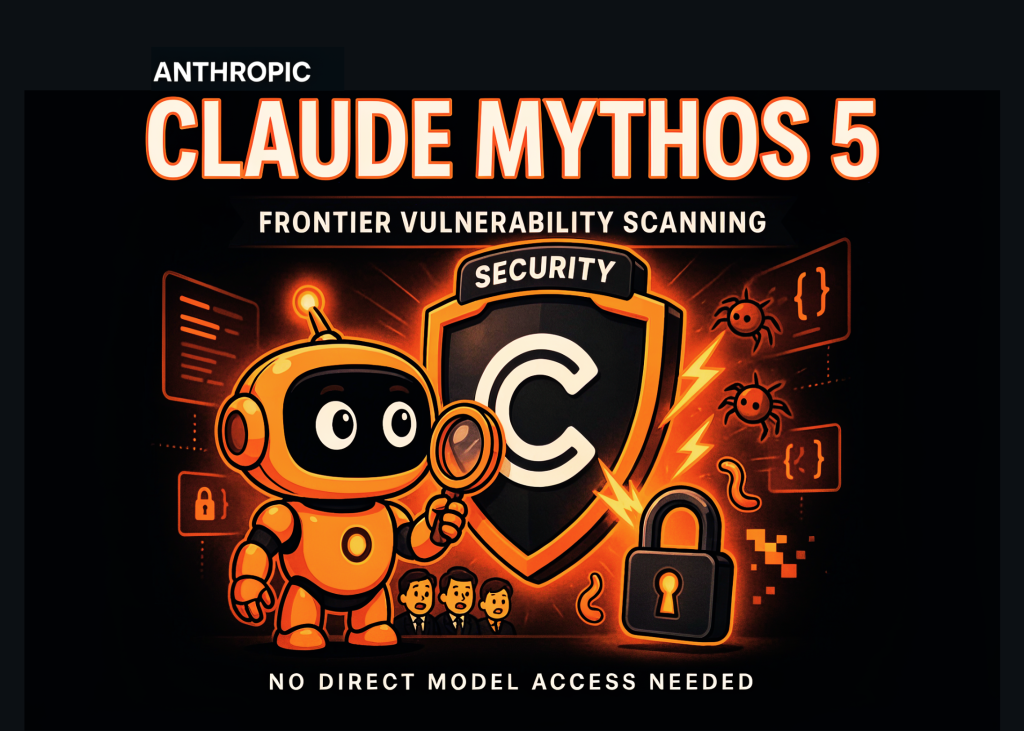
## Introducing Claude Security: Enterprise-Grade Vulnerability Scanning Powered by Claude Mythos 5
Starting August 21, 2026, Anthropic has introduced a major update to its cybersecurity capabilities by deploying Claude Mythos 5 within Claude Security, exclusively for Claude Enterprise customers. This move effectively brings enterprise-grade vulnerability scanning directly into the hands of security teams, allowing them to proactively identify and remediate security issues within their codebasets. Unlike previous iterations that limited such high-capability models to vetted partners, this public beta integration is included in standard Enterprise plans without any additional model add-on costs.
### How Claude Security Works
Claude Security operates as a specialized scanning tool designed to integrate seamlessly into existing development workflows. The process begins when a user connects a GitHub repository through the interface at claude.ai/security. Once connected, Claude Mythos 5 conducts a comprehensive analysis of the codebase, going beyond simple pattern matching to trace data flows across multiple files and examining Git history.
What sets this scanning process apart is its multi-layered approach:
1. **Intelligent Analysis**: Mythos 5 examines code the way security researchers do, looking for multi-component vulnerability patterns that traditional scanners often miss.
2. **Adversarial Verification**: Each potential finding undergoes an internal verification process where the model challenges its own results before surfacing them, significantly reducing false positives.
3. **Structured Reporting**: Findings return with detailed information including CWE categories, confidence ratings, severity levels, and suggested fixes.
The feature represents Anthropic’s commitment to “output-only access” – the scanning model analyzes code but cannot be prompted to write exploits, with remediation requiring human review and approval through Claude Code.
### Deployment and Access
Claude Security is currently available in public beta exclusively for Claude Enterprise customers. An Enterprise-tier administrator can enable the feature in the admin console, after which team members can initiate scans at claude.ai/security. The implementation follows a specific access model:
– **Enterprise Customers**: Full access to Mythos 5-powered scanning
– **Pro, Max, and Team Plans**: No access to the Mythos-powered scanning capability
– **Claude Code Plugin**: Available in beta for all Claude Code users, but runs on models already in their account (not Mythos 5)
The scanning capability is designed for several key applications:
– Pre-release codebase audits
– Legacy code review
– Scheduled regression scanning
– Triage of existing vulnerability backlogs
– Directory-scoped scans on high-risk services
### Three Major Updates
Anthropic’s announcement included three significant developments:
1. **Mythos 5 Integration**: The core scanning capability now runs on Claude Mythos 5, the highest-tier model in Anthropic’s cybersecurity arsenal.
2. **Defender Advantage Fund (0xDAF)**: A new initiative offering $35 million in Claude credits to organizations focusing on securing open-source software.
3. **Cyber Verification Program Expansion**: Plans to broaden dual-use capabilities coverage across Opus and Sonnet models, with Mythos-class access to follow.
### Technical Safeguards and Philosophy
The deployment of Mythos 5 represents Anthropic’s carefully considered approach to AI safety in cybersecurity. Mythos-class models sit above the standard Opus tier and were intentionally withheld due to their dual-use potential – capable of both finding vulnerabilities and creating exploits.
Anthropic’s security philosophy centers on interface design rather than capability restriction. By delivering scan results rather than a prompt interface, the system ensures the model works on code the organization owns while preventing attempts to manipulate it into generating malicious code. This same principle extends to partner integrations, where end users receive structured outputs (patch lists, alerts) rather than direct model access.
### Conclusion
Claude Security represents a significant evolution in AI-assisted cybersecurity, bringing enterprise-grade vulnerability scanning to organizations that need it most. By deploying Claude Mythos 5 within a controlled interface, Anthropic has created a powerful tool that maintains security standards while preventing misuse. As the public beta rolls out to Enterprise customers, security teams will gain access to what Anthropic describes as “the strongest cybersecurity capabilities of any model in the world” – but with the safeguards and structure necessary for responsible enterprise deployment.
—
## Frequently Asked Questions (FAQ)
**Q: Who can access Claude Security’s vulnerability scanning capabilities?**
A: Currently, only Claude Enterprise customers can access the Mythos 5-powered scanning feature. This is available in public beta at no additional cost beyond the Enterprise plan.
**Q: How does Claude Security differ from previous versions?**
A: The primary difference is the underlying model. While previous versions may have used Claude Fable 5, the new implementation runs on Claude Mythos 5, which Anthropic describes as having the strongest cybersecurity capabilities of any model they’ve developed.
**Q: Is there a separate model add-on required for Claude Security?**
A: No. Mythos 5 scans are billed as standard token usage under existing Enterprise plans. There’s no additional model add-on or separate billing.
**Q: Can smaller organizations access this capability?**
A: Not through this implementation. Pro, Max, and Team plan users don’t currently have access to the Mythos-powered scanning. However, a separate Claude Security plugin for Claude Code is available in beta for all Claude Code users.
**Q: How does the adversarial verification process work?**
A: Each potential finding undergoes an internal verification pass where the model challenges its own result before surfacing it. This process is designed to reduce false positives while maintaining high confidence in genuine vulnerabilities.
**Q: Can the model be prompted to create exploits during scanning?**
A: No. The design ensures that the scanning model cannot be steered into writing exploits. Users receive scan findings and suggested patches rather than a prompt interface that could be manipulated.
**Q: What happens after vulnerabilities are identified?**
A: Organizations can push findings to Slack or Jira via webhooks, or export them as CSV or Markdown. Patching occurs separately through Claude Code, where human review and approval is required before implementing any fixes.
**Q: Can scans be customized or scheduled?**
A: Yes. Scans can be scoped to specific directories and scheduled to run on a recurring basis, making them suitable for both one-time audits and continuous security monitoring.
—
## Conclusion
Anthropic’s deployment of Claude Mythos 5 within Claude Security represents a significant milestone in AI-assisted cybersecurity for enterprises. By delivering powerful vulnerability scanning through a controlled interface, Anthropic has created a solution that balances capability with safety concerns. The public beta makes this enterprise-grade technology accessible to organizations that need it most while maintaining the safeguards necessary for responsible deployment.
As the cybersecurity landscape continues to evolve, tools like Claude Security demonstrate how AI can augment human security teams without introducing new risks. The combination of advanced threat detection, structured reporting, and careful access controls positions Claude Security as a compelling option for organizations seeking to strengthen their security posture in an increasingly complex digital environment.
