



Follow ZDNET: Add us as a preferred source on Google.
ZDNET’s key takeaways
- Android 17 has arrived for Pixel devices.
- The new update brings some important features.
- Some features make multitasking much easier.
It’s here! Android 17 is officially available!
OK, let’s be real — it’s not *that* groundbreaking. Sure, it’s a fresh version of our favorite mobile operating system, but it’s not the kind of dramatic leap we saw going from Android 15 to Android 16. That said, there’s still plenty worth getting excited about. In fact, there’s one particular addition that nearly made me jump out of my chair.
Also: Android 17 is out now, with a fresh Pixel Drop for June – here’s what’s new
The update landed on my Pixel 9 Pro this morning and took about 30 minutes to download and install from start to finish. If you’re rocking a Pixel phone, you should see the update rolling out any day now; if you’re using a different Android device, you’ll have to sit tight until the release reaches your handset.
So which new features caught my eye right away?
1. Desktop mode
I’ve already covered Android’s new Desktop Mode in a previous write-up, so I won’t repeat myself too much. But the short version is this: this could easily be one of the most transformative features for Android users in a long time. Picture this — you connect your Android phone to an external display, then pair a Bluetooth mouse and keyboard, and suddenly your phone operates like a full desktop computer. That’s exactly what Desktop mode delivers.
Also: 40+ hidden Google Maps settings that every user should be taking advantage of
Think of Desktop mode as Google’s answer to Samsung’s DeX, and it works beautifully. Granted, my testing was done during the Android 17 beta period, so you can bet it’s been refined and polished even further since then.
2. App bubbles
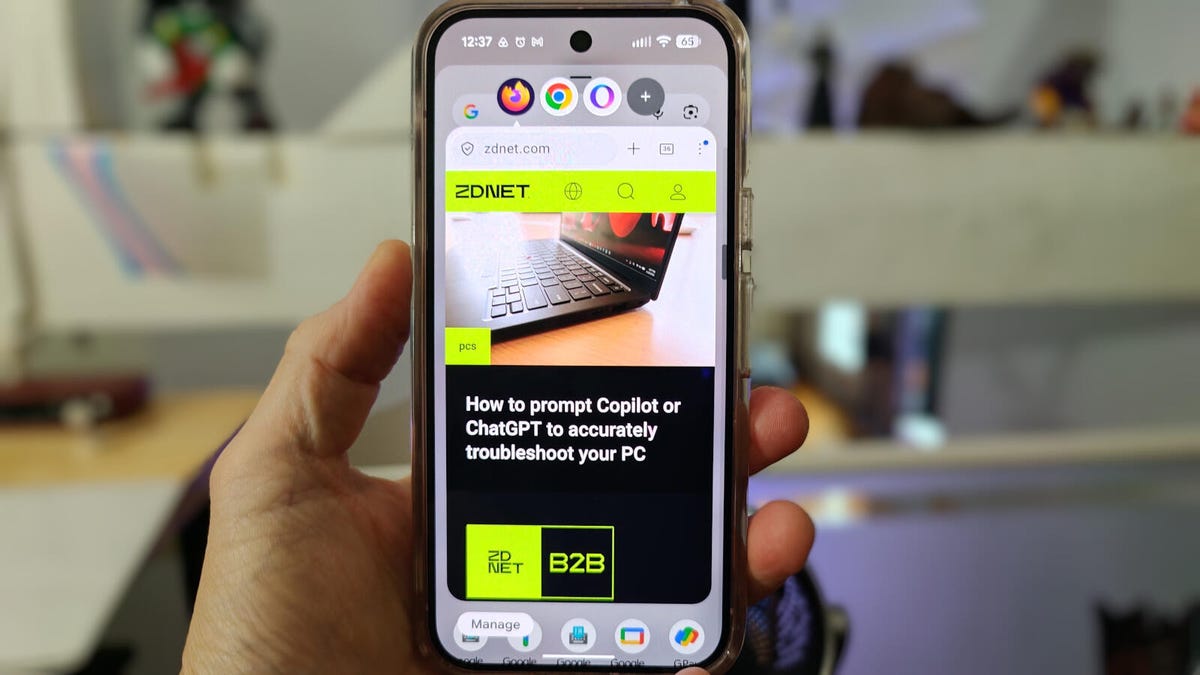
So far, this is my favorite new Android 17 feature.
Jack Wallen/ZDNET
This, right here, is another major highlight (at least for me). I’ve been using message bubbles for a while now, so I already appreciated how convenient they were. But app bubbles elevate the Android experience to an entirely new level.
App bubbles let you “bubble” individual apps, making it significantly easier to switch back and forth between them. Essentially, this is the closest Android has ever come to genuine desktop-style multitasking, and it works like a charm.
To get started, just long-press an app icon on your home screen and then either tap “Bubble” or hit the small square icon in the upper-right corner of the pop-up menu. I’m not entirely sure why some apps show a Bubble option and others don’t, but either way, the process is straightforward.
Also: 3 unofficial Android Auto apps I installed to make my car screen more useful
Once you’ve placed an app in a bubble, it floats as a small circle on your home screen. Add another app, and it joins the group. Keep adding bubbled apps until you have everything you need, and then you can quickly switch between them from within the bubble itself. (You’re limited to a single bubble collection on the home screen at a time.)
Just add the apps you know you’ll use most frequently, and they’ll be right at your fingertips. Tap the bubble, pick the app you need, and you’re off.
3. Selfie camera in screengrabs
If you do Android how-tos, this is a wonderful addition.
Jack Wallen/ZDNET
For anyone who’s ever tried to walk someone through a phone task remotely (or create tutorial content for YouTube), this is a genuine game-changer.
When you go to record your screen in Android 17, you can now turn on the selfie camera so you can narrate what’s happening — all while your face is visible in a small overlay from the shoulders up.
This is a fantastic addition that will genuinely help a lot of people (myself included) make life easier for others.
To turn it on, pull down the Quick Tiles panel, tap “Screen recording,” and then make sure to toggle on the Selfie cam option.
4. Recent apps improvement
This new feature makes it easier to interact with recent apps.
Screenshot by Jack Wallen/ZDNET
If you pull up the recent apps view (swipe upward until it appears), you’ll notice that each app now displays its full name along with a drop-down menu. That drop-down gives you options to pin the app, split the screen, take a screenshot, open the app, or clear the recent apps list.
This upgrade makes navigating the recent apps page far more intuitive and efficient.
5. Early GUI Linux support
My next step will be to install Xfce.
Screenshot by Jack Wallen/ZDNET
The Linux terminal on Android is going through a significant transformation, and soon it will be capable of running full Linux GUI applications. You can catch a glimpse of the early stages in the Android 17 version of the Linux terminal by tapping the GUI icon in the upper-right corner of the terminal window.
Fair warning — this feature is nowhere near ready for actual use. I opened it hoping to test things out, but there was no obvious way to launch a GUI app. I even tried installing LibreOffice, only to watch the installation fail. After that, the Linux terminal completely crashed on me, forcing me to do a full reset (of the terminal app, thankfully not the phone itself).
Also: The best Android phones to buy in 2025
After resetting, I eventually reached a login prompt for the GUI feature. I then went back to the standard terminal, created a new user account, assigned it a password, and added it to the sudo group. From there, I was able to log in on the GUI side using that new user. I haven’t pushed it any further yet, but I’m fairly confident I could install a full desktop environment like Xfce and then run GUI applications. I’ll tackle that experiment when I’m feeling a bit more daring.
6. Enhanced HDR brightness
If you enjoy HDR content, you’ll love this new feature.
Screenshot by Jack Wallen/ZDNET
If you regularly watch HDR (High Dynamic Range) content like videos and photos, you’re going to love this. Enhanced HDR brightness gives you control over how HDR content appears on your device. For example, if you want brilliantly clear, vivid skies in your videos, just turn on Enhanced HDR brightness and crank it to the maximum.
This feature makes a noticeable difference in the visual quality of HDR content. If you want your HDR videos and images to really stand out, make sure this setting is enabled and push that slider all the way to the right.
There are other new additions in Android 17, but the ones above are the ones that really stood out to me.
