



In brief
- TikTok creator IABatida reimagined “O Sapo não lava o pé,” a beloved Brazilian children’s song, as a smoky 1950s blues performance featuring AI-crafted frogs.
- The account boasts 326,000 followers and 6.7 million likes, with its 50’s-style Baby Shark remix alone earning 1.6 million likes.
- This concept fits squarely into the growing family of AI-born memes, alongside trends like “Make It More,” Studio Ghibli filters, and Italian brainrot.
“O Sapo não lava o pé” (the frog doesn’t wash his feet) is the kind of tune every Brazilian kid picks up before they even start school. The entire storyline? A frog who won’t wash his period. That’s literally the whole song.
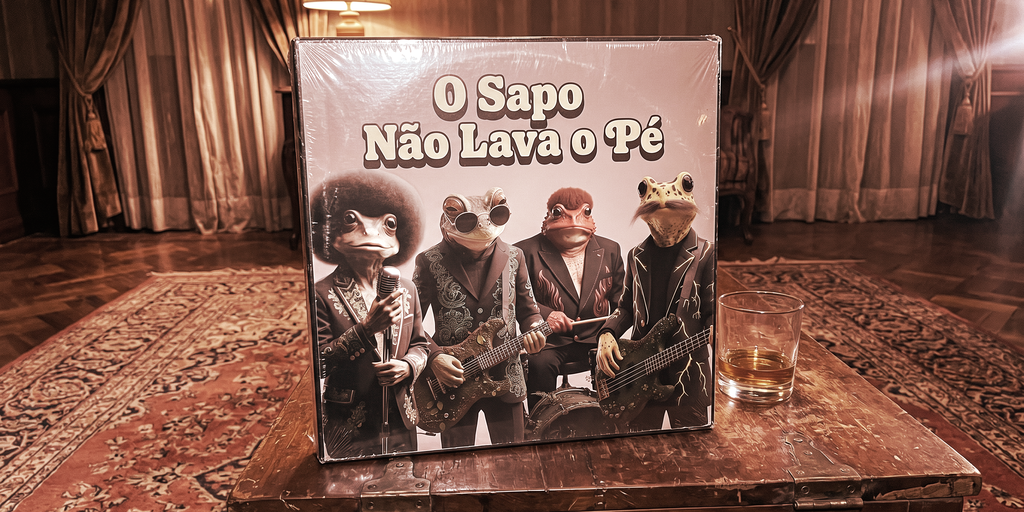
This week, a TikTok account named IABatida transformed that simple nursery rhyme into a vintage 1950s blues number, performed by a group of AI-generated frogs in a dimly lit lounge. The voices are deep and raspy, the guitar tones are rich, and there’s a double bass holding down the groove.
And honestly? It works surprisingly well.
The clip is clearly marked as AI-generated and has already surpassed 1.5 million likes on TikTok within just a few days, while its YouTube Shorts counterpart draws its own steady audience. Brazilian viewers keep showing up in waves to express the same sentiment in various forms: This really shouldn’t work, but somehow it absolutely does.
IABatida (Portuguese for “AI Beat”) has built its whole brand around feeding children’s songs and pop hits into AI and reinterpreting them as though they were recorded in a completely different era. The channel has grown to 328,000 followers and a combined 6.7 million likes. Its Motown-flavored take on “Baby Shark” has racked up 1.6 million likes by itself, while an indie-rock rendition of the same track has pulled in another 388,900.
The reason it clicks is that the music itself is genuinely solid. The arrangements feature real compositional elements—catchy choruses, bridges, tasteful solos, and vocals that actually sound pleasant. The visuals stay true to the chosen time period. The overall impression feels intentional and polished, not thrown together at the last second.
And that’s precisely the appeal. The frog video is part of a now-familiar category of internet culture: the AI-native meme. Not simply a meme built with AI tools, but one that can only exist because AI exists—it would be utterly impossible without it.
Decrypt has been following this evolution for some time. It likely began in late 2023 with the “Make It More” trend, where people asked ChatGPT to progressively warp a normal image into something increasingly ridiculous until DALL-E finally threw in the towel.
Next came “Ghibligeddon” in March 2025, when GPT-4o’s image generator caused a million people to sign up for ChatGPT in a single hour just to transform their selfies into Studio Ghibli-style artwork. Sam Altman had to publicly ask everyone to slow down while OpenAI’s servers struggled to keep up.
Then there’s Italian brainrot—the surreal genre that spawned Tralalero Tralala, a three-legged shark wearing Nike sneakers; Bombardiro Crocodilo, a crocodile merged with a World War II bomber; and Ballerina Cappuccina, a ballerina with a cappuccino cup replacing her head. Tralalero Tralala first appeared in January 2025 from a TikTok account that was later banned. Ballerina Cappuccina followed in March 2025. By spring that year, Italian brainrot characters were popping up in Ryanair advertisements and Loewe fashion campaigns.
Other AI-driven meme movements include the “pack” trend and the “dollification” trend that emerged after Google launched Nano Banana.
From photo to figurine style in just one prompt.
People are having fun turning their photos into images of custom miniature figures, thanks to nano-banana in Gemini. Try a pic of yourself, a cool nature shot, a family photo, or a shot of your pup.
Here’s how to make your own 🧵 pic.twitter.com/e3s1jrlbdT
— Google Gemini (@GeminiApp) September 1, 2025
What IABatida is doing follows the same blueprint but flips one key element. Italian brainrot largely banks on the humor of AI producing gloriously nonsensical content that people adore regardless. The frog blues video arguably works in the reverse way. The joke is that the AI is actually good at this. Unsettlingly good.
You click on the video expecting the humor to come from how rough and glitchy it looks. Instead, you find yourself sitting through the whole forty seconds wondering whether you should go pour yourself a whiskey.
Then the melody gets lodged in your brain for the rest of the day.
That’s the emerging blueprint of the AI meme economy in 2026. Tools like Suno, Udio, and Google’s Lyria 3 can now generate full three-minute tracks with coherent musical structure from nothing more than a short text prompt. Image and video models can render a four-piece frog band in era-accurate lighting without anyone needing to build a single 3D model.
The effort required to create something that looks and sounds like a genuine production is now roughly equal to the time it takes to type a single paragraph.
IABatida’s existing library already includes Aladdin’s “Arabian Nights,” the Brazilian children’s staple “Pintinho Amarelinho,” and several Baby Shark variations spanning styles from 50s Motown to indie rock. The frog cover is simply the newest addition. The next remix will drop whenever the algorithm gives the green light.
Daily Debrief Newsletter
Start every day with the top news stories right now, plus original features, a podcast, videos and more.
