



When automakers develop a new concept car, they usually have a few targets in mind. Sometimes, show cars can be for inflicting shock and awe on anyone who sets eyes on them. The approach helps promote the company as exciting to potential buyers.
Concepts also let brands test the public’s reaction to new technology, to see whether buyers are interested in a specific feature. At the same time, already-developed tech can be shown to the world to find any potential issues.
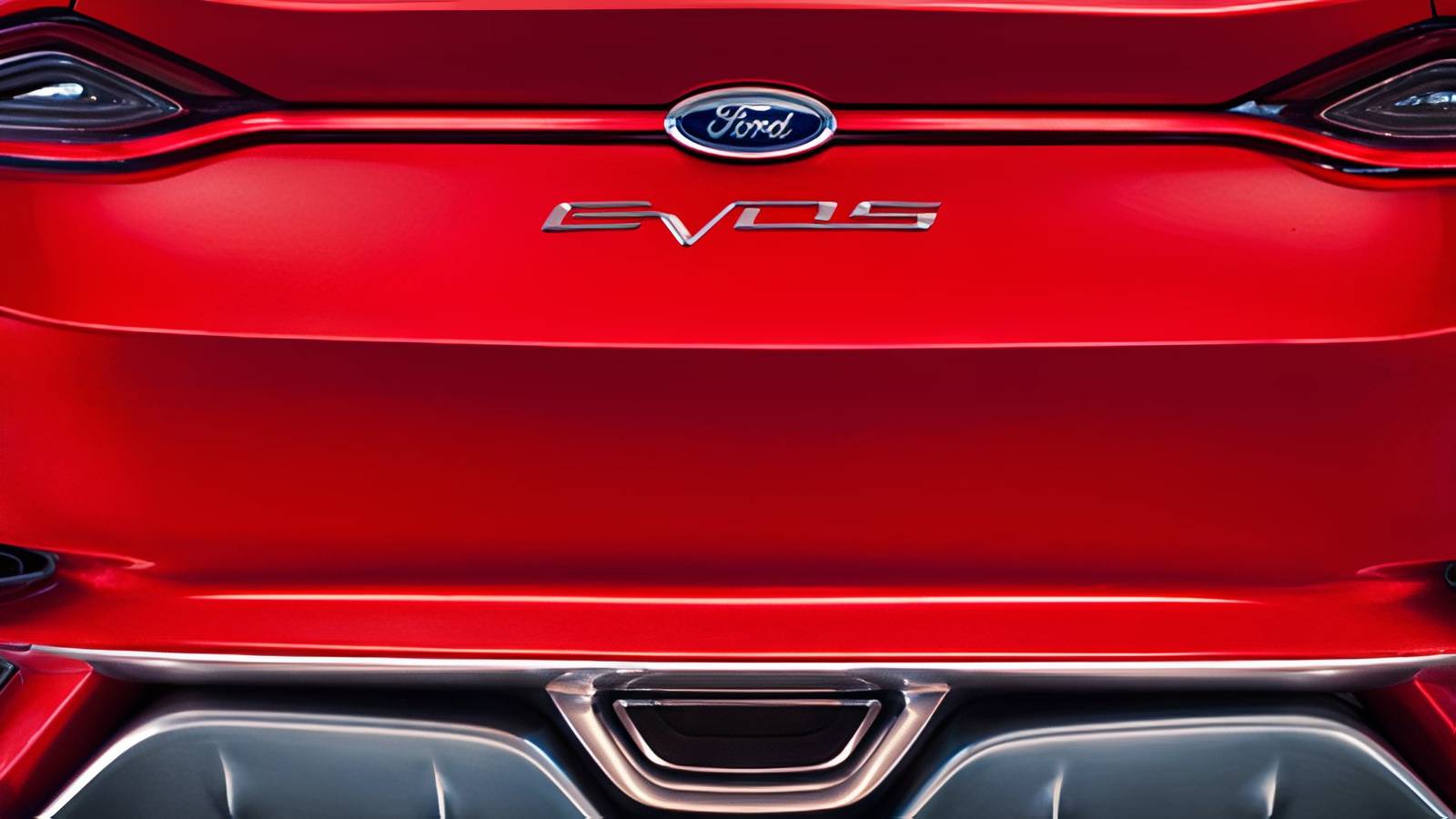
Showing cloud-based automotive tech was a trend about a decade ago as automakers previewed new ways to connect the vehicle to its owner. For example, Ford built the wacky-looking Evos gullwing four-door coupe back in 2011 to try to awaken interest in these fresh innovations. It was a vehicle designed to think for its pilot but never reached production. The ideas behind it were fascinating, though.
The Evos Concept Was Conceived To Bring The Future To The Present Day
The story of the Evos Concept begins in 2011, when the vehicle was unveiled at the Frankfurt Motor Show in Germany. The sleek coupe was designed to nail a couple of key pillars, with the first being to show off Ford’s new Kinetic 2.0 design language. The look was an evolution of the philosophy Ford had been using since 2006. The main difference was the Aston Martin-style grille placed out front on all its post-2011 models. The Evos took the form of a sleek four-door coupe, made even more exotic by doors that opened in a gullwing style. Unusually, the rear doors stretched as far back as the taillights, ensuring the whole side of the car was open when both doors on each side were fully extended.

The Secret Ford Concept Car That Was Meant To Fight Ferrari
The name Ford GN34 probably doesn’t ring a bell for even the most hardcore car enthusiasts. Here’s why.
Ford’s Interesting Four-Door Coupe Concept Was Also Loaded With Technology That Made It A Driver’s Car

Aside from its extroverted design, the Evos was notable for its range of forward-thinking tech. Much of it was designed to enhance the vehicle’s driving experience, with the driver-focused cabin being the main example of this approach. It was also equipped with one of Ford’s new hybrid powertrains.
The Evos Was As Efficient As It Was Engaging

Aside from looking and feeling striking on the road, Ford also wanted the Evos to represent its approach to building fuel-efficient vehicles. The Evos came with the same 2.0-liter hybrid powertrain from the forthcoming C-Max Energi, which arrived in 2012. The concept’s total output was 188 hp, with an estimated maximum range of 500 miles. The system could run in an EV-only mode at speeds up to 47 mph.
2011 Ford Evos Concept | |
|---|---|
Engine | 2.0L NA I4 with hybrid |
Transmission | 1-Speed eCVT |
Power | 188 hp |
Torque | 129 lb-ft |
0-60 mph | N/A |
Driving Range | Approx. 500 miles |
The Evos Could Utilize The Cloud To Set The Car Up For Your Needs

The rest of the Evos’ underpinnings were left under wraps. Ford revealed that the vehicle could support cloud computing to predict the driver’s preferences and set up the car by tweaking the throttle, steering, suspension, and other elements. For example, the Evos would know to adopt a stiffer setup for a person with a sporty style behind the wheel.
The Cloud Could Also Make The Evos More Environmentally Friendly

Aside from adjusting the settings to its pilot’s driving preferences, the Evos’ cloud-connected brain could set the car up to use as little fuel as possible. The computer analyzed the driver’s usual routine and travel patterns, and then tweaked the systems to suit.
Access to historical driver behavior and travel patterns allows us to calculate the optimal fuel and energy efficiency by predicting the destination. Our researchers are working to increase understanding of driver behavior, develop accurate protocols to predict it, and enhance the trip by providing the smartest use of fuel or battery for the situation.
– said Ford’s then Head of Global Research, Paul Mascarenas

Ford Built The First 4-Door Mustang 41 Years Ago
We’ve been asking for and speculating about a four-door Mustang for a while now, but Ford already answered our demands 41 years ago.
How The Evos Used The Cloud To Enrich Its Owner’s Life
- The system could analyze driving habits and common destinations to alter vehicles’ driving experience
- This info could also be used to make a car run as efficiently as possible
- Using data from a person’s calendar, let the Evos pre-heat or cool the cabin before the journey
- Air quality and heart rate monitors allowed the computer to adjust the conditions to the occupants’ needs
- The tech could suggest fun driving roads and sites of interest
This system would have been useful for drivers, as they wouldn’t need to constantly worry about which gear to be in at any given time or which mode to select. The car could handle everything for them in this regard, allowing them to simply drive it. The result was optimal fuel economy and minimal environmental damage, without having to touch a single button.
The Evos Had Some Other Tricks Up Its Sleeve

There was more to the Evos Cloud mind than affecting its driving habits, too. Ford also revealed that the system was designed to work with other cloud-connected devices owned by the driver, primarily ones located in their homes. The vehicle could use this data to estimate the time the driver would be leaving the house in the morning, for example, when leaving for work, and then prep the car accordingly. The possibilities for this function were endless, with a good one being that the car could heat or cool the cabin to make the interior comfortable before the driver even sets foot inside. Various EV carmakers later adopted a similar system, though an app is needed to control it. The Evos could also be made to read their owners’ electronic calendars, so the computer could predict when they would leave the house and have everything prepped.

Ford’s Secret $30,000 Truck May Have Been Teased At New Company Headquarters
A Ford spokesperson declined to comment, but we have official photos of vehicles under covers.
In addition, the cloud setup could see which radio station, song, or podcast you were listening to at home and start playing it in the vehicle once you climbed aboard. The idea of all this was to essentially make the Evos a personal assistant to its owner, as well as a health expert.
Ford’s Futuristic Coupe Was Designed To Keep You As Healthy As Possible

The car was even equipped with a heart rate-monitoring system in the seat, which allowed the occupant-monitoring system to adjust to the driver’s stress levels. It could even account for drivers with allergies and adjust the onboard filtration levels to prevent potential health risks. The Evos was also capable of checking every possible route to the driver’s next destination, and then suggest the one with the cleanest air quality. Other driver-monitoring systems have addressed similar issues, such as Citroën’s anti-drowsiness system.
While these systems have yet to be featured in a production car, the rise of AI is already driving a shift that could bring some of these more high-tech features to drivers soon. Hopefully, designers can come up with a feature that will allow cars to give themselves a full wash and valet, too.
Sources: Ford.
