



# How Flexible Electronics Are Unlocking the Next Era of Intelligent Systems
## When Machines Can Finally “See” the World Around Them
Artificial intelligence has transformed the way businesses forecast demand, support customers, and automate workflows. But there is a blind spot at the heart of this revolution: most AI systems operate on information that exists only in the digital realm. The physical world — where products are manufactured, shipped, stored, and sold — remains largely invisible to these systems.
A container might travel across an ocean, pass through multiple handling points, and arrive at a warehouse, yet the detailed conditions it endured during its journey often go completely unrecorded. Shelves of inventory shift between facilities with only sporadic status updates. The valuable data trapped inside physical objects and environments has long been out of reach of intelligent systems.
Closing this visibility gap is no longer optional — it is essential. As AI becomes more deeply integrated into business operations, the organizations that can gather richer, more granular information from the physical world will be the ones that lead. This is driving a fundamental shift toward what many are calling **Physical AI**: systems designed not just to process digital data, but to sense, interpret, and act upon real-world conditions directly.
—
## Physical AI: Beyond the Screen
Traditional AI has excelled at tasks within digital environments — analyzing text, recognizing images in databases, predicting trends from historical records. Physical AI extends this capability into the tangible world. Instead of relying solely on what has been typed or uploaded, it can gather live information from objects, environments, and processes in real time.
Imagine a fleet of packages that can broadcast their location, temperature, and handling conditions at every stage of transit. Or a retail shelf that knows exactly which items have been removed and when. This kind of intelligence is made possible by the **Internet of Everything (IoE)** — a vision in which everyday products and objects are equipped with the ability to identify themselves, share updates, and provide actionable data throughout their entire lifecycle.
The technology making this vision practical, however, is where the real story begins.
—
## Why Item-Level Data Changes Everything
Many current AI systems have access to aggregated or delayed operational data. A company may know that a shipment has arrived at a regional hub, but it usually cannot tell you the condition of each individual product inside that shipment. This lack of granularity leads to blind spots that cascade through the supply chain — missed spoilage alerts, unnoticed delays, and compliance gaps that only surface when it is too late.
Moving to **item-level intelligence** changes this equation entirely. When every single product carries a source of real-time data, organizations gain:
– **Early warning capabilities** — Problems such as temperature deviations, unexpected route changes, or unauthorized access can be spotted the moment they occur.
– **Precision monitoring** — Stock levels, product journeys, and shelf rotations can be tracked with unprecedented accuracy.
– **Faster response times** — Decisions are informed by current conditions rather than by outdated assumptions.
– **New commercial value** — Detailed product data supports emerging regulatory frameworks like Digital Product Passports, which require verified information about provenance, materials, and sustainability performance.
Beyond compliance, item-level intelligence opens the door to entirely new services. Businesses can offer customers transparent, real-time product histories — tracking everything from ethical sourcing to carbon footprint — turning data into a competitive differentiator.
—
## The Scalability Challenge
Connecting billions of physical objects sounds straightforward in principle, but the economics tell a different story. For decades, traditional silicon-based chips have been the standard for embedding intelligence into products. These processors are powerful, but they come with significant cost, size, and manufacturing complexity. That makes them impractical for high-volume, low-margin applications — think food packaging, disposable shipping labels, clothing tags, and similar everyday goods.
If the dream of ubiquitous physical intelligence is to become reality, a different approach is needed.
—
## Flexible Semiconductors: Small Chips, Big Impact
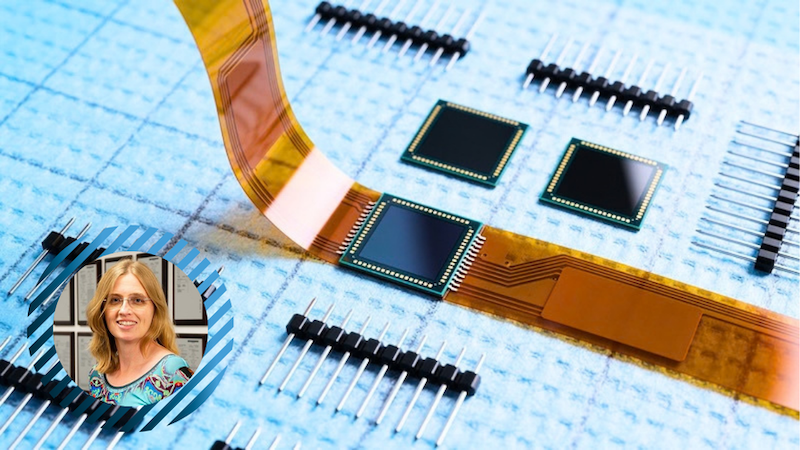
Enter **flexible semiconductor technology**. Unlike rigid silicon, flexible chips can be printed onto thin, pliable substrates, allowing them to be embedded in curved surfaces, woven into fabrics, or affixed to lightweight packaging. Their production process is dramatically simpler and faster — often measured in weeks rather than months — which reduces both cost and environmental footprint.
The implications are significant:
– **Cost-effective ubiquity** — Intelligent tags and sensors become affordable enough to deploy at scale, even on disposable or single-use items.
– **New form factors** — Intelligence can now be integrated into products and environments where traditional chips would simply not fit or would be prohibitively expensive.
– **Sustainability alignment** — The lower environmental cost of manufacturing flexible electronics makes them a natural fit for circular economy initiatives, recycling programs, and reuse models.
Flexible semiconductors do not replace high-performance silicon chips — they complement them. Where traditional processors provide the computing muscle needed to train and run sophisticated AI models in data centers, flexible chips serve as the sensory layer, generating the rich, real-world data that makes AI truly context-aware.
—
## A Smarter Partnership Between Digital and Physical
The future of intelligent systems is not shaped by any single technology. High-performance silicon will continue to power the heavy computational work of training advanced AI models, while cloud and data center infrastructure will supply the scale needed to process enormous datasets.
Flexible semiconductors fill the critical gap between these digital foundations and the physical world. One class of chip provides the processing power; the other provides the physical visibility. Together, they form a bridge that allows AI systems to go beyond what they can learn from digital records alone — giving them the ability to perceive, interpret, and respond to the actual state of the real world.
This partnership is already beginning to reshape industries. From smarter supply chains that self-correct in real time, to consumer products that carry verifiable sustainability credentials, the applications are expanding rapidly. Organizations that embrace this convergence of flexible electronics and AI will be best positioned to drive efficiency, unlock new revenue streams, and build deeper trust with customers and regulators alike.
—
## FAQ
**What is Physical AI?**
Physical AI refers to artificial intelligence systems that can observe, interpret, and respond to conditions in the real world — not just within digital environments. It extends AI capabilities beyond screens and software interfaces so that machines can gather information directly from objects, products, and environments.
**Why is item-level intelligence important for AI?**
Item-level intelligence provides continuous, real-time data about individual products rather than relying on aggregated or delayed summaries. This allows organizations to detect problems early, monitor stock with greater precision, and make decisions based on current conditions rather than historical assumptions.
**What role does the Internet of Everything (IoE) play?**
IoE describes the ecosystem in which everyday objects can identify themselves, communicate updates, and share data throughout their lifecycle. It is the framework that makes physical AI viable at scale by ensuring a steady flow of information from the physical world into digital systems.
**How are flexible semiconductors different from traditional silicon chips?**
Flexible semiconductors are thin, pliable, and can be printed onto various surfaces, whereas traditional silicon chips are rigid and require complex manufacturing. Flexible chips are significantly cheaper and faster to produce, making them suitable for high-volume, low-cost applications like packaging, tags, and labels.
**Can flexible electronics replace traditional processors?**
No. Flexible semiconductors are designed to complement, not replace, traditional silicon processors. Silicon chips handle the heavy computational work of running AI models, while flexible chips serve as sensors and data generators at the physical edge.
**How does this technology support sustainability?**
Flexible electronics have a lower environmental footprint in both manufacturing and deployment. Their affordability and adaptability make them ideal for circular economy applications, including recycling, reuse, and products with extended lifecycles. They also help businesses meet emerging regulatory requirements around provenance and sustainability reporting.
**What industries benefit most from this shift?**
Supply chain and logistics, retail, food and beverage, apparel, healthcare, and manufacturing all stand to gain from improved visibility into physical products and environments. Any sector that relies on tracking, monitoring, or verifying the condition and origin of physical goods can benefit from item-level intelligence.
—
## Conclusion
The next chapter of artificial intelligence is not just about building smarter algorithms — it is about connecting those algorithms to the tangible world in meaningful ways. Physical AI, powered by item-level intelligence and enabled by flexible semiconductor technology, represents a transformative leap from digital awareness to physical awareness. By closing the visibility gap between what happens on screen and what happens on the ground, businesses can unlock new levels of efficiency, transparency, and innovation. The convergence of high-performance computing and accessible physical sensing is reshaping entire industries, and the organizations that invest in this integration today will define the standard for intelligent, responsive, and sustainable operations tomorrow.
Thank you for reading
