



# Adhesives and Bonding Technologies: Innovations Driving Modern Manufacturing
## The Case for Adhesive Bonding
For decades, manufacturers have relied on mechanical fasteners and thermal joining techniques to assemble products across industries ranging from aerospace to medical devices. In recent years, adhesive bonding has emerged as a preferred alternative, offering a host of advantages that traditional methods simply cannot match.
One of the most significant benefits of adhesive bonding is how it distributes stress across a joint. Unlike a single bolt or weld point that concentrates force in a localized area, adhesives spread load evenly over a broad surface. This reduces the risk of fatigue failure and extends the service life of the assembly. Additionally, adhesives are applied inside the joint cavity, making them virtually invisible once the parts are assembled. This preserves the aesthetic integrity of the finished product, which is especially important in consumer electronics and medical instruments.
Adhesives also provide excellent resistance to vibration and flexural forces. In applications where components are subject to repeated motion or mechanical shock, a properly formulated adhesive can absorb energy and prevent joint loosening. Beyond structural bonding, many adhesives serve double duty as environmental seals, protecting joints from moisture, chemicals, and corrosion without the need for additional gaskets or o-rings.
Flexibility in design is another compelling reason to choose adhesives. They can bond irregularly shaped surfaces, join dissimilar materials such as metal to plastic or glass to rubber, and accommodate substrates that would be damaged by the high temperatures of welding or soldering. Adhesive bonds add negligible weight to an assembly and do not alter the dimensional tolerances of the parts being joined, which is critical in precision engineering.
## UV Curing: Precision and Speed
Ultraviolet curing has become one of the most popular adhesive technologies in modern manufacturing. UV-curable adhesives solidify almost instantly when exposed to the correct wavelength of light, enabling rapid cycle times and tight process control. This makes them particularly well suited for high-volume production environments where throughput is a priority.
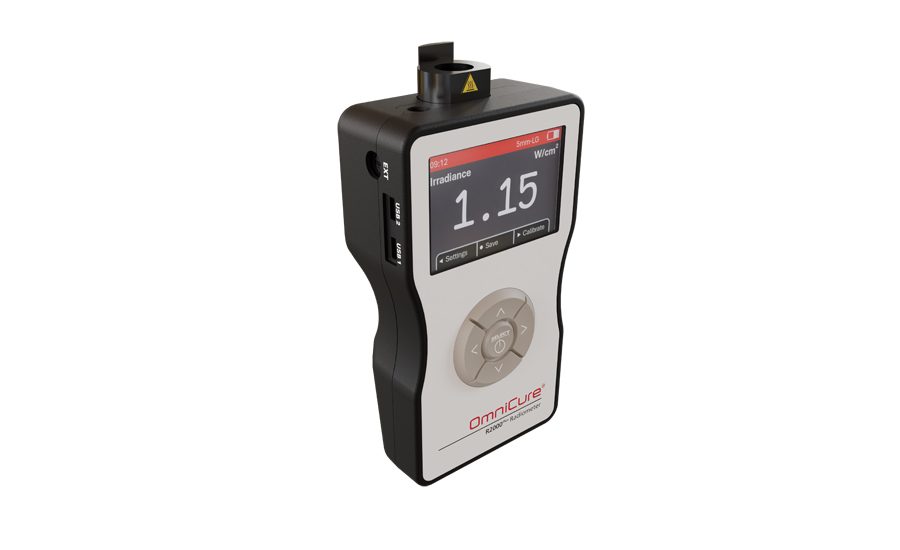
One notable development in UV curing is the introduction of broadband radiometers capable of measuring optical power across a wide spectral range, typically from 250 to 1,000 nanometers. These instruments allow engineers to verify that curing systems are delivering consistent output, ensuring that every joint receives the exact amount of energy it needs. Many modern radiometers offer NIST-traceable calibration, rapid measurement cycles, and onboard data logging to support quality assurance programs and regulatory compliance.
Flood curing systems have also advanced significantly. New-generation UV flood lamps feature intuitive touchscreen interfaces that let operators control intensity, exposure duration, and curing mode with precision. These systems often include programmable profiles, allowing engineers to store complex curing recipes that combine ramped intensity, staged exposure, and pulse sequences. Pulse curing is especially valuable when working with heat-sensitive materials, as it delivers bursts of high-intensity light in short intervals, curing the adhesive quickly without generating excessive thermal buildup.
## Dispensing Technology: Accuracy at Scale
Precise dispensing is just as important as the adhesive itself. Modern dispensing platforms have evolved to handle oversized assemblies and complex geometries while maintaining micron-level accuracy. Gantry-based robotic systems now offer dual-driven axes, linear encoder positioning, and high-speed motion capabilities that can accelerate at up to three times the force of gravity. These systems are modular, meaning they can be reconfigured to suit different products, work envelope sizes, and production volumes without requiring a complete overhaul of the equipment.
For applications demanding extreme precision, compact robotic workcells can deposit adhesive in the form of dots or beads with tolerances as tight as ±3 microns. These cells are lightweight enough to be integrated into clean room environments and can handle payloads of up to 13 kilograms, making them suitable for a wide range of microassembly tasks.
## Structural Adhesives with Extended Working Time
Two-part structural adhesives continue to play a critical role in applications requiring strong, durable bonds. Recent formulations combine extended open times—sometimes as long as 20 minutes—with rapid strength development once the bonded components are brought together. This gives assemblers ample time to position parts and make adjustments before the adhesive begins to set, which is especially helpful when bonding large surface areas or working with components that require exact alignment.
Highly thixotropic adhesives that resist stringing and slumping are ideal for filling gaps and bonding vertical surfaces without dripping. Many modern structural adhesives are rubber-toughened, giving them superior resistance to impact, vibration, and crack propagation. They can also bridge mismatched coefficients of thermal expansion, making them suitable for joining materials that expand and contract at different rates when subjected to temperature changes.
Advanced adhesion promotion technologies have further expanded the versatility of these products. Some formulations can bond directly through light oil residues or surface oxide layers, eliminating the need for extensive surface preparation. In many cases, a simple wipe with a common solvent such as acetone or isopropanol is sufficient to achieve a strong, reliable bond.
## UV-Curable Sealants for Water-Tight Bonds
Sealing applications have benefited from the development of UV-curable formulations that create water-tight bonds on a wide variety of plastics. These sealants offer excellent resistance to environmental factors including humidity, temperature fluctuations, and chemical exposure. A practical feature of many UV-curable sealants is their fluorescence under UV light, which allows quality inspectors to quickly verify that adhesive has been properly applied to the bonding surfaces before curing.
## Choosing the Right Adhesive for Your Application
With so many adhesive technologies available, selecting the right product can be challenging. Factors to consider include the types of substrates being bonded, the operating environment the assembly will be exposed to, the required bond strength, cure time constraints, and the level of precision needed during application. Working with experienced adhesive suppliers and dispensing equipment providers can help manufacturers identify solutions that meet both technical requirements and production goals.
## Frequently Asked Questions (FAQ)
**Q: What are the main advantages of adhesive bonding over mechanical fasteners?**
A: Adhesive bonding distributes stress over a larger area, adds minimal weight, prevents corrosion, accommodates dissimilar materials, and maintains the dimensional integrity of parts. It also provides a sealed joint that resists vibration and flexural forces.
**Q: How do UV-curable adhesives work?**
A: UV-curable adhesives contain photoinitiators that react when exposed to ultraviolet light, causing the adhesive to transition from a liquid to a solid state within seconds. This allows for very fast curing cycles without the need for heat.
**Q: What is open time, and why does it matter?**
A: Open time refers to the period during which an adhesive remains workable after it has been applied. A longer open time gives assemblers more flexibility to position parts and make adjustments before the adhesive begins to cure, which is especially important for large surface areas or precision alignments.
**Q: Can adhesives bond dissimilar materials?**
A: Yes, one of the greatest strengths of adhesive bonding is its ability to join materials with different properties, such as metal to plastic, glass to rubber, or composites to metals, without the challenges associated with thermal expansion mismatches.
**Q: What surface preparation is required before applying adhesive?**
A: Surface preparation depends on the adhesive formulation and the substrates involved. Some modern adhesives can bond through light surface contaminants, while others require cleaning with solvents such as acetone or isopropanol, or mechanical abrasion to ensure proper adhesion.
**Q: How do dispensing robots contribute to adhesive application quality?**
A: Dispensing robots provide repeatable, precise application of adhesive in the form of dots, beads, or flood coats. Their high positional accuracy and programmable motion paths ensure consistent bead placement and volume control, reducing waste and improving joint reliability.
**Q: Are adhesive bonds suitable for high-temperature environments?**
A: It depends on the adhesive formulation. Specialty high-temperature adhesives are available that can maintain bond strength at elevated temperatures, though standard formulations may degrade if exposed to excessive heat. Always verify the thermal ratings of the specific adhesive being used.
## Conclusion
Adhesive bonding technologies have come a long way from simple epoxy glues. Today’s manufacturers have access to an extensive portfolio of UV-curable adhesives, structural acrylics, precision dispensing systems, and advanced curing equipment that together enable faster, cleaner, and more reliable assembly processes. Whether the goal is to reduce part weight, eliminate corrosion, join dissimilar substrates, or simply increase production speed, there is an adhesive solution tailored to the task. As these technologies continue to evolve, adhesive bonding will undoubtedly play an even larger role in the factories and laboratories of tomorrow.
Thank you for reading
