



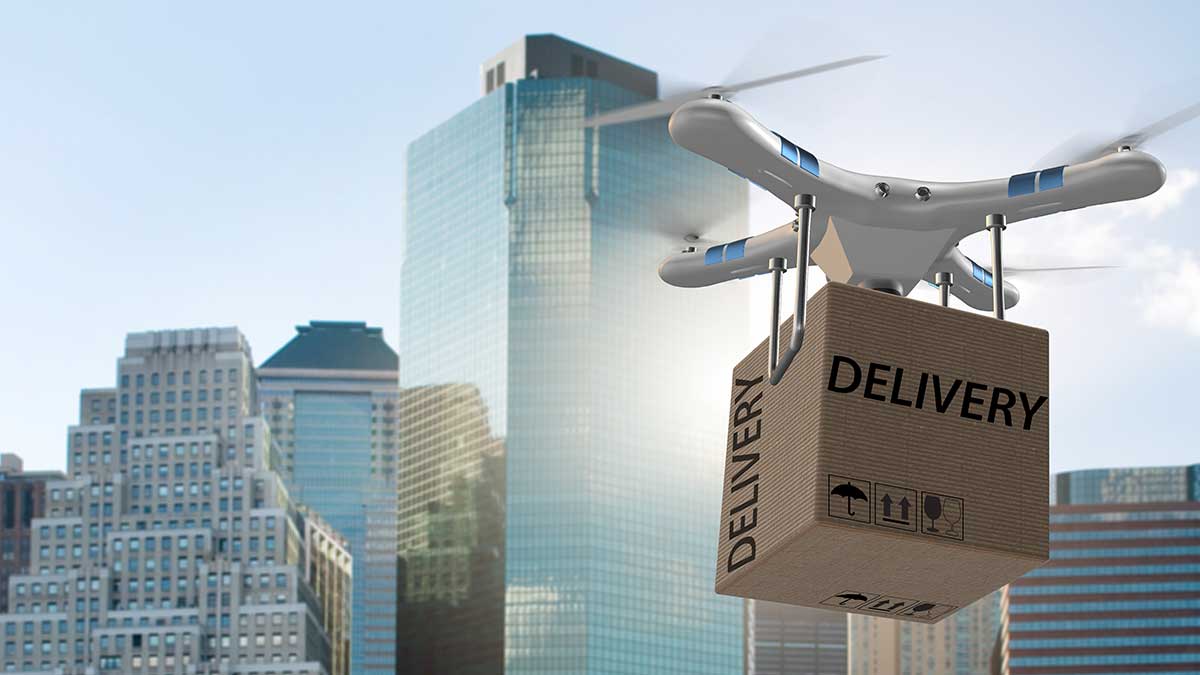
# The Promise and Challenges of Autonomous Drone Delivery: What to Expect in the Coming Years
## The Vision of Aerial Logistics
Imagine placing an online order and having it arrive not by van or truck, but by a quietly hovering unmanned aircraft that lands gently on your property. That vision has driven investment and research into autonomous drone delivery for years, and while it is no longer purely theoretical, turning it into an everyday reality is proving more complex than initially anticipated.
Unmanned aircraft capable of transporting parcels and medical supplies have already demonstrated success in select regions. These systems integrate satellite navigation, visual sensors, detect-and-avoid technology, and sophisticated flight control software to navigate routes independently. The appeal is clear: faster deliveries, reduced traffic congestion, lower carbon emissions for short-haul trips, and access to locations that traditional vehicles struggle to reach.
So why hasn’t this technology taken off on a massive scale yet? Let’s explore the hurdles and the promising developments shaping the next era of logistics.
—
## Key Barriers to Widespread Adoption
### Navigating Beyond the Operator’s View
For drones to deliver goods efficiently at scale, they cannot be tethered to a human pilot watching from the ground. Beyond Visual Line of Sight (BVLOS) operations are critical because they allow a single operator to manage multiple aircraft simultaneously across wide areas. Without BVLOS capability, deploying thousands of delivery drones becomes prohibitively expensive and logistically impractical. The industry must prove that autonomous systems can safely manage their own flight paths, respond to dynamic conditions, and make real-time decisions without continuous human oversight.
### Staying Connected in the Skies
Unmanned aircraft rely on constant, stable communication links to coordinate with ground stations, air traffic systems, and other airspace users. Dead zones, signal interference, or network outages could leave a drone stranded or unable to respond to emergencies. Ensuring that delivery drones can maintain safe operations even when connectivity drops—whether due to geography, weather, or infrastructure gaps—is a foundational requirement for scaling these services.
### Navigating the Regulatory Landscape
Aviation authorities in the United Kingdom are actively working to modernise rules around unmanned aircraft, but progress takes time. Operating drones beyond the pilot’s line of sight requires special permissions, rigorous safety case submissions, and proof that systems meet exacting standards. While the national aviation regulator has published roadmaps targeting routine BVLOS operations in the near future, the current framework remains restrictive. Until clear, standardised procedures are in place for airspace integration, liability, and operator accountability, businesses will find it difficult to roll out delivery networks across entire cities or regions.
### Handling the Unexpected Safely
True autonomy means more than pre-programmed flight paths. Drones operating in delivery networks must perceive their environment, dynamically reroute around obstacles, assess weather changes, and recover gracefully from equipment malfunctions or communication losses. Advanced onboard processing and artificial intelligence are needed to ensure that these aircraft behave predictably and safely in scenarios that no engineer has specifically programmed for.
### Energy and Range Limitations
Current battery technology places hard limits on how far a delivery drone can travel and how much weight it can carry. Expanding range and payload capacity requires breakthroughs in energy storage, motor efficiency, and charging or battery-exchange infrastructure. Without these improvements, drone delivery remains viable primarily for short-distance, lightweight packages rather than serving as a full replacement for conventional ground logistics.
### Earning Public Trust
Noise pollution, privacy concerns, and the perceived risk of accidents over residential areas all influence how communities receive drone services. People living under regular flight paths may worry about camera systems capturing private moments or about the disturbance of frequent low-altitude flights. Building public confidence through transparent safety records, community engagement, and noise-reduction engineering will be essential for long-term acceptance.
—
## Early Successes and Emerging Use Cases
The United Kingdom is already witnessing practical applications. In 2023, a postal service launched an electric drone route connecting remote island communities, showcasing the value of aerial logistics where traditional road or ferry connections are slow or unreliable. This kind of use case—where geography creates genuine logistical challenges—offers a compelling early argument for the technology.
Healthcare represents another high-impact opportunity. Transporting blood samples, medications, diagnostic equipment, and emergency medical supplies by drone can save lives by cutting delivery times dramatically, sometimes by hours compared to ground transport. A project in Scotland has been testing this concept by linking remote hospitals and clinics with urban medical centres, demonstrating how unmanned aircraft can bridge critical gaps in access to care.
On the commercial front, major players are expanding trials internationally. One leading company has launched delivery programmes targeting over a thousand daily shipments in Australia and Ireland, aiming to compete with established e-commerce delivery networks. Meanwhile, consumer demand continues to grow, with nearly half of all online shoppers indicating a willingness to pay a premium for same-day delivery—creating a market incentive for faster, more flexible fulfilment options.
—
## When Will We See Drones as a Normal Sight?
It is important to set realistic expectations. Delivery drones will not replace vans and lorries across the country in the immediate future. The economics, infrastructure, and regulatory frameworks simply are not mature enough to support mass adoption within the next two or three years.
However, between 2027 and 2030, drone delivery is expected to become increasingly common in targeted settings. Rural and remote communities, medical supply chains, urgent or time-sensitive shipments, and suburban areas are the most likely early adopters, since these scenarios show the clearest advantages over conventional methods. The aviation regulator’s planned progression toward routine BVLOS operations provides the legal foundation that operators will need to expand their services.
For a truly mainstream consumer experience—where drone delivery is one of several standard options at checkout—2030 and beyond represents a more realistic timeline. The pace at which this unfolds will depend on regulatory developments, public sentiment, technological advancements in autonomy and energy, and the willingness of businesses to invest in the necessary physical and digital infrastructure.
—
## Looking Ahead
Autonomous drone delivery has moved past the prototype phase and into real-world commercial use. The coming years will focus on scaling these services responsibly—building networks that are safe, cost-effective, widely accepted, and environmentally beneficial. As airspace rules evolve, battery technology improves, and public familiarity with the technology grows, unmanned delivery aircraft may well become a routine and familiar part of how goods move through our communities.
—
## Frequently Asked Questions (FAQ)
**Q: How do autonomous delivery drones navigate without a human pilot?**
A: They use a combination of GPS positioning, onboard cameras, lidar and obstacle-detection sensors, plus flight control software that processes real-time data to plan routes and avoid hazards independently.
**Q: Can drones deliver in bad weather?**
A: Most delivery drones are designed to operate in moderate conditions, but heavy rain, high winds, and extreme temperatures can restrict or halt flights. Weather resilience is an area of ongoing engineering development.
**Q: Are drone deliveries environmentally friendly?**
A: Electric drones produce zero direct emissions during flight, and for short-distance deliveries they can be more energy-efficient than traditional vehicles. However, the overall environmental benefit depends on factors like battery production, electricity sources, and infrastructure.
**Q: What kinds of goods are suitable for drone delivery?**
A: Currently, the most practical applications involve small, lightweight packages—typically under a few kilograms. Medical supplies, retail goods, and urgent documents are among the most common use cases being explored.
**Q: How safe are autonomous delivery drones?**
A: Safety is a primary focus of industry and regulators. Drones are equipped with redundant systems, parachute mechanisms, detect-and-avoid technology, and fail-safe protocols. However, as with any emerging technology, safety records will continue to be evaluated as operations scale up.
**Q: Will drone delivery be expensive?**
A: Costs are currently higher than conventional delivery, but as technology matures, battery prices drop, and operations scale, per-delivery costs are expected to decrease significantly. Some consumers already show willingness to pay a premium for speed.
**Q: Do I need to be home when my drone delivers?**
A: Delivery procedures vary by service provider. Some require a person to be present to receive the package, while others can land or lower parcels to a designated safe spot on the property automatically.
—
## Conclusion
Autonomous drone delivery sits at the intersection of robotics, aviation, logistics, and public policy. The technology exists and works; the challenge now lies in building the ecosystems—regulatory, infrastructural, and social—that allow it to grow safely and sustainably. The next decade will likely see drones become a familiar but targeted presence in delivery networks, particularly for urgent and geographically challenging shipments. As investment and innovation continue, the dream of ordering something and having it fly to your door is steadily becoming an achievable reality.
Thank you for reading
