



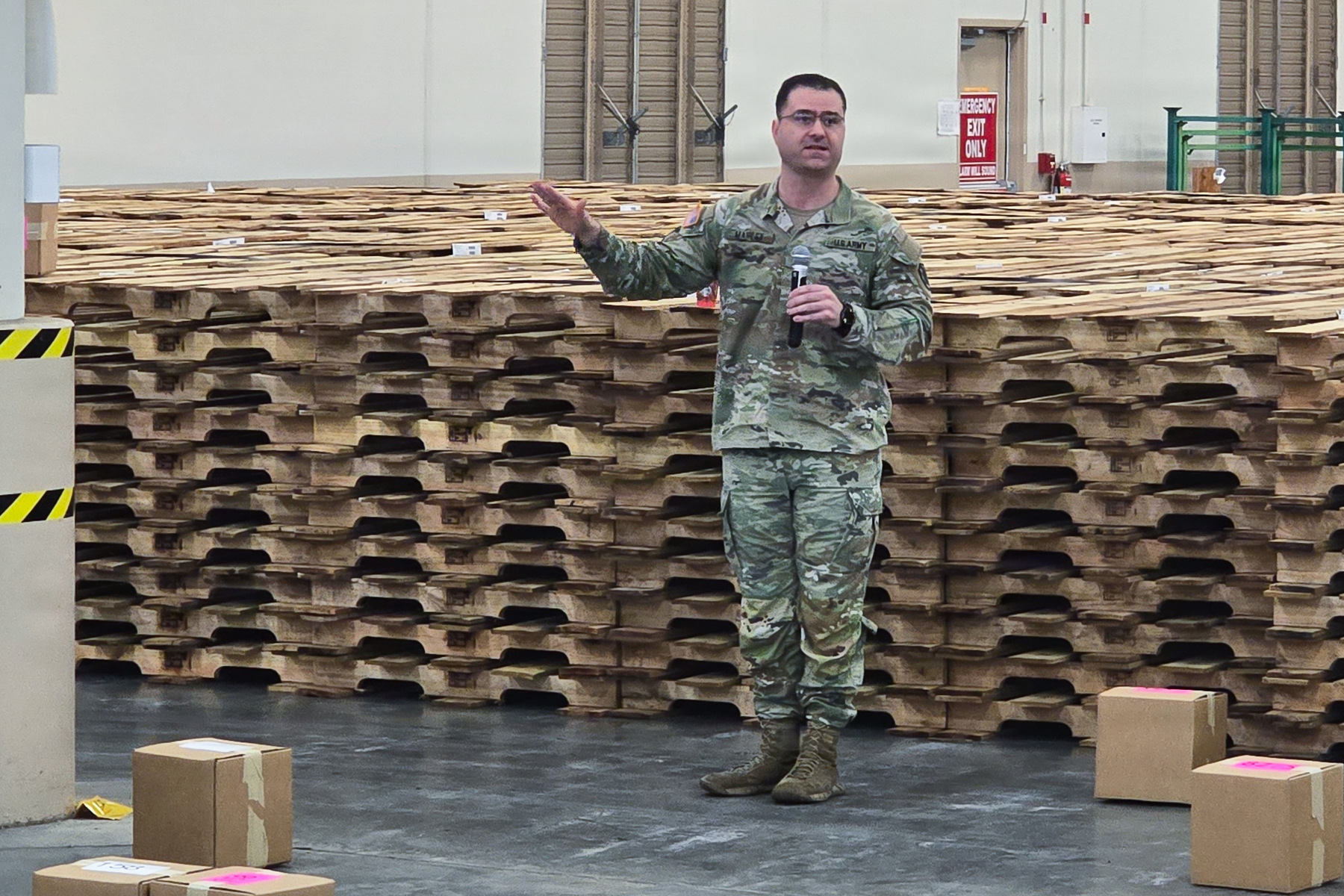
# How the Defense Logistics Agency Built a Modern Warehouse Management System from the Ground Up
**A look at the agency’s eight-year journey to replace its aging inventory platform with a cutting-edge commercial system**
The Defense Logistics Agency (DLA), one of the largest military support organizations in the world, has completed a sweeping modernization of its warehouse management technology after more than half a decade of planning and execution. The final phase of the rollout was activated this summer at Hill Air Force Base in Utah, marking the end of a transition that touched 24 distribution locations across the globe.
## The Scale of the Challenge
DLA Distribution manages roughly 14 million items that flow through its warehouses every year, representing approximately $140 billion in total inventory value. The stakes are enormous — mismanaged logistics at this scale could directly affect military readiness and the ability to supply troops in the field.
The previous platform, a legacy system called the Distribution Standard System (DSS), had been in operation since the early 1990s. It was built to handle the materiel distribution responsibilities that had once been split among the individual military branches. Over the decades, it received patches and upgrades, but its underlying architecture had grown increasingly rigid and difficult to maintain.
## Why the Change Was Necessary
Several factors converged to push the agency toward a complete overhaul:
– **Audit Readiness:** The old system simply could not meet the Department of Defense’s increasingly stringent financial audit requirements. Agency leaders recognized that without a modern platform, achieving a clean audit opinion was out of reach.
– **Customization Debt:** The legacy DSS had been heavily customized over the years to serve the specific needs of each military service. While that made it flexible in some respects, it also made the system brittle and expensive to update.
– **Commercial Platform Advantage:** The decision was made to migrate to a warehouse management system built on SAP’s commercial platform, which offered a modern foundation that could be standardized across the entire DLA distribution network.
## A Globally Coordinated Rollout
The deployment followed a methodical, phased approach. It began in earnest with a pilot site in Corpus Christi, Texas, in the summer of 2018, before expanding across the country and eventually overseas. The final four major sites — Susquehanna, Pennsylvania; Warner Robins, Georgia; Oklahoma City, Oklahoma; and Hill Air Force Base, Utah — were brought online over the course of the past year.
What made this transition unique was the approach to staffing and training. Rather than simply handing the new system over to warehouse personnel, the agency deployed SAP subject matter experts to work side by side with distribution center teams on the warehouse floor during the initial launch period. A “leapfrogging” strategy was employed, where personnel from one site would travel to another to gain hands-on experience with the system before their own location went live.
The human element was significant. The new system is used not only by DLA civilian employees but also by private-sector industry partners who operate within DLA warehouses. At overseas locations, local nationals — from Japan to Germany — interact with the platform daily. This meant that the change management effort had to account for a diverse, multilingual workforce operating across multiple continents.
## A Joint System for a Joint Force
One of the most notable features of the new warehouse management system is its connectivity. It does not operate in isolation. Instead, it communicates directly with the Navy’s ERP system, the Army’s Logistics Modernization Program, and the Air Force’s D035 system. This interoperability effectively makes it a joint platform, giving all branches visibility into the inventory that DLA manages on their behalf.
The system also supports cross-docking operations, which allow materials to move from receiving directly to shipping without being placed in long-term storage. This capability is particularly valuable as the military moves toward more just-in-time inventory models, which can reduce storage costs and improve the speed of supply chains.
## What the New System Means Going Forward
Officials have emphasized that the upgrade provides military buying commands with unprecedented visibility into inventory levels from the point of manufacture all the way to the point of use in the field. This transparency should help the services make smarter decisions about how much stock to hold, how often to reorder, and how to coordinate with the industrial base.
Looking ahead, there is potential for even greater integration — one day, the same repair part procured and stored by DLA could be tracked as it sits on a shelf in an Army, Navy, Air Force, or Marine Corps warehouse. That level of end-to-end visibility would represent a major leap in the department’s supply chain sophistication.
—
## Frequently Asked Questions (FAQ)
**Q: What is the Defense Logistics Agency, and why is its warehouse system so important?**
A: The DLA is a combat support agency within the Department of Defense that provides logistics and supply chain services to the military services. Its distribution network stores and moves millions of items — from food and fuel to spare parts and munitions — making reliable inventory management essential to national defense.
**Q: What system did DLA use before this modernization?**
A: The previous system was called the Distribution Standard System (DSS). It had been in use since the early 1990s when DLA absorbed the materiel distribution functions formerly handled by the individual branches of the armed forces.
**Q: Why was the old system no longer adequate?**
A: The DSS could not meet the DoD’s financial audit requirements, and its heavy customization for each military service made it costly and difficult to maintain. The agency needed a modern, standardized commercial platform.
**Q: What commercial platform was chosen for the new system?**
A: DLA selected a warehouse management system built on SAP’s commercial platform, which provides a modern, scalable foundation for managing complex global logistics operations.
**Q: How many locations were affected by the rollout?**
A: The new system was deployed across 24 DLA Distribution locations worldwide, with the final activation occurring at Hill Air Force Base, Utah.
**Q: How many items and how much inventory does the system manage?**
A: The system is responsible for tracking approximately 14 million items per year, representing roughly $140 billion in total inventory value.
**Q: What is cross-docking, and why does it matter?**
A: Cross-docking is a logistics practice where incoming goods are transferred directly from receiving to outbound shipping without being stored in long-term inventory. This supports just-in-time delivery models, reducing warehousing costs and improving supply chain speed.
**Q: Who uses the new warehouse management system?**
A: The system is used by DLA civilian employees, private industry partners operating within DLA warehouses, and local nationals at overseas locations, including personnel in Japan and Germany.
**Q: How long did the entire modernization effort take?**
A: From the initial pilot in June 2018 through the final site activation in 2026, the effort spanned approximately eight years.
**Q: What are the next steps for DLA’s warehouse operations?**
A: Beyond the WMS deployment, the agency is exploring deeper integration with military service logistics systems and greater visibility into inventory from factory to end user, including potential tracking of repair parts across service-specific warehouses.
—
## Conclusion
The completion of DLA’s warehouse management system modernization represents a landmark achievement for one of the Department of Defense’s most critical support functions. By replacing a three-decade-old legacy platform with a modern commercial system built on SAP technology, the agency has not only positioned itself to pass future financial audits but has also gained the tools to operate a more agile, transparent, and joint-compatible supply chain. For the nearly 2,000 personnel — military, civilian, contractor, and local national — who interact with the system daily, the upgrade means working with technology that is fit for the demands of 21st-century military logistics. As DLA looks to the future, the foundation is now in place to push for even greater visibility and efficiency across the entire defense supply chain.
Thank you for reading
