



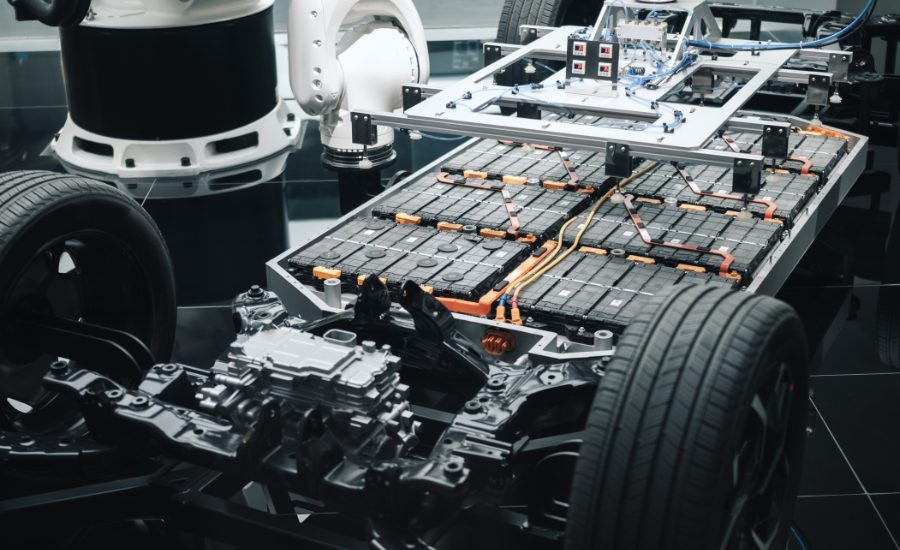
Pressure-sensitive adhesive (PSA) tapes are revolutionizing the assembly of electric vehicle (EV) battery packs. In high-volume manufacturing, engineers must balance the need for robust, reliable bonds with the demands of automated production lines. Achieving this balance requires a holistic approach where material selection is dictated by the entire manufacturing process, not just the end performance of the battery.
Successful integration of PSA tapes in EV assembly demands a concurrent focus on design for manufacturing. When evaluating a tape, engineers must look beyond final bond strength and consider how the material will be converted, handled, detected, positioned, and applied by automated machinery. Adhesive chemistry can be formulated to minimize residue buildup on cutting tooling and rollers, which helps extend preventive maintenance intervals. Similarly, release liners can be engineered with specific properties that allow automated equipment to strip and position them reliably at high speeds.
Integrating machine vision into the assembly process also influences material design. By incorporating specific pigments, films, or printing into the tape construction, vision systems can easily detect the material and ensure precise placement, significantly reducing scrap and positioning errors.
A common pitfall in adhesive selection is overengineering the tape. An adhesive with excessive peel strength or tack might seem ideal for the final bond, but it can create stubborn residue during the converting and die-cutting stages, leading to unplanned downtime. Engineers must carefully determine which performance characteristics are genuinely necessary and optimize the tape’s construction around those actual manufacturing requirements.
The variety of substrates used in EV battery packs adds another layer of complexity. Low-surface-energy plastics, such as polypropylene and polyethylene, are notoriously difficult to bond, while silicone foams present challenges due to their inert nature. Inorganic thermal barriers, often delicate and fragile, require careful handling when automated systems remove release liners and position the components without causing damage.
Surface preparation is equally critical. A tape’s effectiveness is directly tied to the condition of the surface it touches. Components entering the assembly line may carry residues like stamping lubricants from sheet-metal forming. Testing adhesives on these actual production conditions—rather than assuming perfectly clean substrates—helps manufacturers determine if an additional cleaning step is required for adequate bond performance.
Geometric complexities also impact adhesive performance. A tape that bonds securely on a flat test coupon may behave differently when wrapped around a corner or applied to a curved surface. Residual stress can cause a seemingly secure bond to lift after exposure to heat. Over-reliance on technical data sheets can also be misleading; for instance, a high-strength film might appear ideal for dielectric applications, but it can split around sharp metallic edges once a tear initiates. Often, a material with lower inherent strength but greater ductility and conformability provides a more durable long-term solution in such applications.
Thorough testing using environmental chambers that simulate temperature extremes, humidity, and repeated thermal cycling is essential. This process typically begins with small specimens and gradually progresses to larger sections that accurately represent the final battery assembly.
Perhaps the most consequential yet overlooked elements in the design process are the release liners. By adjusting the liner’s chemistry, manufacturers can precisely control the separation force required for automated removal. Zone coating techniques can create specific areas of adhesive and non-adhesive surfaces, making it easier for robotic arms to grasp and peel the liner. Color engineering in both adhesives and liners further enhances detection accuracy by machine vision systems.
One of the most significant manufacturing advantages of PSA tapes is the ability to pre-apply them. By bonding the tape to components before those parts reach the final assembly stage, manufacturers can streamline the process. When the component arrives at the assembly station, equipment simply removes the release liner, positions the part, and creates an instant bond. This allows parts to move rapidly down the production line, dramatically increasing throughput.
As EV manufacturers continue to reimagine vehicle and battery architectures, automation and robotics will become even more central to scaling production. The critical question for both adhesive suppliers and manufacturing engineers is no longer simply whether a material can create a required bond, but whether that bond can be produced reliably, repeatedly, and at the pace the assembly line demands.
**Frequently Asked Questions (FAQ)**
**Q: Why is design for manufacturing important when selecting PSA tapes?**
A: Selecting an adhesive based solely on its final bond strength can lead to significant production bottlenecks. Engineers must consider the entire lifecycle of the tape, including how it will be converted, handled, and applied by automated equipment, to ensure the material does not cause excess scrap or line downtime.
**Q: How do surface conditions affect PSA tape performance in EV battery assembly?**
A: A tape’s adhesion is only as effective as the surface it touches. Factory components often carry residues such as stamping lubricants from metal forming. Evaluating adhesive performance on these actual, production-grade surfaces is critical to determining if additional surface preparation is needed for a reliable bond.
**Q: Why might a stronger adhesive tape be worse for automated manufacturing?**
A: Overengineering the adhesive can create more problems than it solves. Tapes with excessively high tack or thickness often leave behind stubborn residue on tooling during converting and die-cutting. Optimizing the tape for the specific application, rather than maximizing its strength, keeps production running smoothly.
**Q: What role do release liners play in high-speed automated production?**
A: Release liners are essential for automated handling. Their chemistry can be adjusted to control the exact peel force required for removal, and they can be zone-coated or colored to assist robotic systems and vision sensors in accurately detecting and separating the liner from the adhesive.
**Q: How can pre-applying PSA tapes improve the battery assembly process?**
A: Pre-application allows manufacturers to attach the tape to components before final assembly. When the component reaches the assembly station, the release liner is removed, and the parts are immediately bonded. This creates an instant grab that allows components to move rapidly down the assembly line, significantly boosting overall throughput.
**Conclusion**
The integration of pressure-sensitive adhesives into electric vehicle battery assembly represents a sophisticated intersection of material science and automated manufacturing. As EV producers adopt more complex battery architectures and high-speed robotics, the importance of selecting the right tape—and designing for manufacturability from the very start—cannot be overstated. By optimizing for surface compatibility, production geometry, and automated handling, manufacturers can ensure that PSA tapes deliver both reliable performance and the efficiency required for modern EV production. Thank you for reading
