



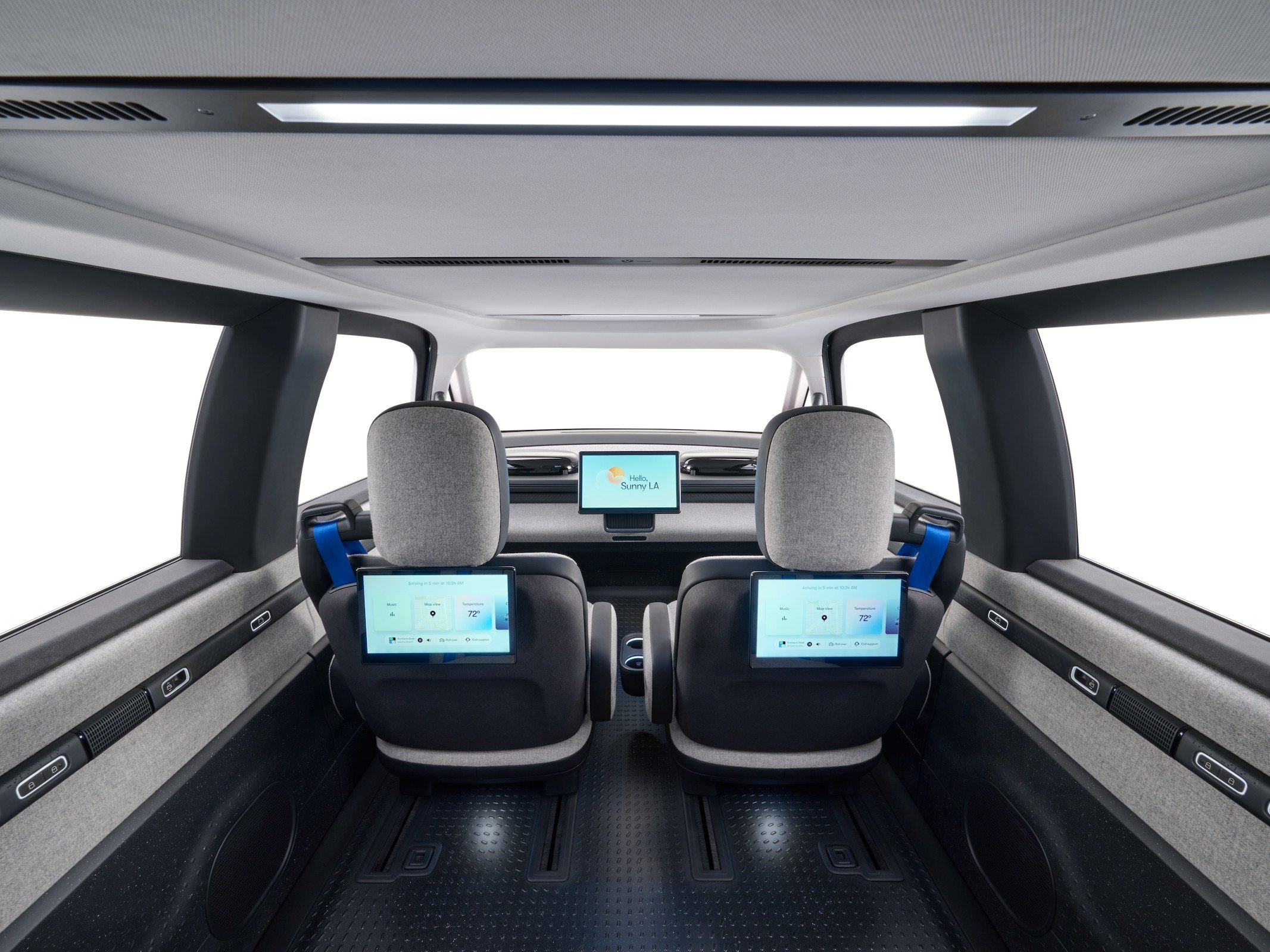
# How Waymo Turned 200 Million Driverless Miles Into a Blueprint for Autonomous Driving: Inside the AI Architecture Powering the Next Era of Safe Roads
Autonomous vehicle development is one of the most complex engineering challenges of our time, and Waymo has spent years refining the systems that allow its fleet to navigate city streets without any human behind the wheel. Across more than 200 million miles of fully driverless operation, the company has distilled its experience into a set of guiding principles that shape everything from how its cars “see” the world to how they validate every decision before making a maneuver. This article breaks down the key lessons Waymo has drawn from that remarkable mileage, exploring the technologies and philosophies that underpin a system designed to make roads safer at scale.
## The Sensor Arsenal: Why Three Beams Are Better Than One
A central debate in the autonomous vehicle industry concerns whether cameras alone can provide sufficient awareness for fully driverless operation. Waymo’s position, backed by 200 million miles of real-world data, is clear: they cannot. The company relies on a combination of cameras, lidar, and radar, with each sensor type assigned a distinct role in creating a complete picture of the environment.
**Lidar** generates high-resolution 3D maps of the surrounding space, measuring distances with millimetre-level accuracy and capturing the geometry of objects in the vehicle’s vicinity. **Cameras** are tasked with semantic understanding — reading traffic signals, recognising street signs, and interpreting visual cues that tell the car what is happening in its world. **Radar** excels at tracking the speed and movement of other vehicles and objects, and it maintains functionality even when visibility is compromised by heavy rain, fog, or dust — conditions that degrade camera performance and can make device-only perception unreliable.
This sensor fusion approach ensures that no single point of failure can blind the system, and each input type compensates for the weaknesses of the others, creating a redundancy that is critical for safety at the scale Waymo operates in.
## Navigation Without Blank Maps
Another question the industry has debated is the role of high-definition maps in autonomous driving. Rather than treating maps as a mere background layer, Waymo uses an AI-driven mapping system that functions like a living reference library. The onboard computer continuously compares real-time sensor data against this map to identify changes — a temporary stop sign erected by a construction crew, an unexpected detour, or a new lane configuration — allowing it to allocate processing power to the novel or unexpected while relying on the map for known road geometry, particularly in complex junctions or low-visibility conditions.
## From Modules to Foundation Models
Early versions of autonomous driving systems relied on fragmented, specialised components — a separate model for detecting pedestrians, another for tracking vehicles, and yet another for interpreting traffic lights. As the system scaled, maintaining this patchwork became unwieldy. Waymo’s response was to consolidate into a smaller number of high-capacity foundation models trained on massive datasets, allowing the data itself to define what is important rather than relying on hand-built rules. This shift mirrors developments seen in large language model research, where scale and data-driven learning have proven transformative.
To manage the computational demands of running such models onboard a vehicle, the company employs “teacher-student” model pairs in which a larger model trains a smaller, efficient one that can operate in real time on the car’s hardware. This approach preserves the benefits of deep learning without exceeding the onboard compute budget.
## The Validation Layer: A Safety Net for Every Move
A defining feature of Waymo’s architecture is the separation between planning and validation. The Driver proposes trajectories and manoeuvres, but these are not executed blindly. A dedicated onboard validation layer subjects each proposed path to physics-based limits and traffic law checks before any action is taken. Techniques described as drawing from reinforcement learning and generative AI-style reasoning are used to evaluate whether a proposed move is safe and compliant. If it would breach a limit or risk a collision, it is blocked outright.
This separation is presented as a necessary requirement for scaling to SAE Level 4 — fully driverless operation within defined conditions — and reflects the principle that planning alone, without rigorous verification, is insufficient for safe deployment at scale.
## Ends and Means: Simulation That Feels Like the Real Thing
To prepare for edge cases that rarely occur on public roads — such as a vehicle cutting aggressively across multiple lanes — Waymo uses two forms of simulation. **Open-loop simulation** replays recorded data without allowing surrounding vehicles to respond to the Driver’s actions, similar to watching a recording without participating. **Closed-loop simulation**, by contrast, allows virtual traffic to react to the Driver in real time, creating a dynamic feedback loop. This approach is well-suited for reinforcement learning techniques and for surfacing rare or dangerous scenarios before they are encountered on the road. The company runs tens of billions of simulated miles alongside a constant stream of real-world data from its weekly fleet operations.
A separate internal system, known as the Critic, continuously analyses both real and simulated driving behaviour, flagging patterns that require human engineering review. It evaluates safety, legal compliance, and even the smoothness and comfort of driving — how natural a turn feels or how gentle a braking event is — ensuring that the Driver’s performance is measured beyond its own outputs and against calibrated real-world data.
## The Data Flywheel
Waymo describes its operations as a continuous cycle. Data from the fleet is extracted, labelled automatically, fed back into model retraining, and then validated through simulation and governance before new features are redeployed to the field. This flywheel, operating across massive quantities of information, allows the system to work through the long tail of uncommon but critical driving situations.
## Hardening Through Unsupervised Experience
One final principle stands out: no amount of simulated miles or supervised data can replace time spent driving without a human present. Waymo distinguishes between improving SAE Level 2 driver-assist systems and building Level 4 autonomy from the ground up. The latter requires closed-course validation followed by real unsupervised driving — the only true test of a fully autonomous system — and it is through this path that the company has accumulated more than 200 million miles of driverless experience.
—
## Frequently Asked Questions
**1. Why does Waymo use both lidar and cameras when other companies are focusing on cameras-only approaches?**
Waymo’s data across hundreds of millions of miles supports the view that cameras alone are not sufficient for safe driverless operation at scale. The company’s sensor fusion strategy uses lidar for precise 3D environmental mapping, cameras for reading signs and visual cues, and radar for tracking object velocities in poor visibility conditions. This redundancy strengthens the perception system and addresses the limitations each sensor type has on its own.
**2. What does “SAE Level 4” mean in Waymo’s context?**
SAE Level 4 refers to fully autonomous operation within a defined set of conditions, without the need for a human driver to take over. It is distinct from SAE Level 2 and Level 3 systems, which assist the driver but still expect human attention or control. Waymo builds Level 4 autonomy from the ground up, and validates it through both controlled testing and real-world unsupervised driving, which it considers essential for proving safety at scale.Speak to an Expert Today
**3. How does the “teacher-student” model pair help onboard systems?**
A larger, powerful model trains a smaller version that runs directly on the vehicle’s hardware. This allows the car to benefit from deep learning-based perception and reasoning without requiring more compute power than is physically available in the car, balancing capability with real-time performance.
**4. What is the role of closed-loop simulation?**
Unlike replaying passive data, closed-loop simulation puts the Driver in a virtual world where surrounding vehicles react to its actions in real time. This creates realistic feedback and allows the system to learn from both expected and unexpected scenarios, improving performance on rare events before they happen on real roads.
**5. What is the “Critic” system?**
The Critic is an internal review tool that analyses driving behaviour from real and simulated data and flags concerns for engineers. It assesses safety, legality, and ride quality — including the smoothness of manoeuvres — to provide a holistic view that is independent of the Driver’s own outputs.
—
Waymo’s 200 million driverless miles represent more than a milestone number. They reflect a deliberate architectural philosophy: combining multiple sensing modalities, enforcing rigorous validation, pairing planning with simulation-based learning, and embracing a continuous cycle of data-driven improvement. From foundation models to onboard safety checks, each element is designed to produce autonomous systems that are not only capable but accountable — and that can improve through experience without human intervention at the wheel.
Thank you for reading.
