



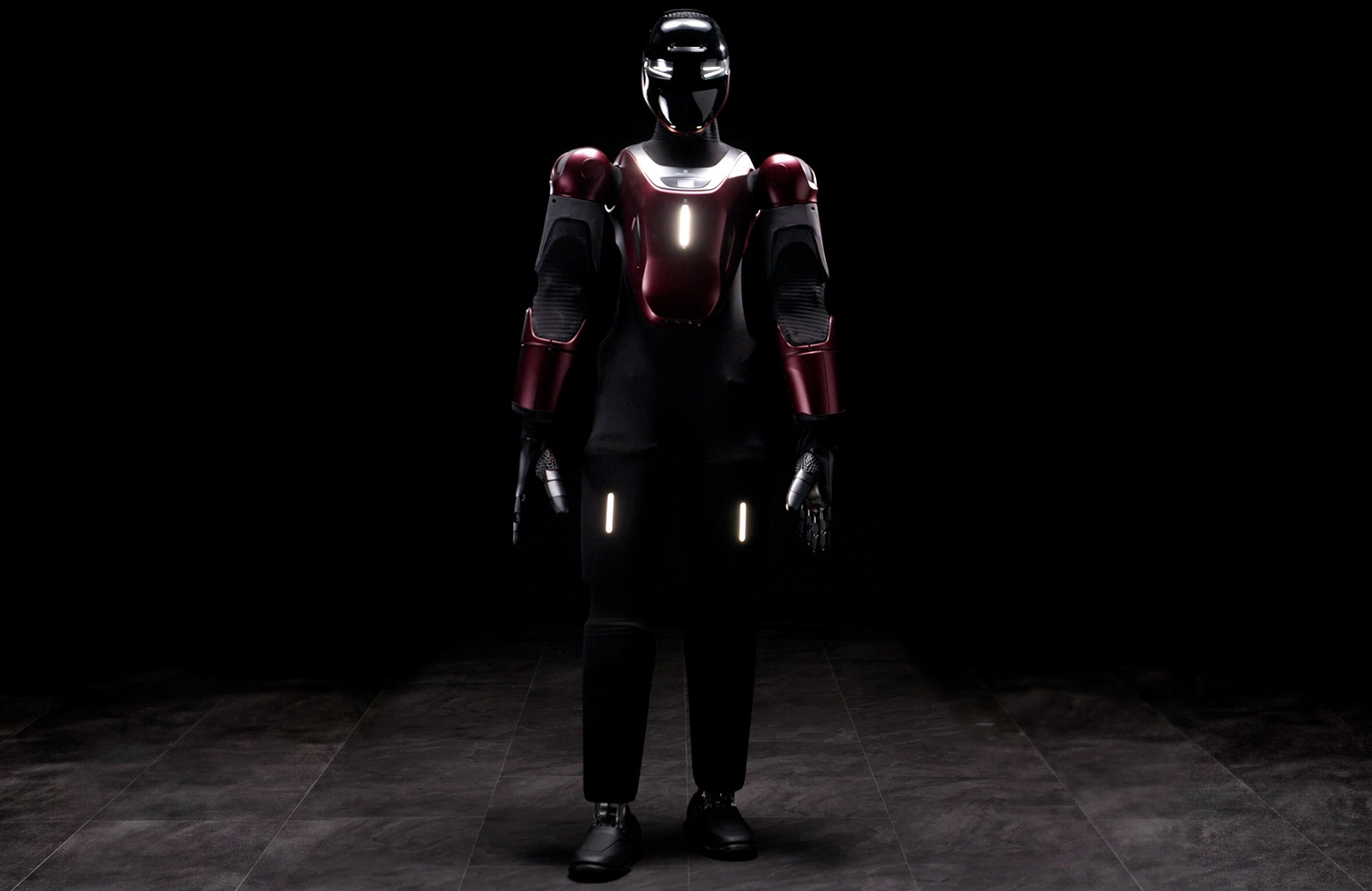
**Generative Bionics Unveils Gene.01: A Human-Aware Humanoid for Industrial Use**
Generative Bionics, a deep-tech company focused on humanoid robots for industrial applications, has introduced its latest innovation: the Gene.01 humanoid. Debuted at AMD Advancing AI 2026, the robot was developed in just six months and showcases advanced integration of full-body tactile sensing with physics-native artificial intelligence.
The AI system controlling Gene.01 is designed to treat the robot’s body, mechanics, and intelligence as a unified system. This integration enables the robot to better interpret and respond to its physical surroundings, making it well-suited for demanding industrial environments.
Unlike many one-size-fits-all humanoids, Gene.01 is presented as a scalable platform. It can be customized at the AI, design, and end-effector levels to meet specific customer needs. According to Daniele Pucci, CEO of Generative Bionics, Gene.01 represents the company’s belief that physical AI must be human-aware, physics-native, and industrial from day one.
The development timeline was notably swift. In only six months, the team moved from concept to a fully functional and sensorized humanoid platform by combining expertise in humanoid robotics, AI, biomechanics, and design. The company’s goal is to amplify human capabilities with robots that can sense, feel, and learn from the physical world, adapting to the specific requirements of each industrial customer.
**Built for Collaboration and Industry**
A key feature of Gene.01 is its emphasis on human-robot collaboration. The robot is equipped with full-body distributed tactile skin capable of detecting touch, temperature, proximity, and force. This sensor suite allows the robot to anticipate human presence and respond proactively, enhancing safety and natural interaction.
The tactile sensing enables a teaching method based on demonstration, including both motion and the required force. This approach addresses challenges that video-only learning systems cannot solve, such as how to grip an object tightly and securely.
**A Unified Physical AI Architecture**
Gene.01 is built on Generative Bionics’ proprietary physical AI architecture, which integrates the robot’s body, mechanics, and intelligence into a single system. Rather than designing hardware and control separately, the platform natively optimizes movement, sensing, and human collaboration.
The system uses digital models of both the robot and its human partner to tune hardware and motion intelligence together. Factors such as ergonomics and walking stability are considered measurable criteria in this process. The result is a robot designed for safe and efficient collaboration with people, rather than standalone performance.
The company has also focused on accessibility for developers. Gene.01’s digital twin is available through standard software channels, including PyPI, conda-forge, and the official ROS build farm. A single command via pip, conda, or ROS installs the platform into existing AI, simulation, or robotics environments, allowing developers to begin building immediately.
**Scalability and Future Applications**
Gene.01 is intended to serve as the foundation for a family of task-specific humanoid robots. For each application, Generative Bionics plans to customize the platform at three levels: refining the AI for the target task, adapting the exterior design to the operating context, and changing the end effectors, such as hands and feet, based on deployment needs.
This platform strategy is central to the company’s plans for large-scale manufacturing. By producing one core platform at volume, Generative Bionics aims to create multiple customized humanoid robot products for different industries, including logistics, manufacturing, public safety and inspection, and healthcare.
The collaboration with Fincantieri, a global leader in shipbuilding, marks the first specific industrial configuration of the platform. It involves developing a welding humanoid designed for complex shipyard environments.
**Openness and Ecosystem Development**
In addition to its industrial focus, Generative Bionics is open-sourcing Gene.01’s robot model. This move is intended to provide a foundation for physical AI developers working on industry-specific applications.
The company is also building a European physical AI ecosystem in collaboration with Synapticon, an actuation specialist based in Germany. The partnership focuses on developing a EU-protected actuation stack for the humanoid pipeline, starting with Gene.01. The collaboration includes European final assembly, calibration, safety testing, and integrated actuators tailored to the robot’s mechanical, thermal, and control requirements.
Generative Bionics draws on more than 20 years of research, development, and prototyping of humanoids from the Italian Institute of Technology (IIT). The company spun out of IIT in 2024 and holds exclusive licenses to key technologies. In late 2025, it raised €70 million ($81.2 million) to support product development, physical AI system training, and construction of its first production plant.
—
### FAQ
**What is the Gene.01 humanoid robot?**
Gene.01 is an industrial humanoid robot developed by Generative Bionics. It is designed for human-aware, physics-native operation in industrial environments. The robot features full-body tactile sensing and is built on a proprietary physical AI architecture that integrates body, mechanics, and intelligence.
**What makes Gene.01 different from other humanoids?**
Unlike one-size-fits-all humanoids, Gene.01 is a scalable platform that can be customized at the AI, design, and end-effector levels. It emphasizes human-robot collaboration through full-body tactile sensing, allowing safer and more natural interaction.
**What is physical AI in the context of Gene.01?**
Physical AI refers to an AI system that treats the robot’s body, mechanics, and intelligence as a unified system. This enables the robot to better understand and respond to physical interactions in its environment.
**What industries is Gene.01 intended for?**
Gene.01 is being developed for logistics, manufacturing, public safety and inspection, and healthcare. The first industrial application is a welding humanoid being developed with Fincantieri for shipyard operations.
**Is the Gene.01 platform open to developers?**
Yes. Generative Bionics is open-sourcing the robot model and making the digital twin accessible through standard software channels, allowing developers to build applications on top of the platform.
**How does the tactile sensing work?**
The robot’s full-body distributed tactile skin can detect touch, temperature, proximity, and force. This allows it to anticipate human presence, respond before contact, and enable teaching by demonstration, including force control.
**What is the significance of the Fincantieri collaboration?**
The partnership with Fincantieri represents the first task-specific industrial configuration of the Gene.01 platform, focusing on a welding humanoid for complex shipyard environments.
**Where can I learn more or get access to the platform?**
Developers can access Gene.01 through standard channels such as PyPI, conda-forge, and the official ROS build farm. More information is available through Generative Bionics’ official platforms and open-source releases.
—
### Conclusion
Generative Bionics’ Gene.01 humanoid represents a significant step toward industrial-grade physical AI. By unifying tactile sensing, physics-native AI, and a scalable platform approach, the robot is designed to work alongside humans in demanding industrial settings. With its open development model and focus on customization, Gene.01 provides a foundation for building a new generation of human-aware, adaptive industrial robots. As Generative Bionics advances its ecosystem and expands into new applications, Gene.01 may serve as the starting point for a broader family of task-specific humanoids.
