



In the rapidly evolving landscape of robotics, the industry is shifting from simple task automation to developing **physical AI** systems capable of perceiving, reasoning, and acting within dynamic and unpredictable real-world environments. According to a recent report from *The Robot Report*, the global robotics market is expected to grow at a compound annual rate of 19.6% between 2026 and 2036, highlighting the urgency for more sophisticated and reliable development methodologies.
A key challenge in this evolution is the **sim-to-real gap**—the discrepancy between performance in a controlled simulation and success in the messy reality of a factory floor or warehouse. While imitation learning and real-world trials have traditionally been used to bridge this gap, they come with significant drawbacks, including high costs, safety risks, and the inability to capture rare but critical failure modes.
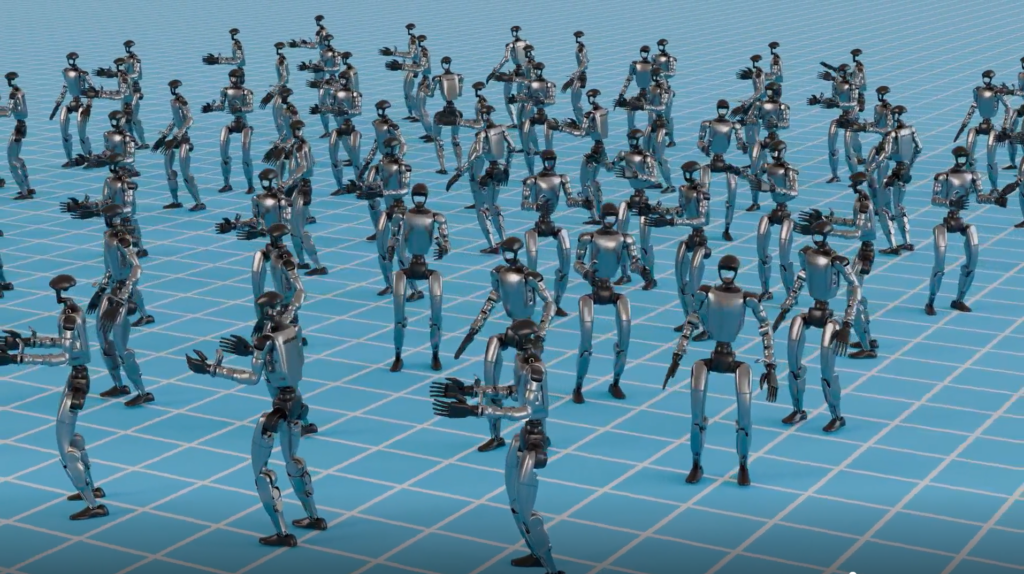
To address these issues, robotics teams are turning to **”virtual gyms”**: high-fidelity simulation environments where robots can train, fail, and recover safely. These virtual gyms combine digital twins, synthetic data, reinforcement learning, and hardware-in-the-loop testing to expose robots to a wide range of scenarios— from rare defects in warehouse logistics to complex material handling—without the risks associated with real-world testing.
The effectiveness of a virtual gym depends not on visual fidelity alone, but on **selective physical accuracy** tailored to the task at hand. For example, a mobile robot navigating a warehouse requires different simulation characteristics than a robotic arm performing defect detection or a system handling deformable materials. By integrating physics-based models, data-driven corrections, and co-simulation tools, these environments can accurately reflect the failure modes that occur in actual deployment.
Synthetic data plays a crucial role, particularly for perception-driven tasks. Real-world data is often insufficient or unrepresentative—especially for rare events or new products that exist only in CAD files. By training models with synthetic data calibrated to real-world conditions, teams can dramatically improve recognition accuracy, precision, and recall, making real-world data collection more efficient and targeted.
Furthermore, the article emphasizes that a virtual gym is not just a training tool but a **critical component of a broader deployment workflow**. This lifecycle includes assessing appropriate use cases, modeling the environment, training policies, validating performance against real systems, and continuously improving through operational feedback.
As robotics moves toward coordinated physical AI systems, the ability to test and refine behavior in a safe, virtual space before deployment becomes essential. Virtual gyms enable teams to uncover and resolve issues early, reduce commissioning time, and ensure that robots are prepared for the complexities of real-world operations long before they leave the lab.
***
**Original Source:**
“Why robotics teams need virtual gyms before deployment” by *The Robot Report*, July 2026.
[https://www.therobotreport.com/why-robotics-teams-need-virtual-gyms-before-deployment/](https://www.therobotreport.com/why-robotics-teams-need-virtual-gyms-before-deployment/)
