



Electric vehicles are packed with many essential parts—such as oil and water pumps, compressors, control units, chargers, inverters, and converters—that must perform reliably under tough conditions. These include intense heat, repeated temperature swings, and constant exposure to oils and coolants.
Sealants are vital for keeping these components durable and dependable over time.
One especially sensitive zone is where electronic systems meet mechanical assemblies. Electrical pins and busbars serve as bridges, linking internal electronics to the outside of a component like an oil pump or compressor. Sealants shield these connections from moisture and chemicals. They must remain effective even when subjected to extreme temperatures. Even tiny cracks or separations in the seal can cause corrosion or dangerous short circuits.
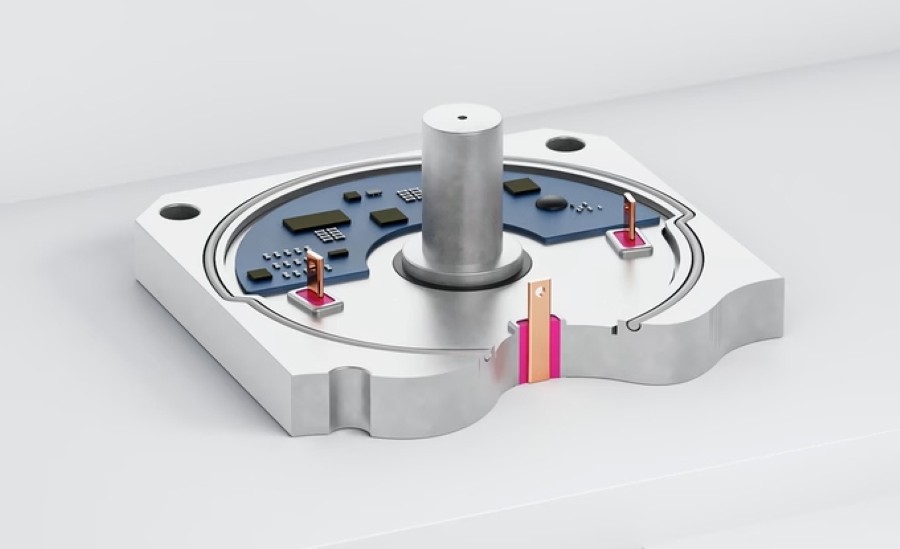
Sealing the pins on an oil pump is essential to safeguard its internal electronics. In this diagram, the sealant is highlighted in magenta to show its placement. Source: DELO Industrial Adhesives
Because of these challenges, sealant requirements have grown stricter. Car manufacturers now expect higher temperature resistance, longer testing periods, and faster curing times.
Understanding Sealants
Sealants are used on pins, contacts, and busbars. Once cured, they create a protective barrier between the component surfaces and the surrounding environment. They frequently come into direct contact with oils, chemical additives, and coolants, and must withstand temperatures from –40°C to 160°C. Additionally, sealants help reinforce the mechanical stability of pins and their attachment to circuit boards.
To work effectively, sealants must have low viscosity so they can quickly and thoroughly coat intricate shapes. They also need to bond well with a range of materials, including copper, silver, tin, nickel, polybutylene terephthalate, polyamide, and polycarbonate.
Just as crucial is their ability to stay permanently elastic—even at very high or very low temperatures—to absorb thermal expansion and pressure-induced deformation. These thermomechanical properties must remain consistent throughout the vehicle’s lifetime. That means the sealant should show minimal swelling and little mass loss at high temperatures, despite having a loosely cross-linked, flexible structure.
Need fast answers about assembly or manufacturing?
Try Ask ASM—our new intelligent AI search assistant.
Ask ASM
Lastly, the curing process must be both rapid and energy-efficient.
The newest polymer-based sealant formulations meet all these demanding criteria.
One of the latest innovations is Dualbond GE4926. Compared to its predecessor, this sealant shows an 85% reduction in swelling after prolonged exposure to automatic transmission fluid at 160°C. Tests involving various oils and high-temperature storage demonstrate that it provides more than double the adhesion strength on common substrates compared to earlier versions.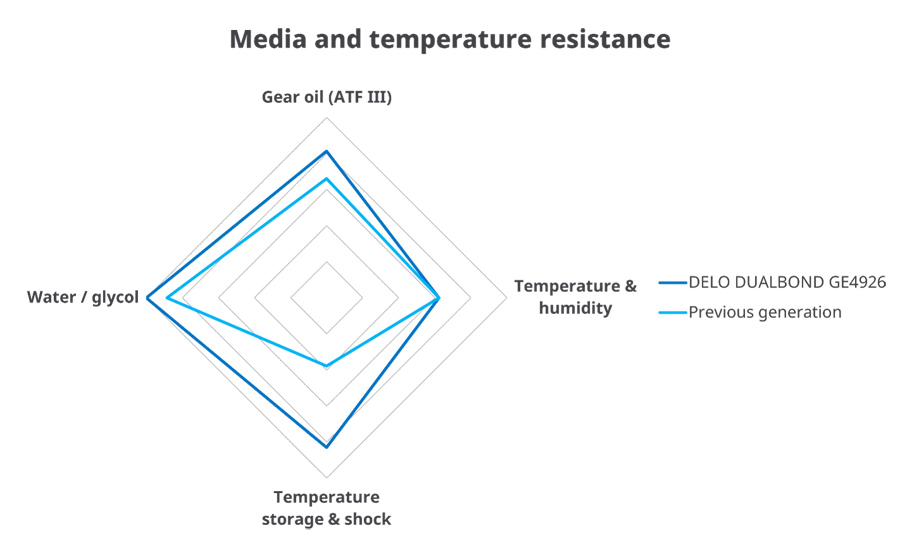
This radar chart illustrates how Delo Dualbond GE4926 outperforms previous formulations—especially under thermal stress. Source: DELO Industrial Adhesives
Elongation at break—a key measure of long-term elasticity—has also been improved: degradation after extended exposure to harsh environments is now about 20% lower. The maximum continuous operating temperature has been raised to 160°C.
The Role of Design and Geometry
Sealing success depends not only on the material itself but also on the shape of the pins and cavities. Features like undercuts, uneven gaps, or inadequate bonding surfaces can greatly reduce sealing performance. Achieving a reliable seal requires careful coordination among material choice, dispensing method, flow behavior, and curing process. This principle holds true for busbars as well, given their flat, sometimes multi-layered conductor designs.
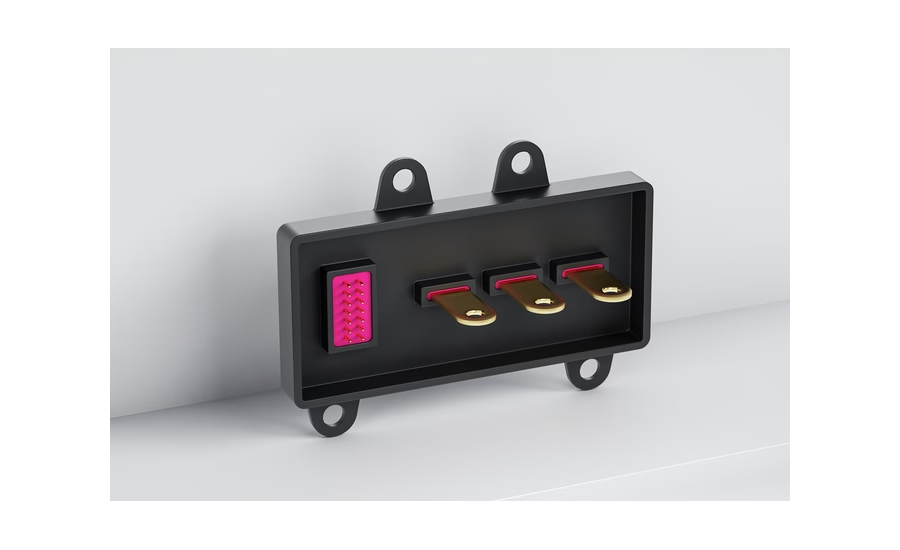
For busbars, it’s critical that the sealant penetrates the tiniest gaps and fully covers the part. In this image, the sealant is shown in magenta to highlight its location. Source: DELO Industrial Adhesives
Optimized flow characteristics and proper processing time allow the sealant to reach every part of the assembly. Advanced dispensing systems and real-time process monitoring—such as inline fluorescence inspection—ensure consistent, high-quality results. For busbars especially, complete coverage is non-negotiable. The same applies to power electronics sealing, where pins and busbars often feature complex shapes with tight gaps and undercuts.
Manufacturers can choose from several curing methods, depending on the application and production needs. Heat curing is traditionally used, particularly in motor compartments,
This approach guarantees the most dependable results.
That said, UV-curing sealants are now an option as well. UV curing is quicker and consumes less energy than heat curing. It also requires less floor space.
One widely adopted strategy is dual curing, where the sealant is initially set using light. It then finishes curing in areas that light cannot reach, thanks to ambient moisture. Once light-fixed, the assembly can go straight on to further processing and leak testing. This cuts down on cycle times and makes it possible to handle parts that are sensitive to heat without damage.
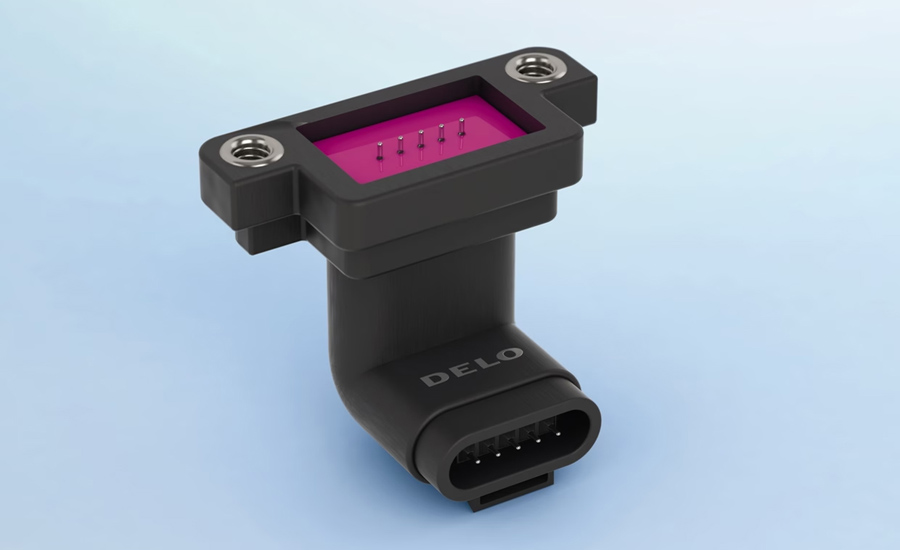
Dualbond GE is a dual-curing sealant (shown here in pink) that provides a dependable seal for connectors featuring passivated silver pins. Connectors like these are commonly found in automotive control units. Source: DELO Industrial Adhesives
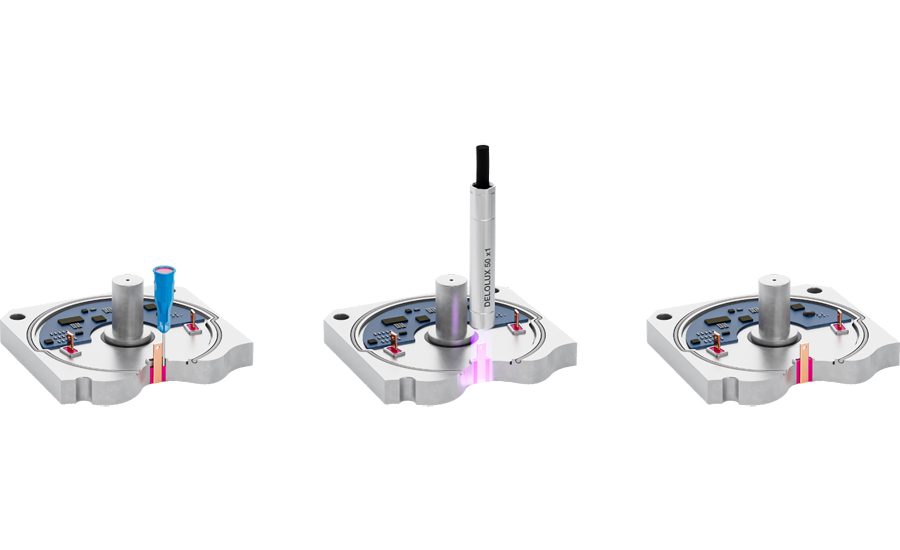
Another technique is known as “activation on the flow.” In this process, the UV-curing adhesive is illuminated with light right at the point of dispensing. This triggers a working window of roughly 5 to 10 minutes, during which the sealant remains easy to flow and spreads well enough to fill the entire cavity. After that window, the sealant hardens to its full strength with no additional steps needed. Further processing can begin right away if the exposed sealant receives an extra dose of light after assembly. This delivers instant green strength and keeps the sealant from leaking out of the joint.
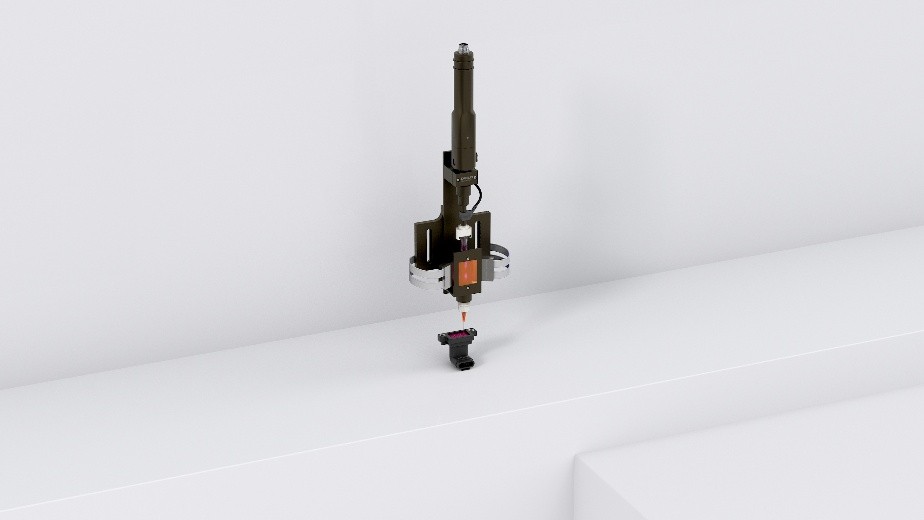
With “activation on the flow” curing, the adhesive is bathed in UV light as it is dispensed. This triggers a 5- to 10-minute working window during which the sealant maintains good flowability and enough wetting action to fill an entire cavity. The sealant then reaches its full cure without any further intervention. Source: DELO Industrial Adhesives
Outlook and Development
Modern sealants hold up well against widely used oils and coolants, and they maintain stable mechanical properties even at higher temperatures. Still, new and more aggressive fluids are introduced every year, and adhesive manufacturers need to keep pace.
In particular, evolving automotive oil formulations are driving the creation of new sealant recipes. Depending on the oil’s makeup, the amount of diffusion—and therefore sealant swelling—can shift. In many cases, only slight tweaks to the sealant’s formulation are needed to address the issue.
