



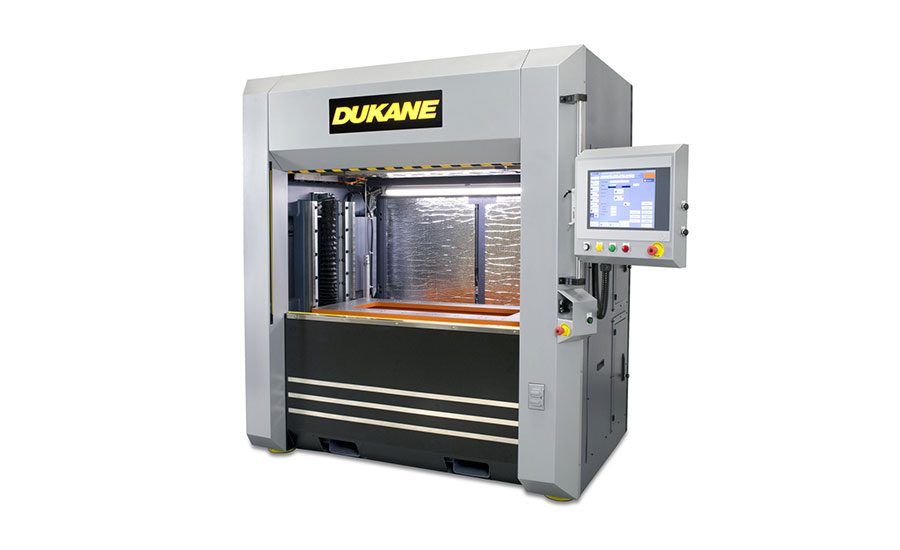
Manufacturers are constantly looking for joining methods that offer more consistent processes, reduced operating expenses, and better overall production efficiency. The latest vibration and ultrasonic welding systems are meeting those demands through improvements in servo control, predictive maintenance, real-time process monitoring, and energy efficiency. Whether it’s plastic welding or clean-room production, these technologies are enabling manufacturers to achieve higher weld quality while cutting downtime and operational costs.
Dukane’s VW6000 vibration welder relies on servo-driven motion to deliver highly accurate control over the welding process. The system integrates four proprietary technologies: Q-Factor, Melt-Match, low-amplitude preheat, and ultra-high frequency welding.
Q-Factor functions as a predictive maintenance solution that continuously tracks the condition of critical vibration head and tooling components. This allows manufacturers to detect potential failures before they happen, helping to minimize unplanned downtime and lower maintenance expenses.
Melt-Match technology aligns servo motion with the rate at which the plastic melts, maximizing weld penetration while reducing flash and enhancing weld strength. Low-amplitude preheat reduces the generation of particulates during the welding process, and ultra-high frequency welding operates between 260 and 400 hertz—well above conventional industry frequencies—to minimize material displacement, flash, and particulate matter.
Dukane Corp.
www.dukane.com
Image courtesy of BSE Inc.
Fume Extraction System Built for High-Volume Operations
The Purex 5000i line of three-phase fume extraction systems is engineered to handle the large volumes of hazardous fumes produced during manufacturing processes.
Capable of filtering up to 2,942 cubic feet of air per minute, the system uses a three-stage filtration setup that includes HEPA and carbon filters. Automatic electronic flow control keeps extraction rates steady as filters accumulate contaminants, while built-in gas and particle sensors warn operators when hazardous conditions arise.
Looking for quick answers on assembly and manufacturing topics?
Try Ask ASM, our new smart AI search tool.
Ask ASM
Airflow can be adjusted to suit specific needs, and noise levels stay below 60 dBA during operation. A heavy-duty variant is also offered for environments with high particulate concentrations.
See this company at The Assembly Show, Oct. 27–29 in Rosemont, IL.
BSE Inc.
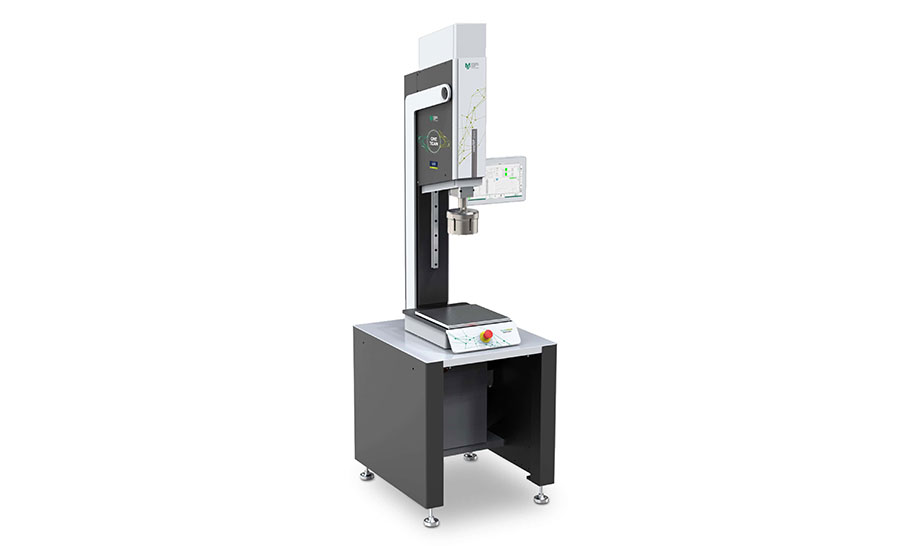
Image courtesy of MS Ultrasonic Technology LLC
Servoelectric Ultrasonic Welders Cut Cycle Times
MS Ultrasonic Technology’s MS sonxTOP series pairs servoelectric motion control with advanced process monitoring to deliver consistent weld quality and highly reliable production processes.
At the heart of the system is the MS preciSer servo drive, which precisely manages force, displacement, and speed. According to the company, this technology can shorten cycle times by as much as 25 percent compared to pneumatic ultrasonic systems, while pushing good-part rates up to 99.6 percent.
The fully electric drive removes the need for compressed air, cutting operating costs and energy use while reducing carbon emissions by as much as 80 percent. The machines are rated for clean-room use up to ISO Class 5 and come equipped with Industry 4.0 connectivity, GMP-compliant traceability, and multilingual touch-screen interfaces.
The series is offered in inline, column, and tabletop configurations to support both automated and standalone applications.
See this company at The Assembly Show, Oct. 27–29 in Rosemont, IL.
MS Ultrasonic Technology LLC
www.ms-ultrasonic.com
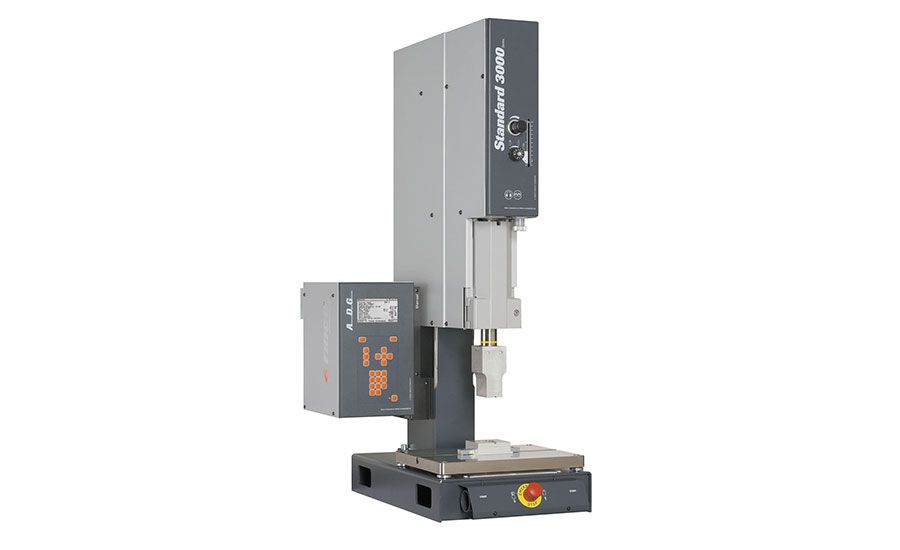
Image courtesy of Rinco Ultrasonics
Ultrasonic Welding Machine Designed for Clean-Room Production
Rinco Ultrasonics’ Standard 3000 ultrasonic welding machine is built for welding, cutting, and punching thermoplastics, textiles, films, and other materials. The pneumatic-drive system delivers travel measurement accuracy of 0.01 millimeter and supports multiple welding modes, including time, energy, travel, and combined control modes.
The machine can store up to 32 parameter sets to ensure consistent, repeatable processes and includes multi-level user administration to restrict access to welding settings.
A version with a stainless-steel housing is certified to ISO Class 6 standards, making it suitable for medical manufacturing environments. Additional features include adjustable amplitude control, built-in production and reject counters, comprehensive process monitoring, and exportable weld data.
Rinco Ultrasonics
www.rincoultrasonics.com
