



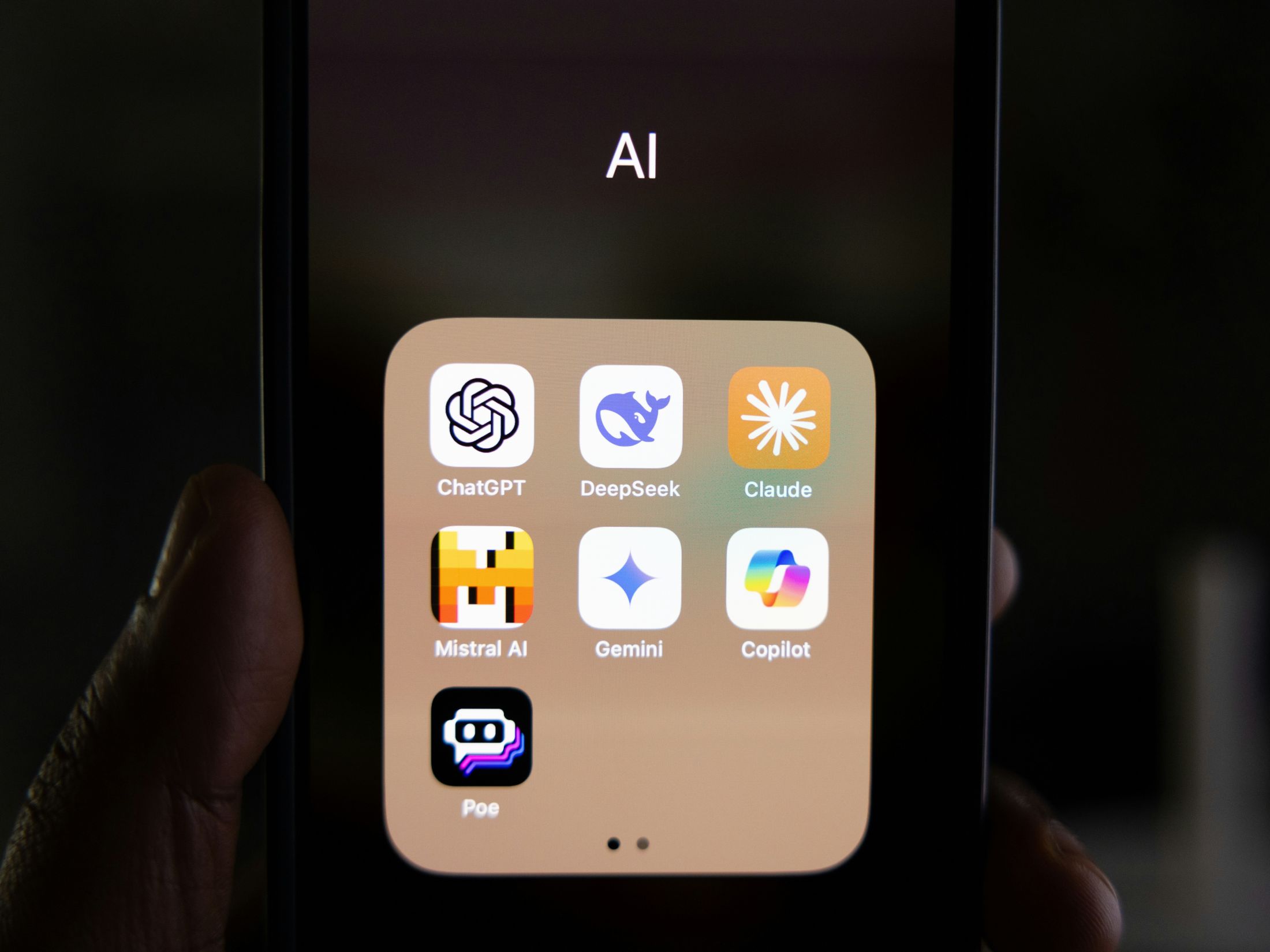
Anthropic’s decision to file for an IPO signals a major shift for generative AI: it is evolving from an experimental, research-driven phase into a reliable, everyday tool for businesses.
While operating privately, AI developers have focused mainly on building faster and maximizing computing power, often ignoring predictable billing. Taking a leading AI company public forces its engineering priorities to align with standard business purchasing needs, bringing in regular release dates and clear pricing structures that corporate leaders need for long-term planning.
William Samengo-Turner, Technology Sector Lead at A&O Shearman, commented: “If Anthropic goes through with an IPO, the biggest question isn’t whether the stock market is prepared for AI—it’s whether AI is prepared for the demands of being a public company.”
Businesses are at the heart of this transition. Companies that rely on Claude for their internal operations can now anticipate how public market rules will standardize Anthropic’s pricing tiers, API usage limits, and corporate contracts in the years ahead.
Establishing a public valuation framework
Investors wanting a piece of the generative AI boom have mostly put their money into hardware and infrastructure companies. This indirect strategy let them fund the massive computer clusters needed for AI without worrying about issues like AI making things up or legal fights over copyrighted training data.
Samengo-Turner points out that public investors have largely stayed on the sidelines of the core technology: “People have been able to invest in the ‘picks and shovels’ of the AI rush—buying into the infrastructure, chip, and software companies that support it. Anthropic would give them one of the very first chances to invest directly in a company that actually builds top-tier AI models at a large scale.”
Figuring out how to value this type of company is incredibly tough. Anthropic and its rivals have to spend massive amounts of money constantly to train newer versions of their models. Shifting these huge financial demands into a public company setup creates significant operational strain for both the AI provider and its customers.
Once public, Anthropic will have to juggle the need to purchase huge numbers of GPUs with the pressure to report strong quarterly profits. This means they’ll have to pass those computing costs on to customers in a consistent, predictable way.
Karthik Hariharan, Senior Engineering Manager at DoorDash, noted: “Both OpenAI and Anthropic are in a rush to go public before the other and keep pace with SpaceX and xAI. The catch is that whoever goes public first will likely set the baseline price range that the market will follow for at least the next year to a year and a half.”
If investors push for rapidly growing profit margins right after the IPO, businesses should expect stricter licensing rules and the possible phasing out of older, less profitable AI models. This will force companies to regularly update their API connections just to keep access to the most affordable options.
The B2B dependency
The financial success of these public offerings depends heavily on business customers because everyday consumers simply don’t provide enough revenue to cover the massive computing bills.
Suvrankar Datta, Principal Investigator at CRASH Lab, explained: “There are eight billion people in the world… but out of those, only about 100 million can afford Claude at its current price. Even if all those people pay $20 a month, the company still couldn’t survive without going public.”
A $20 monthly subscription can’t pay for billion-dollar data centers. Because of this, AI providers have to pull the necessary revenue from corporate budgets, making their tools a daily fixture in business tasks like hiring, legal reviews, and customer service.
Nate Elliott, AI Analyst at Emarketer, said: “We’re about to see whether the market views AI as a product for everyday people or a tool for businesses. Claude has a strong base of corporate users, but it just doesn’t compete well as an AI platform for casual consumers.”
Emarketer predicts that by 2026, only 5.4 percent of internet users in the US will use Claude, far trailing the 36.6 percent expected to use ChatGPT and the 27.4 percent expected to use Gemini.
“The silver lining for Anthropic is that over 60 percent of US AI users say they use these tools for their jobs, and we think that share will only grow,” Elliott added.
To show investors a steady increase in revenue, Anthropic will need dependable, high-volume corporate contracts. Business leaders can use this reliance to their advantage, negotiating long-term price guarantees and better data control policies now, before public market pressures force Anthropic to chase short-term profits over expanding its customer base.
Margin pressures and market consolidation
The upcoming public offering pushes the entire generative AI industry to become more financially disciplined. Instead of seeing this as a bad thing, businesses can view it as the end of unpredictable startup habits and the start of reliable, professional vendor relationships.
Smitarani Tripathy, Social Media Analyst at GlobalData, said: “Conversations show growing worries about the financial reality of the AI industry, with many experts doubting whether the huge sums spent on developing models and computing infrastructure will actually result in lasting profits.”
Tripathy adds that this filing kicks off an “AI capital markets race,” where AI companies now have to prove they can grow their revenue, run efficiently, and maintain a solid business model—not just innovate.
If a company goes public but can’t maintain steady profits, it might abruptly change its service agreements or shut down important API features to save money.
“Going forward, a company’s worth will depend heavily on business unit profits, profit margins, and keeping customers,” Tripathy noted. “This will force a major merging of the industry, wiping out smaller companies that can’t grow their commercial revenue or operate as efficiently as software companies do.”
Companies that build tools around smaller AI models should be prepared for those model providers to be bought out by bigger companies or go out of business entirely. Building flexible systems that allow easy swapping of core AI models is a crucial way to protect against a provider going bankrupt or being acquired.
Additionally, businesses should expect stricter limits on how much they can use the service. When a company is private, letting users make heavy demands on computing power is a worthwhile loss used to gain market share. Once public, allowing unlimited access ruins profit margins. Companies will likely see new, complex pricing tiers that charge extra for unpredictable usage while offering discounts for steady, bulk-processed data tasks.
The test for high-capital innovation
Anthropic’s journey to the public exchange serves as
The IPO is also seen as a key signal of how institutional investors view capital-heavy technology ventures.
Samengo-Turner elaborates on what this means for startups backed by venture capital: “This moment could serve as a model for public markets when appraising a rising wave of tech firms characterised by massive funding demands, top-tier scientists, and bold strategic goals.”
He suggests that such a high-profile flotation might “prompt a surge of venture-funded tech companies to re-enter public markets, ending a long chapter where many of the industry’s most exciting stories stayed behind closed doors.”
Should Anthropic’s public listing establish a benchmark, numerous AI startups are expected to follow suit, pushing the sector toward greater financial discipline and profitability focus.
“In the end, stakeholders will be looking past Anthropic alone,” Samengo-Turner adds. “They’re gauging whether public markets are truly ready to back tomorrow’s tech leaders.”
See also: Anthropic launches Claude Opus 4.8
Curious about insights into AI and big data straight from experts? Join the AI & Big Data Expo, held in Amsterdam, California, and London. This major event, organised by TechEx, runs alongside premier tech gatherings such as Cyber Security & Cloud Expo. Visit here for details.
AI News is brought to you by TechForge Media. Find more enterprise tech events and webinars here.
