



Terry Gerton Here’s a fun topic to kick off our conversation this morning: disasters. With hurricane season nearly upon us, I imagine you’re already gearing up to collaborate with FEMA on disaster relief efforts. Let’s dive into how contractors actually end up supporting FEMA when a disaster strikes.
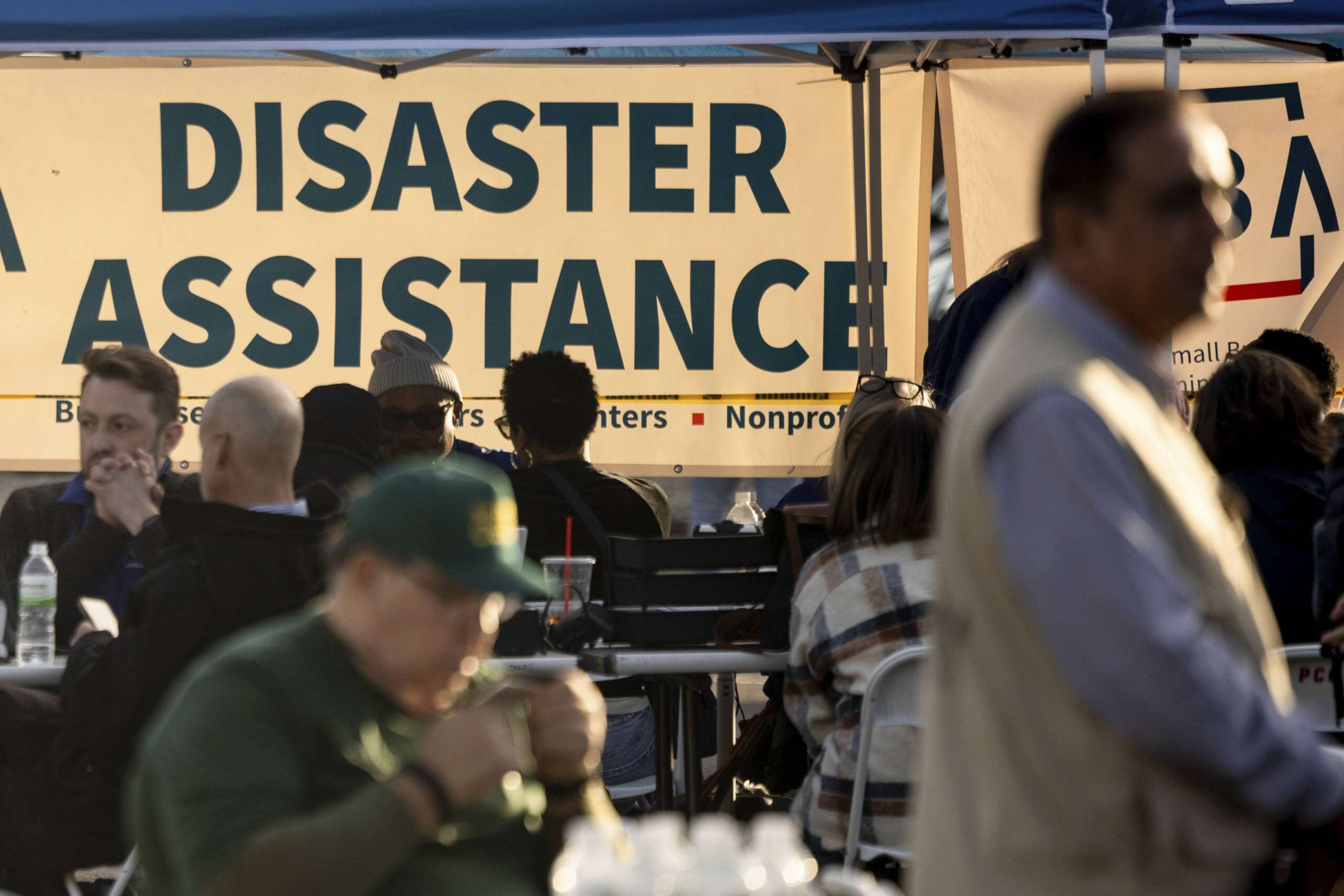
Stephanie Kostro After all the relentless rain we’ve been dealing with here in the National Capital Region, Terry, it really hits home that hurricane season is right around the corner — and honestly, we’re already in wildfire season too. We’ve seen plenty of wildfires recently, so between the torrential downpours and the fires, there’s no shortage of material when it comes to emergency management and natural disasters. So let’s break down what FEMA has been up to. FEMA’s annual budget typically runs about $30 billion — sometimes even more. Of that, roughly $1.5 billion goes toward contracts. That makes it worth discussing what contractors are actually doing to support FEMA and the broader Department of Homeland Security mission in this space. When you look at that $1.5 to $2 billion spent on contracts each year, it covers the kinds of things you’d expect contractors to handle. Housing inspections, for example — if your home is damaged in a disaster, a contractor comes in to assess whether you qualify for federal assistance. So they’re working directly with homeowners and others. On the more traditional contractor side, it involves logistics and commodities: shipping emergency supplies, setting up temporary housing, and clearing debris. Whether you’re dealing with wildfires or hurricanes — the two extremes of the disaster spectrum — contractors are absolutely essential in tackling the devastation that natural disasters bring.
Terry Gerton The new FEMA Reform Council report has been released. Many of its provisions would need to be passed into law before they could actually be implemented. But from PSC’s standpoint, what stood out to you in this report that could help bring contractors more fully into FEMA support operations?
Stephanie Kostro I’m glad you brought up the FEMA Review Council. It was created through an executive order issued over a year ago, and they’ve been hard at work since Executive Order 14180 was released. They’ve taken a close look at FEMA’s core mission, how it’s funded, and what role states should play in disaster response. A few of the recommendations that caught my eye when they were released: first, they propose shifting more of the financial burden to the states by lowering the federal cost share from 75% down to 50%, meaning states would need to contribute more funding. From a contractor’s perspective, that also means diversifying their client base. If they’ve been working with federal agencies 75% of the time, that drops to 50%, so they’ll need to engage more with local governments, states, territories, and so on. Another key recommendation from the review council was overhauling the public assistance program through something called the Reformed and Partnered Initiative for Disasters — or RAPID. I always appreciate a pronounceable acronym. The idea is to trigger direct block grants once certain preset impact thresholds are reached. Once those thresholds are hit, block grants kick in. And as the name suggests, this should speed things up considerably — accelerating the flow of funds to grant recipients and, frankly, to contractors as well. Now, these are all things we’re keeping an eye on, but you’re absolutely right that this isn’t just an executive branch matter. Legislation needs to be enacted, and there are bills currently under consideration in both the House and the Senate.
Terry Gerton Stephanie, FEMA was one of the agencies hit especially hard by the personnel turnover caused by last year’s workforce reductions and the DHS shutdowns. What is PSC currently doing with FEMA to ensure that contractor support kicks in smoothly the moment a disaster hits?
Stephanie Kostro That’s a great question, Terry. FEMA took a serious hit from both the deferred resignation program — which was all over the news this time last year — and the voluntary early retirement program. A significant number of FEMA staff left government service, including contracting officers and people who had been managing these programs. So we’re working closely with FEMA to get a clearer picture of how they plan to put the review council’s recommendations into action, what legislative changes are needed, and how the differing bills in the House and Senate need to come together and get signed by the president. Looking ahead, we’re also focused on how FEMA will work with the states — since states would be taking on a bigger role if these reforms go through — as well as with contractors and grant recipients. There’s a lot happening in this area. Housing is a particular focus for FEMA right now, and we’re collaborating with them closely on that — not just temporary housing like putting people up in hotels, but also other types of structures, camps, and more. We’re also looking at who will qualify for FEMA assistance going forward and what that eligibility might look like. There are a lot of changes in the works, and we’re eager to work with both FEMA and the states on how all of this will actually be carried out.
Terry Gerton Stephanie Kostro is president of the Professional Services Council. Stephanie, let’s shift gears to a different kind of disaster — public health. I know you just brought federal and industry leaders together last week at PSC’s Fed Health Conference. There’s been a lot of public health news lately. What did contractors tell you they’re most worried about?
Stephanie Kostro Terry, our federal health conference — the 10th one we’ve held — took place last Thursday, and it was a fantastic event. We had a number of government agency officials come speak about their current work. The highlight for me was our closing keynote from Dr. Alfred Johnson at the National Institutes of Health. He couldn’t spend a lot of time discussing Ebola, but it was definitely a topic buzzing around the edges of the conference. What really struck me was the conversation around what we’re doing about Ebola and what role contractors can play in fighting it. As a reminder for our listeners, Ebola isn’t new. We see periodic waves of outbreaks, mostly in Africa — places like the Democratic Republic of Congo, which is the source of the current outbreak. So when we break down how we handle something like this with infectious diseases, contractors are a big part of the equation. They supply medical supplies — we just covered that in the FEMA context, right? But we’re talking about supply chain and logistics, personal protective equipment, chlorine, lab consumables, and more, all delivered directly into what we call hot zones — areas like the DRC, which is currently considered a hot zone. They have fleets standing by to deliver these materials. They also build facilities. Private companies are contracted to
To establish Ebola treatment facilities and triage screening zones, field laboratories, and essential life support services. And once more, ground-level assistance for first responders, covering site preparation, sanitation—it sounds really exciting when I discuss it—managing portable restrooms, you know, the essentials in these high-risk areas. Additionally, contractors manage organizational coordination. Companies like Kamonix and RTI, Aft Global often hired by international health organizations to organize extensive humanitarian distribution networks. There is a significant amount happening. And as we plan the U.S. response, it might involve flights arriving directly in Dulles from those affected zones and implementing quarantine measures; those are topics we’ll continue to discuss.
Terry Gerton: Stephanie, similar to the disruptions in domestic disaster response we discussed with FEMA, the federal health system experienced considerable upheaval over the last year to 18 months. What do contractors currently require from this system, which is itself undergoing change?
Stephanie Kostro: That’s an excellent question. Regarding the federal enterprise in the United States, you might ask who is actually in command when it’s an overseas outbreak like this. It falls under the Centers for Disease Control and Prevention, which is a vital operating division within the Department of Health and Human Services. The Department of Homeland Security also plays a part in this coordination. CDC collaborates with international partners and health ministries, conducting activities such as disease monitoring, contact tracing, which should sound very familiar to those who lived through COVID, right? Contact tracing, collecting lab samples, preventing infections, and screening at local borders. DHS also supports the back end to ensure we have the necessary infrastructure to activate supply chain and logistics so we can respond quickly when required.
Copyright
© 2026 Federal News Network. All rights reserved. This website is not intended for users located within the European Economic Area.
