



Stay updated with ZDNET: Mark us as a preferred news source in Google.
TV tech evolves rapidly, making it hard to pick the right model. The process can be simpler when focusing on key details.
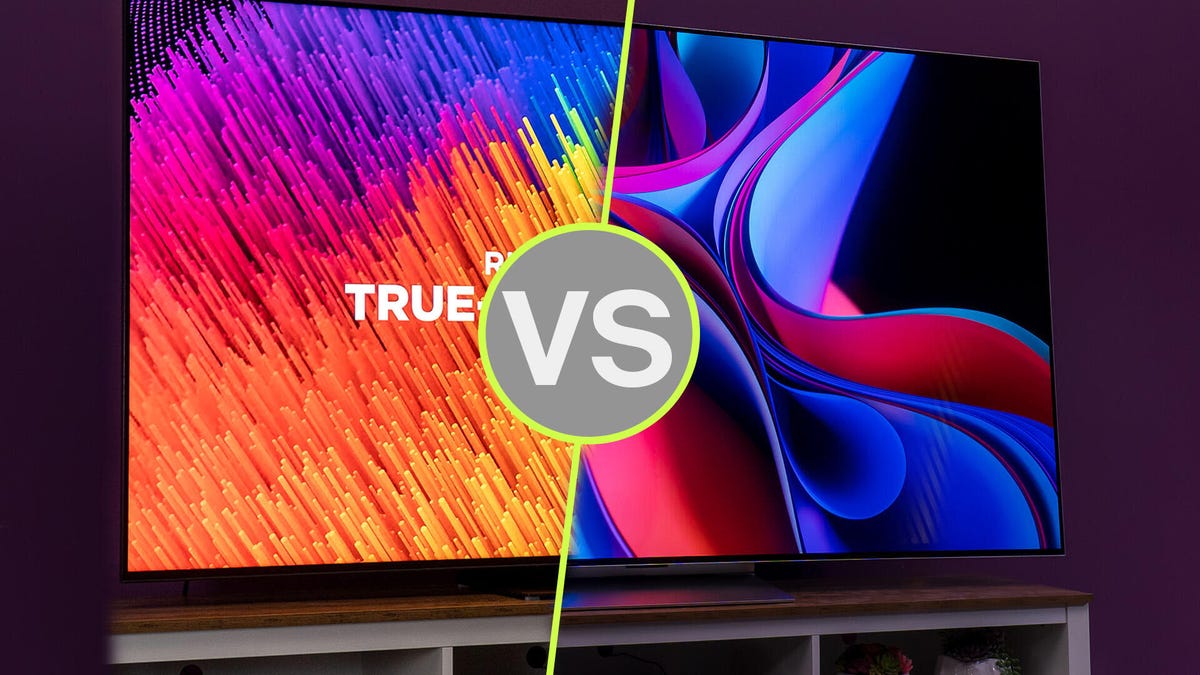
Currently, two leading display types stand out: Mini LED and OLED. These technologies function differently, each with distinct advantages and drawbacks.
Also: Top-rated OLED televisions
In an OLED (organic light-emitting diode) television, every pixel emits its own light when powered. Colors are produced through light passing through colored filters. Pixels not receiving power remain completely off, resulting in perfect black tones.
Mini LED (sometimes labeled QLED or QNED by various brands) relies on an LCD screen with a backlight. Pixels are formed using red, green, and blue filters.
The “Mini” descriptor indicates the use of numerous tiny backlights rather than one large source. Rather than pixel-precise shutoff like OLED, specific zones turn dark to produce black areas.
Key Specifications
Mini LED | OLED | |
Light method | Multiple LED backlights | Self-illuminating pixels |
Contrast ratio | Strong (zone-controlled dimming) | Unlimited (per-pixel adjustment) |
Black performance | Deep blacks with some halo effect | Pure black |
Maximum brightness | Extremely bright (exceeding 2000 nits) | Moderate brightness (800-1200 nits typically) |
Color range | Excellent | Superior |
Response speed | Quick – 1ms to 3ms range | Ultra-fast – 0.03ms to 0.1ms range |
Image retention | No risk | Potential concern |
Consider a Mini LED TV when…
1. Budget or size matters most
Pricing varies by brand and screen size, but Mini LED displays generally cost less than equivalent OLEDs.
For instance, TCL’s current offerings show last year’s 65-inch QM8K available at $1,499 (occasionally dropping to $998), while comparable 65-inch OLEDs from Sony or LG approach $3,000. Larger sizes see even steeper price increases.
Those seeking affordability and screen size will find Mini LED preferable. Picture quality isn’t identical, but you’ll still enjoy excellent visuals with quality sound for streaming movies, live sports, and gaming.
2. Bright display is essential
Mini LED TVs produce more vivid images than OLED models due to their panel design. Technology improvements have reduced this difference, but Mini LED maintains brighter output.
“LCD screens generate 3-4 times OLED brightness when showing full-screen white content, preserving wider color range in bright scenes while sustaining excellent black-level contrast,” explains Wong.
Also: TCL QM8 evaluation
The Hisense U8QG, another outstanding Mini LED display, reaches 5,000 nits brightness with 5,600 dimming zones. This suits rooms with abundant sunlight or harsh overhead lighting that might create screen glare.
3. Avoiding burn-in worries
Television companies suggest image retention appearing as faint ghost images when new content displays is uncommon. However, it does occur occasionally—Sony, LG, Google, and others provide prevention tips.
Reddit forums and support pages feature burn-in complaints. This typically affects users gaming or watching identical channels extensively, but it’s possible.
Mini LED technology virtually eliminates this concern. OLED burn-in prevention methods exist, but choosing Mini LED completely removes this risk.
Choose an OLED TV when…
1. Premium visuals are priority
For uncompromised image clarity, OLED delivers superior results. Independent pixel-level lighting produces sharper pictures, enhanced contrast, and perfect blacks.
Mini LED offers greater brightness, but excessive brightness sometimes causes washed-out imagery. OLED provides wider optimal viewing angles than Mini LED, benefiting off-center seating arrangements.
Also: LG G6 compared to Samsung S95H
Samsung, LG, and Sony continuously enhance OLED brightness through multi-layer panels and advanced processors, yet Mini LED still produces significantly lower brightness levels.
2. Gaming performance matters
Serious gamers understand millisecond differences. Between these technologies, OLED responds faster, changing pixel colors nearly instantly. While Mini LED achieves 1ms response times, some OLEDs respond in just 0.1ms.
OLED displays typically include variable refresh rate support including AMD FreeSync and Nvidia G-Sync, minimizing screen tearing and stuttering.
These TVs pioneered Dolby Vision Gaming at 4K/120Hz, creating smoother gameplay. Casual gamers will find both options adequate, but competitive players should select OLED.
