



The Trump administration is setting governmentwide limits on what number of federal workers can obtain high marks for his or her annual efficiency evaluations.
However the chance of a federal worker receiving a bonus primarily based on their most up-to-date assessment varies significantly agency-by-agency.
In February, the Workplace of Personnel Administration outlined plans to take away a present ban on a “forced distribution” of federal worker efficiency evaluations. This plan would restrict what number of workers will be ranked as excessive performers of their annual critiques.
Federal workers at a number of companies are within the technique of receiving monetary awards, primarily based on final yr’s evaluations, earlier than OPM’s modifications went into impact.
A Federal Information Community assessment of coverage modifications at a number of companies reveals management has appreciable discretion in how they select to acknowledge top-performing workers.
Whereas some companies are limiting what number of workers obtain a bump of their salaries, others are broadening the pool of workers who’re eligible to obtain a onetime bonus.
HHS caps step-increase awards
The Division of Well being and Human Providers is limiting the variety of top-performing workers who can transfer up the Basic Schedule pay scale for reaching high marks on their newest analysis.
In response to inside emails obtained by Federal Information Community, solely 3% of workers eligible to obtain a high quality step enhance (QSI) will really get one.
Workers who obtain a QSI are given a “within-grade increase,” and transfer a step up on the Basic Providers pay scale used for many civilian federal workers.
Companies award fewer QSIs than onetime money or time-off awards as a result of the staff who obtain them are given a bump in wage.
To qualify for a QSI, workers should obtain the best ranking of report out there.
On the CDC’s Nationwide Heart for Persistent Illness Prevention and Well being Promotion, an workplace that tracks power circumstances like most cancers and diabetes, 167 workers out of a complete workforce of greater than 1,000 had been eligible. About half of the middle’s QSI-eligible workers requested to obtain one.
Nonetheless, the middle was restricted to awarding QSIs to 4 workers this yr. The middle’s management relied on a “computer-generated, randomized selection process” to select the 4 QSI recipients from these eligible to obtain them.
“We recognize that many highly deserving employees elected this award option, and we sincerely wish it were possible to honor every preference,” the middle advised workers in an e mail obtained by Federal Information Community. “We understand that this outcome may be disappointing, and we want to emphasize that selection is not a reflection of your work or merit. Every employee who elected a QSI has demonstrated performance worthy of recognition.”
All different workers who elected to obtain a QSI, however weren’t chosen, will obtain their secondary award election. As an alternative of a QSI, workers may also request a onetime money cost, a time-off award or a mixture of each.
One CDC worker advised Federal Information Community that the percentages of getting a QSI had been like “winning the lottery.”
“For me, I think the future as a CDC employee is so uncertain that cash feels like a smarter option,” the CDC worker stated. “Previously, it was a no-brainer to take the QSI.”
Seth Kroop, deputy director for administration, operations, communications and coverage at CDC’s Nationwide Heart for Rising and Zoonotic Infectious Illnesses (NCEZID), advised workers in a latest all-hands assembly that there was a “pretty large difference” between the variety of workers eligible to obtain a QSI, and the variety of workers who acquired one.
“The bottom line was, there will be far fewer QSI slots than eligible employees across the agency. This was an HHS decision and HHS policy that they shared with us,” Kroop stated.
HHS didn’t instantly reply to a request for remark.
SSA digs deeper into its finances to present extra bonuses
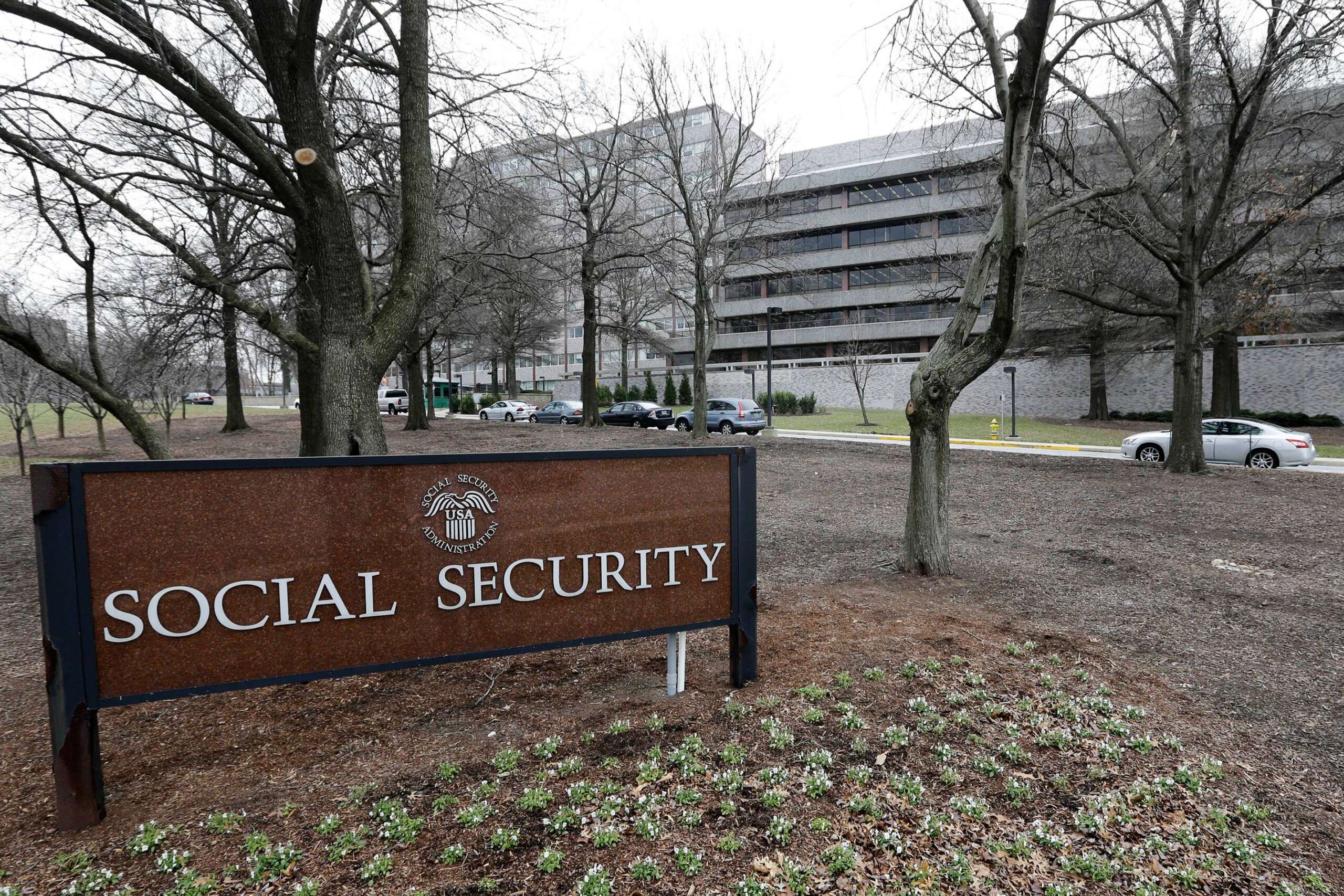
In the meantime, the Social Safety Administration is setting apart further funds this yr to make sure a larger-than-usual pool of workers receives efficiency awards.
Florence Felix-Lawson, the company’s chief human capital officer, advised workers in an e mail final month that they’d be getting efficiency awards sooner than traditional, on the course of SSA Commissioner Frank Bisignano.
“His goal was simple: to recognize employees as soon as possible,” Felix-Lawson wrote.
In response to the e-mail, SSA expanded eligibility to incorporate workers who acquired a 3.5 or 3.7 efficiency analysis, “reflecting a broader commitment to recognizing strong performance across the agency.”
By making extra workers eligible for awards, however with the identical quantity of funding, SSA officers realized that some workers can be getting decrease bonuses than they acquired in prior years.
“As we reviewed the outcomes, the commissioner emphasized the importance of ensuring that awards remain meaningful — particularly for strong performers across the 4-level,” Felix-Lawson wrote. “At his direction, and in partnership with our budget team, we have secured additional funding to supplement awards for employees rated 4.0 through 4.7.”
Beforehand, awards on the 4-level started at 0.5% of base wage. With this extra funding, they now vary from 1.2% to 1.5%:
- 4.0: 1.2% of base wage
- 4.3: 1.3% of base wage
- 4.5: 1.4% of base wage
- 4.7: 1.5% of base wage
- 5.0: 2.0% of base wage (unchanged)
Felix-Lawson wrote that efficiency awards are discretionary and “are not guaranteed year to year and are not intended to mirror prior awards.”
“When we are able to provide them, we do so thoughtfully, balancing recognition, performance differentiation, and available resources. We are fortunate to have a commissioner who strongly supports recognizing the contributions of this workforce, and this additional investment reflects that commitment,” she wrote.
VA units bonus standards for top-rated executives
The Division of Veterans Affairs can be setting the bonus standards for its senior management.
In a Jan. 29 memo, VA wrote its senior management, members of the Senior Govt Service and SES-equivalent workers can be eligible for a 12-20% efficiency award in the event that they acquired high marks on their most up-to-date efficiency analysis.
A assessment of inside paperwork obtained by Federal Information Community reveals that efficiency awards for a number of SES workers went from 10% in prior years to to twenty%.
VA Press Secretary Quinn Slaven stated in an announcement that beneath President Donald Trump, “VA rates and rewards employees based on how well they serve veterans.”
“The Biden Administration’s VA handed out top-performance ratings and huge bonuses like candy – whether employees deserved them or not. In fact, under Biden, over 98% of senior VA employees received perfect or near-perfect ratings. No serious person would call that a system for developing, incentivizing and rewarding top talent,” Slaven stated.
In a city corridor assembly in February, VA Secretary Doug Collins advised workers that the division beneath his management is making efficient use of recruitment and retention incentives.
“We want to keep good people, and we’re going to do that in every possible way,” Collins stated.
Copyright
© 2026 Federal Information Community. All rights reserved. This web site is just not meant for customers positioned throughout the European Financial Space.
