



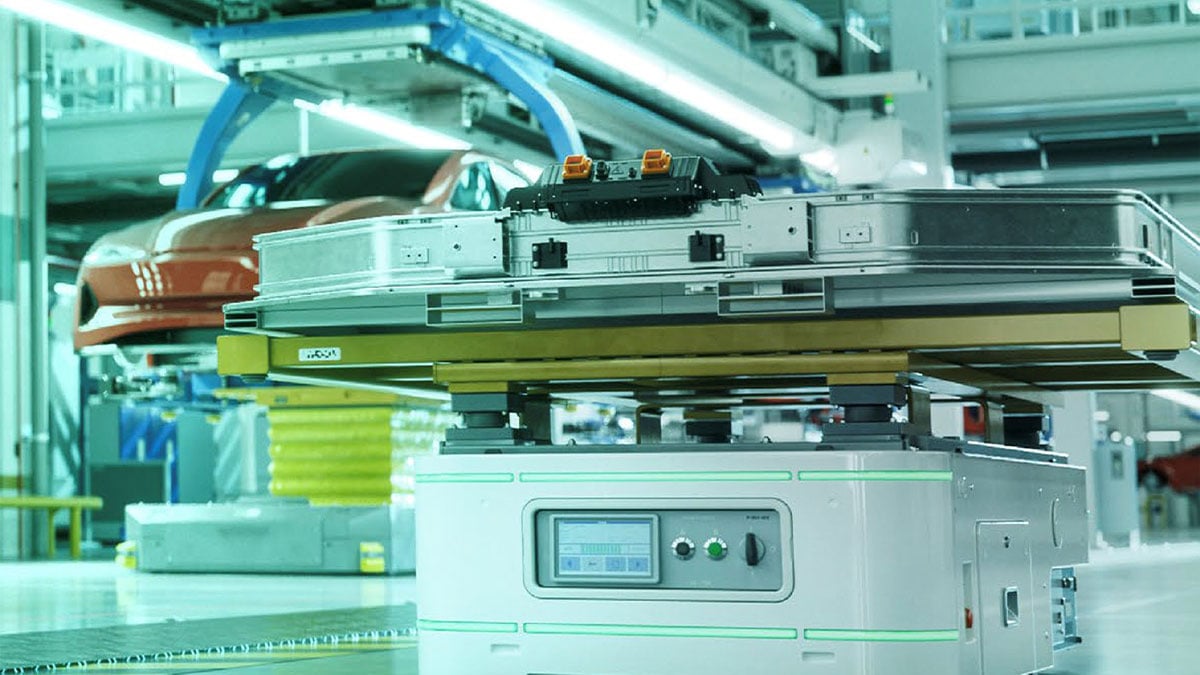
**The Critical Role of Wireless Connectivity in Modern Transport Robots: AGVs and AMRs**
**Introduction**
In today’s rapidly evolving industrial landscape, efficiency and precision are paramount. Automated guided vehicles (AGVs) and autonomous mobile robots (AMRs) have emerged as central technologies in smart factories and warehouses, driven by the dual goals of tackling persistent labour shortages and maximising productivity. These sophisticated machines handle the critical work of moving parts, pallets, and finished goods, ensuring seamless logistics between production lines, storage areas, and packing stations. In the dynamic environment of e-commerce fulfilment centres, their role has expanded to include picking and sorting tasks, further reducing reliance on human labour and minimising the potential for operational errors. While the mechanical capabilities of these robots are impressive, their true potential is unlocked only through robust and reliable wireless connectivity. This article explores the diverse wireless technologies powering these systems, the critical challenges they face, and the rigorous testing required to ensure uninterrupted, safe, and efficient operations.
**How AGVs and AMRs Work and Their Growing Utility**
The operational differences between AGVs and AMRs define their respective roles in a facility. AGVs are largely deterministic machines, typically following predefined paths. They rely on guidance mechanisms such as embedded guidance lines, magnetic tape, or even precisely placed markers to navigate the warehouse floor. In contrast, AMRs represent a more advanced, flexible generation of robot. They navigate autonomously, using a suite of sophisticated sensors like LiDAR and cameras. A key technological differentiator for many AMRs is Simultaneous Localisation and Mapping (SLAM), which allows them to build a digital map of their environment in real-time, dynamically avoiding obstacles and optimising their routes using artificial intelligence. This autonomy allows AMRs to adapt to a changing environment, making them ideal for complex and unpredictable settings like busy e-commerce centres.
Beyond the fundamental task of transport, these robots are becoming multi-functional platforms. They are increasingly equipped to handle part picking and sorting, tasks that were previously the exclusive domain of human workers. This added functionality not only further reduces the need for manual labour but also significantly cuts down on the human errors associated with repetitive, high-precision tasks.
**Why Wireless Connectivity is the Backbone of Autonomous Operations**
For an AGV or AMR to function effectively, it must be in constant, reliable communication with its surroundings. Wireless connectivity is the nervous system of these robots, enabling them to receive commands and transmit critical sensor data. A variety of wireless technologies serve different purposes within this ecosystem. Bluetooth is often the technology of choice for low-power sensor communications, offering a simple way to connect various components without draining the robot’s battery. Wi-Fi plays a crucial role in supporting high-bandwidth activities, such as transmitting the large volumes of data generated by video feeds and detailed positioning information. For scenarios requiring long-range, low-power monitoring of numerous sensors, Low Power Wide Area (LPWA) networks are used, providing connectivity over several kilometres with minimal energy consumption.
The evolution towards 5G and private 5G networks represents a significant leap forward. These technologies offer ultra-reliable, low-latency communications that are essential for real-time robot control and coordination. This capability is critical for systems like Ultra-Reliable Low-Latency Communications (URLLC), which provide the high throughput and precision required to interface directly with Programmable Logic Controllers (PLCs) that manage production-line equipment and Warehouse Management Systems (WMS). These systems orchestrate the entire logistics flow, managing everything from incoming cargo and inventory levels to the transportation of products throughout the facility.
**Understanding and Overcoming Connectivity Challenges**
Despite the clear advantages, creating a reliable wireless environment for these robots is fraught with challenges. The very environments that house these machines are often the most difficult for radio waves to navigate. Warehouses are typically characterised by vast spaces with high ceilings and, crucially, numerous metallic structures like shelving, racks, and the robots themselves. These physical features can cause significant radio wave reflection, leading to multipath interference, where signals bounce around and arrive at the receiver at different times, causing data corruption. Metallic objects can also absorb radio signals, leading to attenuation and dead zones.
Furthermore, the operational setting is a dense electronic environment. Numerous other devices and machinery generate their own electromagnetic emissions, which can interfere with the delicate signals used for robot communication. This phenomenon, known as intra-EMC or “autointoxication,” occurs when one component’s emissions disrupt its own systems or those of nearby robots. The problem is compounded by the fact that wireless regulations and frequency allocations differ from one country or region to another. Consequently, manufacturers cannot simply produce a one-size-fits-all robot; they must rigorously test and certify their machines to ensure compliance with the local standards of every market they operate in.
Unstable connectivity is not just an inconvenience; it is a critical safety and operational risk. Interruptions in communication can cause robots to halt unexpectedly, collide with obstacles or other machines, or become lost within the facility. Therefore, ensuring robust connectivity requires a deep understanding of the specific radio environment. Engineers must conduct thorough interference detection, identifying and eliminating or mitigating sources of unwanted radio signals before they can impact operations.
**The Role of Rigorous Testing and Validation**
Given the complex challenges of the industrial RF environment, comprehensive testing and validation are non-negotiable. Companies like Anritsu provide the essential test equipment—ranging from RF and network analysers to real-time spectrum analysers—needed to evaluate performance across Bluetooth, Wi-Fi, LTE, NB-IoT, and 5G technologies. These tools are indispensable for a multi-faceted approach:
* **Interference Detection:** Identifying and locating sources of disruptive radio signals.
* **Antenna Evaluation:** Ensuring the robot’s antennas are optimised for its specific operational frequency and environment.
* **Throughput Testing:** Verifying that data is being transmitted at the required speed and reliability.
* **Protocol Validation:** Confirming that the robot’s communication protocols function correctly and securely.
* **Production-Line Testing:** Ensuring every unit meets the highest standards of performance before it ships.
By using monitoring tools like real-time spectrum analysers, engineers can proactively map areas affected by transient interference, allowing them to correct issues before they lead to a communications failure that could halt a production line.
**Future Trends: A More Connected and Autonomous Future**
The trajectory for transport robots is inextricably linked to the advancement of supporting technologies. As AI, 5G, and IoT technologies continue to mature, the role of AGVs and AMRs is set to expand far beyond the confines of the factory floor and warehouse. We can expect to see these intelligent systems playing a vital role in sectors such as agriculture, healthcare, and autonomous last-mile delivery. This greater connectivity and autonomy will create a new era of efficiency, where robots can coordinate seamlessly with other sensors, machines, and management systems, drastically reducing the need for manual oversight and intervention. The future of logistics and manufacturing is not just automated; it is intelligently connected.
—
### FAQ
**Q1: What is the primary difference between an AGV and an AMR?**
**A1:** The main difference lies in their navigation. An AGV (Automated Guided Vehicle) follows a fixed, predefined path, often using guidance lines or magnetic tape. An AMR (Autonomous Mobile Robot), on the other hand, navigates dynamically using sensors, cameras, and AI-powered software like SLAM (Simultaneous Localisation and Mapping) to create its own path and avoid obstacles in real-time.
**Q2: Why are 5G and private 5G networks important for modern transport robots?**
**A2:** 5G and private 5G are critical because they offer ultra-reliable, low-latency communication. This is essential for real-time control of the robots, allowing them to coordinate instantaneously with other machines, PLCs, and warehouse management systems. This level of reliability is required for the safe and efficient execution of complex tasks.
**Q3: What are some common sources of wireless interference for robots in a warehouse?**
**A3:** Warehouses present a challenging RF environment. Common sources of interference include the metallic surfaces of shelves and racks, which cause signal reflection and multipath issues, and other electronic machinery that generates electromagnetic noise. These factors can degrade signal quality and lead to communication failures.
**Q4: What testing methods are used to ensure robot connectivity?**
**A4:** Manufacturers use a range of test and measurement tools. Real-time spectrum analysers are used to detect and locate transient interference. Tests for antenna evaluation ensure optimal signal transmission, while throughput and protocol validation tests confirm the robot can communicate effectively and securely across various technologies like Wi-Fi, Bluetooth, and 5G.
**Q5: What future applications are expected for transport robots?**
**A5:** Future applications are expected to expand into diverse sectors beyond manufacturing and logistics. Key areas include agriculture (for automated harvesting or spraying), healthcare (for transporting supplies or assisting in hospitals), and autonomous delivery services for the final leg of product distribution.
