



**Harnessing the Power of Agent-as-a-Tool: A Practical Guide**
In the rapidly evolving landscape of artificial intelligence, the paradigm of single-agent execution is giving way to more sophisticated, multi-agent collaborations. The latest shift moves beyond isolated agents solving entire problems towards a more modular and efficient approach: the **Agent-as-a-Tool** pattern. This technique allows us to delegate open-ended, complex tasks by treating one agent as a specialized tool for another, creating a powerful and flexible system architecture.
This article explores the Agent-as-a-Tool pattern, demonstrating its implementation using the OpenAI Agents SDK through a concrete, real-world scenario.
### 1. The Agent-as-a-Tool Pattern
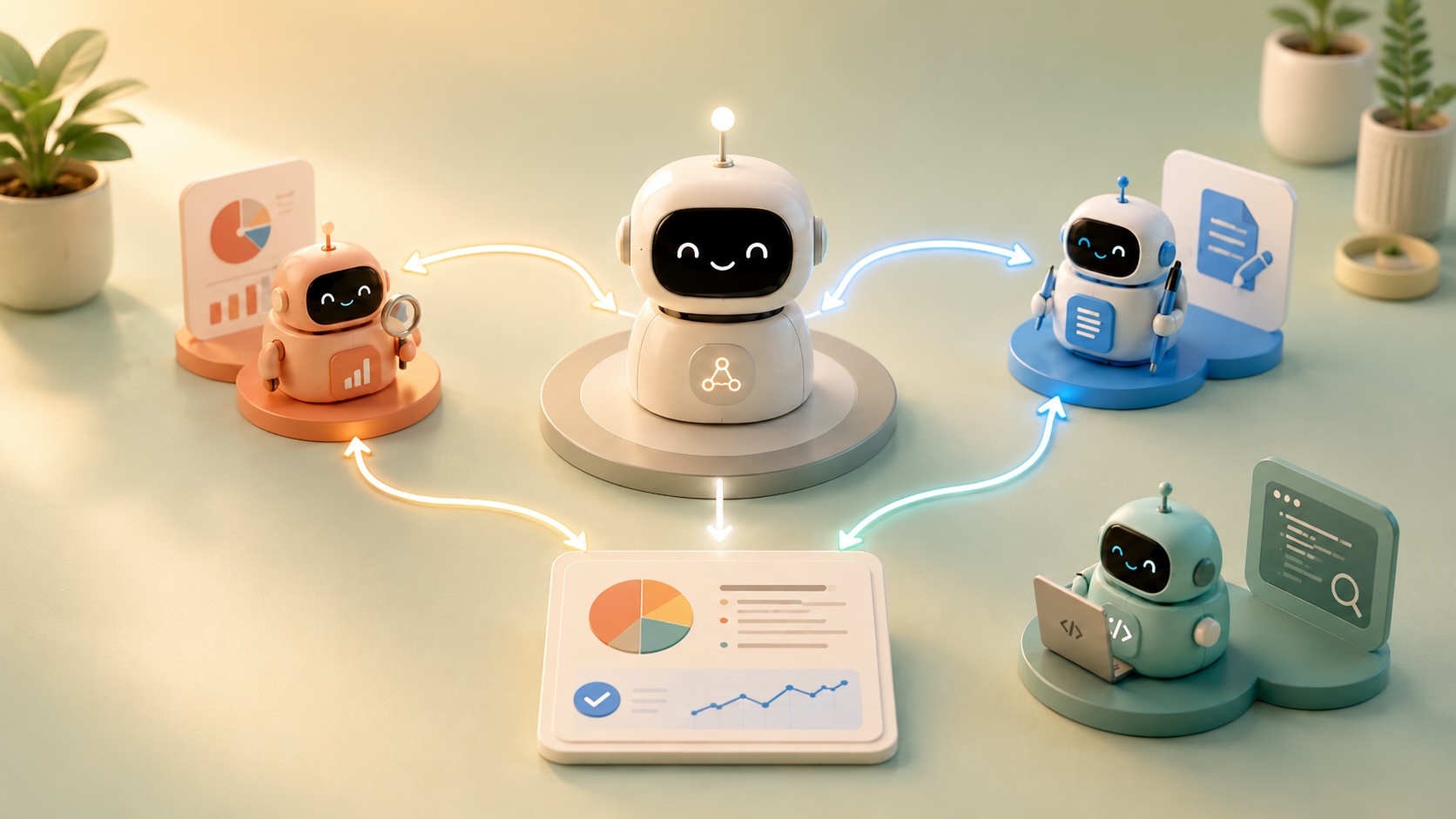
At its core, the Agent-as-a-Tool pattern involves treating an agent as a callable tool within a larger agentic system. A “manager” agent orchestrates the overall task and delegates specific, often complex, sub-tasks to specialized “worker” agents. These worker agents act as sophisticated tools, using their own reasoning and capabilities to solve the delegated problem and report back results.
This pattern is particularly effective when:
* The task is **open-ended** and difficult to define with a rigid, step-by-step script.
* The **boundary of the task is clear**, but the solution path is not.
* You want to maintain a clear **division of responsibility**, keeping the manager agent focused on coordination and decision-making.
Instead of building a monolithic agent, we create specialist agents and equip our manager with them as tools. From the manager’s perspective, the interaction is seamless—it simply calls a tool and receives a structured response. Behind the scenes, however, another agent is performing the deep work.
### 2. Planning a Long Layover: A Practical Case Study
To illustrate this pattern, let’s build an agentic system designed to help travelers plan activities during a long layover. The scenario: a family has a 10-hour stop in Munich and wants to leave the airport, enjoy sightseeing and a good meal, and return safely, all while minimizing stress.
The core challenge is that the planning logic is too complex for a simple function. It requires real-time information, judgment, and risk assessment. This is where the Agent-as-a-Tool pattern shines.
We will create a **Travel Planner** agent that uses three specialized “tool” agents:
1. **Logistics Specialist:** To check if the plan is feasible given transportation and timing.
2. **Local Experience Specialist:** To find suitable activities and food options.
3. **Risk Specialist:** To identify potential pitfalls and suggest mitigations.
#### 2.1 Building the Specialist Agents
Each specialist is a standard agent equipped with the specific instructions and tools it needs to perform its domain.
For example, the **Logistics Specialist** requires web search capabilities to find up-to-date flight and transportation information. We expose this agent as a tool using the `as_tool` method:
“`python
logistics_tool = logistics_agent.as_tool(
tool_name=”check_logistics”,
tool_description=”Check travel timing, transportation feasibility, and buffers.”,
max_turns=3,
)
“`
Similarly, we create a **Local Experience Specialist** with web search to find activities and the **Risk Specialist** to provide critical judgment.
“`python
# Risk Specialist doesn’t need external tools, only its instructions and model.
risk_tool = risk_agent.as_tool(
tool_name=”review_risks”,
tool_description=”Review practical risks and robustness of the travel plan.”,
max_turns=3,
)
“`
#### 2.2 The Manager Agent and Execution
The **Travel Planner** agent is configured with these three tools. When given a request, it doesn’t solve everything itself. Instead, it determines which specialist tool to call, receives the result, and synthesizes the final plan.
The complete system is executed using the `Runner.run()` method, which manages the multi-agent conversation.
“`python
result = await Runner.run(
travel_planner_agent,
user_request,
max_turns=10,
)
“`
In a test run, the system intelligently recommended visiting Freising, a town near Munich, instead of central Munich. It provided a relaxed itinerary with sightseeing and lunch, justifying that the extra travel time would be too strenuous for a family with a young child. The plan included a safe buffer to ensure they could return to the airport well before their flight.
### 3. When to Use This Pattern
The Agent-as-a-Tool pattern is powerful, but it’s not a one-size-fits-all solution. Before implementing it, consider these questions:
* **Is the task open-ended?** Does it require reasoning, research, or judgment that a simple function cannot handle?
* **Can the work be cleanly delegated?** Is it a well-defined specialty that can be isolated from the main workflow?
* **Should the original agent retain oversight?** Is it important for a central agent to remain responsible for the final outcome and coordination?
If you answered “yes” to these questions, the Agent-as-a-Tool pattern is likely an excellent fit. For tasks with simple, deterministic logic, a standard function tool is often a more straightforward choice.
### FAQ
**Q: What is the “Agent-as-a-Tool” pattern?**
A: It is a design pattern where one agent (the manager) treats other specialist agents as tools. The manager delegates specific, complex tasks to these “tool-agents,” which use their own reasoning and capabilities to complete the work and report back, allowing for a clear division of labor in complex systems.
**Q: Why not just build a single, very capable agent?**
A: Breaking down a complex problem into specialized agents offers several advantages. It creates a clear separation of concerns, allows for reusability of specialist agents across different systems, and makes the overall system more modular and easier to manage and debug than a single, monolithic agent.
**Q: What is the `max_turns` parameter in `as_tool`?**
A: `max_turns` limits the number of conversational turns (back-and-forth messages) the specialist agent can take to complete its delegated task. This is a crucial parameter for controlling costs and preventing a tool-agent from running indefinitely.
**Q: What is the difference between an agent-as-a-tool and a regular function tool?**
A: A regular function tool is a predefined piece of code that executes a specific task. An agent-as-a-tool is another AI agent that can perform open-ended, multi-step reasoning, use its own tools (like web search), and handle tasks that are too complex or ill-defined for a static function.
### Conclusion
The Agent-as-a-Tool pattern represents a significant evolution in how we architect solutions with large language models. By moving beyond single-agent prompts and embracing delegation, we can build systems that are more powerful, modular, and maintainable. This pattern allows us to harness the collective intelligence of specialized agents, creating a “society of minds” that can tackle complex real-world problems far more effectively than any single entity could alone. As you design your next LLM application, consider how this pattern can help you build smarter and more scalable systems.
