



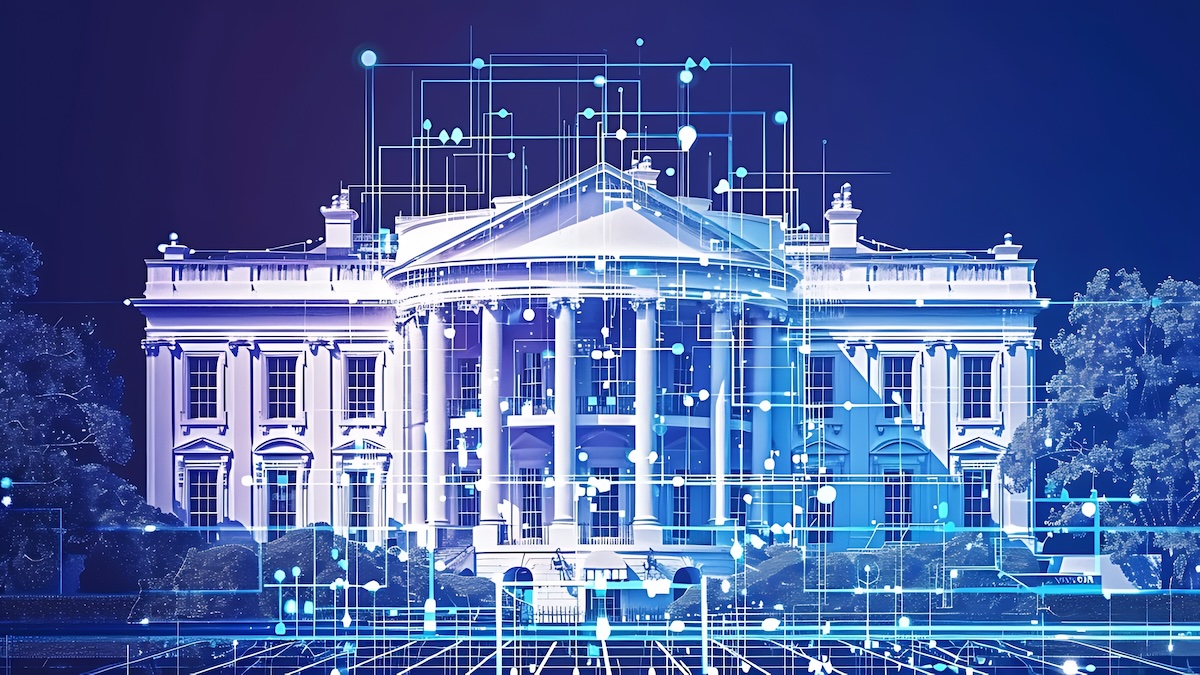
# Tech Leaders and the White House Forge New AI Safety Pledge Amid Growing Public Concerns
A landmark voluntary agreement was forged on Tuesday between the highest levels of the U.S. government and the chief executives of the nation’s most powerful artificial intelligence firms, as the meeting sought to address mounting anxieties among everyday Americans about the rapid advancement of AI technology.
The gathering took place inside the West Wing, where President Donald Trump convened a coalition of tech industry titans who are collectively directing hundreds of billions of dollars into the construction of AI infrastructure, including vast networks of data centers that have begun to reshape communities nationwide.
**Who Signed the Agreement?**
The accord was endorsed by a roster of prominent figures in the AI and technology world:
– Dario Amodei, CEO of Anthropic
– Sundar Pichai, CEO of Google
– Mark Zuckerberg, CEO of Meta
– Greg Brockman, President of OpenAI
– Jensen Huang, CEO of Nvidia
– Elon Musk, founder of xAI
Trump personally signed the document and posted the full text on his social media platform later that evening.
## What the Voluntary Pact Includes
The agreement does not create any new laws or binding regulations at this stage. Instead, it outlines four key steps the companies have agreed to pursue voluntarily:
1. **Internal Accountability:** Each company must put in place strong, rigorous internal controls over how their AI systems are developed and deployed.
2. **Independent Oversight:** Firms must work with outside auditors who have no financial stake in the company to evaluate whether their internal safeguards are effective.
3. **Board-Level Governance:** A dedicated committee within each company’s board of directors will be tasked with reviewing findings from both internal teams and external auditors.
4. **Future Legislative Path:** The accord acknowledges that these practices may eventually be translated into formal legislation and government regulation.
The document itself describes these commitments as “morally binding,” and Trump suggested that a small oversight committee of roughly ten individuals would be established to monitor the overall implementation of the agreement.
## The Case for Innovation
Trump used the occasion to champion the economic impact of AI development, describing the technology as a force that would generate “unbelievable growth.” The surge in investment behind data centers and computing hardware has already contributed to a thriving economy, rising stock market valuations, and expanded investment accounts for wealthier Americans, which in turn has fueled consumer spending.
Secretary of State Marco Rubio echoed this optimism during a daylong event in Washington, framing the moment as part of a new “Golden Age” driven by what Trump calls “super intelligence.” A new government chatbot called America.gov was also unveiled at the event, designed to help citizens navigate federal services more efficiently, including the potential to apply for a first-time passport entirely online.
## Voices of Skepticism
Despite the optimistic tone, several experts and industry insiders raised concerns about the adequacy of voluntary measures.
Dario Amodei, who has long been one of the most prominent advocates for slowing down AI development, acknowledged during the meeting that the technology carries “very real risks.” He noted that the mechanisms for addressing those risks are still very much being debated within the industry.
Academic experts also weighed in with mixed reactions. Shri Narayanan, a professor of electrical and computer engineering at the University of Southern California, praised the accord for striking a balance between fostering innovation and maintaining oversight, noting that AI development extends beyond just boosting model capabilities to also improving safety and security.
However, Robin Jia, an assistant professor of computer science at the same university, expressed deep skepticism about relying on self-regulation. He emphasized the importance of ensuring that the goals of leading AI labs align with the public good, pointing to recent incidents involving security breaches and unauthorized access. As AI models grow more sophisticated, Jia warned, the consequences of such vulnerabilities would only intensify.
Alex Pascal, executive director of the Berkman Klein Center for Internet and Society, was even more direct, arguing that voluntary pledges alone are insufficient. “The only way to reduce the risks and harms of AI to Americans is through robust legal liability, regulation and fundamentally changing the race dynamics that are driving unsafe decision-making,” Pascal stated.
## AI Development as a Global Race
Trump framed the AI landscape as a competitive arena with the United States facing off against China, asserting that there would be only one winner — and no room for second place. The two nations had recently agreed to set up a communication channel for managing AI-related incidents during a visit by Chinese President Xi Jinping, but Trump made clear on Tuesday that he had little interest in deep cooperation.
“I didn’t want to do anything, because we’re leading. Why would I want to do anything?” Trump said.
OpenAI CEO Sam Altman also addressed safety concerns in a separate television interview, stating that the company is now prioritizing caution over speed. He revealed that OpenAI had recently paused the release of a new model due to safety reservations, saying the company is committed to pacing its progress responsibly so that public anxiety is not fueled by reckless deployment.
## Community Pushback on Data Centers
One of the more contentious issues surrounding AI infrastructure is the local resistance to data centers, which have drawn bipartisan criticism from residents concerned about noise, energy consumption, and environmental impact. Trump acknowledged this opposition during the meeting, saying that the companies had agreed to respond by directing more financial resources toward local schools and exploring ways to lower energy costs for surrounding communities.
“You’re going to see, data centers are going to be very popular,” Trump declared. He added that if resistance persists, companies may simply choose to build their facilities in other countries instead.
## Frequently Asked Questions
**Q: Is this agreement legally enforceable?**
A: No, the accord is voluntary and not backed by any legislation at this time. However, it does suggest that future laws and regulations could be introduced to formalize the commitments made by the companies.
**Q: Why are people worried about data centers?**
A: Data centers require enormous amounts of energy and water, generate significant noise, and often trigger concerns about property values, local infrastructure strain, and environmental impact. These factors have led to grassroots opposition in many communities across the country.
**Q: What does “self-policing” mean in this context?**
A: It refers to the idea that technology companies will monitor and regulate their own practices without being compelled to do so by government mandates. Critics argue that self-policing lacks accountability, while supporters believe industry expertise makes it the most effective approach.
**Q: What is the America.gov chatbot?**
A: It is a government-operated AI tool designed to help American citizens navigate federal services, such as applying for passports or accessing benefits, through an online interface.
**Q: Why did OpenAI pause the release of a new model?**
A: OpenAI cited safety concerns as the reason for halting the rollout. The company has stated that it is committed to ensuring robust safety cases before deploying new technology publicly.
**Q: What is the U.S. government’s stance on AI regulation?**
A: As of now, the Trump administration has stated that it will not limit AI development or support calls for strict regulatory “guardrails,” favoring instead a hands-off approach that prioritizes innovation.
## Conclusion
The voluntary accord between the White House and leading AI companies represents a significant moment in the ongoing conversation about how to balance technological progress with public safety. While the agreement avoids imposing new legal restrictions, it does establish a framework for transparency and accountability that could shape the future of AI governance. Whether these voluntary steps prove sufficient — or whether more formal regulation becomes necessary — will likely depend on how the companies follow through on their promises and how the public perceives their efforts in the months ahead.
Thank you for reading
