



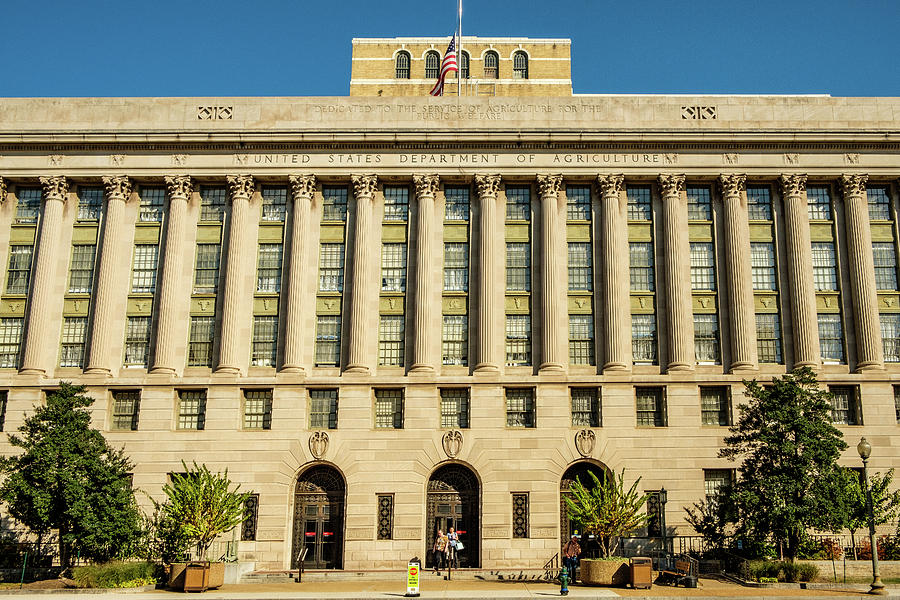
The Agriculture Department is launching a broad initiative to transfer staff from various agencies to locations beyond the Washington, D.C. metropolitan area.
USDA is shifting significantly more positions nationwide compared to efforts during the first Trump administration, though officials anticipate greater employee acceptance of relocation offers this round.
Nevertheless, two unions representing affected USDA staff argue that the moves will create more chaos than department leadership predicts.
For the second time in seven years, USDA wants to move Washington-based employees from the Economic Research Service (ERS) and National Institute of Food and Agriculture (NIFA) to Kansas City.
In 2019, USDA shifted hundreds of ERS and NIFA roles to Kansas City, yet roughly 85% of affected staff chose to resign or retire instead of moving.
The American Federation of Government Employees Local 3403, which advocates for USDA researchers, anticipates comparable outcomes this time around.
A union-conducted internal poll revealed that 76% of members stated they do not intend to relocate. AFGE Local 3403 warned in a statement that these transfers, scheduled to take effect by late summer, will spark a “brain drain” within the department.
Federal News Network has contacted USDA for a response.
The union cautioned that reduced staffing at NIFA would slow grant processing and delay funding to universities and scientific institutions. A smaller ERS research team, they noted, raises the likelihood of mistakes that could undermine economic decision-making.
“ERS and NIFA serve as the intellectual and financial foundations of American agriculture,” AFGE Local 3403 stated. “Pushing this move forward on a rushed timeline, without any assurance of financial support or job guarantees, the USDA is essentially eroding decades of institutional expertise, endangering the critical data and funding that farmers, lawmakers, and land-grant universities depend on.”
AFGE Local 3403 urged “immediate congressional intervention” to stop these relocation plans.
USDA Deputy Secretary Stephen Vaden informed House legislators last August that the department “learned some lessons” from the 2019 relocations but acknowledged uncertainty about how many employees would agree to the latest transfers.
“Whether every employee will volunteer to join us, I can’t say for certain,” he remarked.
USDA revealed last summer its intention to relocate more than half of its D.C.-area workforce to regional hubs nationwide. Approximately 90% of USDA staff already work outside the capital region. The department allowed more than 15,000 workers to depart last year following the acceptance of deferred resignation and early retirement incentives.
Lawmakers introduced provisions in the fiscal 2026 omnibus spending package prohibiting USDA from allocating funds to transfer employees or programs without congressional authorization. However, as reported by E&E News, Vaden—previously serving as USDA’s general counsel during the first Trump administration—contended that USDA did not require congressional appropriations committee approval to relocate personnel.
Vaden communicated to USDA’s office of the inspector general in August 2019 that the USDA secretary possesses “the necessary legal authority to relocate” employees.
“USDA is not obligated to follow unconstitutional laws,” Vaden wrote.
The National Federation of Federal Employees is similarly contending that USDA’s Forest Service is advancing relocation plans absent congressional approval.
“The fiscal year 2026 appropriations legislation clearly prohibited the use of allocated funds for restructuring activities without prior notification and authorization,” NFFE President Randy Erwin stated in a letter to lawmakers. “Yet this extensive overhaul…was announced unilaterally, without the transparency, notification, or authorization mandated by law.”
The Forest Service intends to relocate its headquarters to Salt Lake City, Utah. Additionally, the agency would eliminate 57 out of 77 research stations as well as all nine regional offices.
Forest Service Chief Tom Schultz informed House Appropriations Committee members that around 500 employees would need to relocate under the headquarters reorganization plan.
Schultz emphasized that the Forest Service does not intend to reduce its workforce. Thousands of agency personnel departed last year through voluntary separation packages.
The agency’s fiscal 2027 budget proposal seeks to cut 800 of its roughly 1,110 research scientist roles, with the expectation that impacted staff would secure comparable positions in the private sector or with state agencies. Schultz indicated that researchers would likely find similar opportunities in the private sector at the state level, and that “states would step forward” to fund these roles.
According to NFFE, the Forest Service has already lost more than 20% of its Ph.D.-level researchers due to recent workforce-reduction efforts.
Erwin warned that without congressional oversight, this reorganization could result in diminished public access to public lands and weakened protection of natural resources.
“This dismantling opens a clear path for handing federal lands over to state and private ownership without congressional consent or the approval of the American people,” he wrote.
Copyright
© 2026 Federal News Network. All rights reserved. This website is not intended for users located within the European Economic Area.
