On this tutorial, we exhibit how one can transfer past static, code-heavy charts and construct a genuinely interactive exploratory information evaluation workflow straight utilizing PyGWalker. We begin by making ready the Titanic dataset for large-scale interactive querying. These analysis-ready engineered options reveal the underlying construction of the information whereas enabling each detailed row-level exploration and high-level aggregated views for deeper perception. Embedding a Tableau-style drag-and-drop interface straight within the pocket book permits fast speculation testing, intuitive cohort comparisons, and environment friendly data-quality inspection, all with out the friction of switching between code and visualization instruments.
import sys, subprocess, json, math, os
from pathlib import Path


def pip_install(pkgs):
   subprocess.check_call([sys.executable, "-m", "pip", "install", "-q"] + pkgs)


pip_install([
   "pygwalker>=0.4.9",
   "duckdb>=0.10.0",
   "pandas>=2.0.0",
   "numpy>=1.24.0",
   "seaborn>=0.13.0"
])


import numpy as np
import pandas as pd
import seaborn as sns


df_raw = sns.load_dataset("titanic").copy()
print("Raw shape:", df_raw.form)
show(df_raw.head(3))
We arrange a clear and reproducible Colab setting by putting in all required dependencies for interactive EDA. We load the Titanic dataset and carry out an preliminary sanity test to know its uncooked construction and scale. It establishes a steady basis earlier than any transformation or visualization begins.
def make_safe_bucket(collection, bins=None, labels=None, q=None, prefix="bucket"):
   s = pd.to_numeric(collection, errors="coerce")
   if q just isn't None:
       strive:
           cuts = pd.qcut(s, q=q, duplicates="drop")
           return cuts.astype("string").fillna("Unknown")
       besides Exception:
           move
   if bins just isn't None:
       cuts = pd.lower(s, bins=bins, labels=labels, include_lowest=True)
       return cuts.astype("string").fillna("Unknown")
   return s.astype("float64")


def preprocess_titanic_advanced(df):
   out = df.copy()
   out.columns = [c.strip().lower().replace(" ", "_") for c in out.columns]


   for c in ["survived", "pclass", "sibsp", "parch"]:
       if c in out.columns:
           out[c] = pd.to_numeric(out[c], errors="coerce").fillna(-1).astype("int64")


   if "age" in out.columns:
       out["age"] = pd.to_numeric(out["age"], errors="coerce").astype("float64")
       out["age_is_missing"] = out["age"].isna()
       out["age_bucket"] = make_safe_bucket(
           out["age"],
           bins=[0, 12, 18, 30, 45, 60, 120],
           labels=["child", "teen", "young_adult", "adult", "mid_age", "senior"],
       )


   if "fare" in out.columns:
       out["fare"] = pd.to_numeric(out["fare"], errors="coerce").astype("float64")
       out["fare_is_missing"] = out["fare"].isna()
       out["log_fare"] = np.log1p(out["fare"].fillna(0))
       out["fare_bucket"] = make_safe_bucket(out["fare"], q=8)


   for c in ["sex", "class", "who", "embarked", "alone", "adult_male"]:
       if c in out.columns:
           out[c] = out[c].astype("string").fillna("Unknown")


   if "cabin" in out.columns:
       out["deck"] = out["cabin"].astype("string").str.strip().str[0].fillna("Unknown")
       out["deck_is_missing"] = out["cabin"].isna()
   else:
       out["deck"] = "Unknown"
       out["deck_is_missing"] = True


   if "ticket" in out.columns:
       t = out["ticket"].astype("string")
       out["ticket_len"] = t.str.len().fillna(0).astype("int64")
       out["ticket_has_alpha"] = t.str.comprises(r"[A-Za-z]", regex=True, na=False)
       out["ticket_prefix"] = t.str.extract(r"^([A-Za-z./s]+)", broaden=False).fillna("None").str.strip()
       out["ticket_prefix"] = out["ticket_prefix"].exchange("", "None").astype("string")


   if "sibsp" in out.columns and "parch" in out.columns:
       out["family_size"] = (out["sibsp"] + out["parch"] + 1).astype("int64")
       out["is_alone"] = (out["family_size"] == 1)


   if "name" in out.columns:
       title = out["name"].astype("string").str.extract(r",s*([^.]+).", broaden=False).fillna("Unknown").str.strip()
       vc = title.value_counts(dropna=False)
       maintain = set(vc[vc >= 15].index.tolist())
       out["title"] = title.the place(title.isin(maintain), different="Rare").astype("string")
   else:
       out["title"] = "Unknown"


   out["segment"] = (
       out["sex"].fillna("Unknown").astype("string")
       + " | "
       + out["class"].fillna("Unknown").astype("string")
       + " | "
       + out["age_bucket"].fillna("Unknown").astype("string")
   )


   for c in out.columns:
       if out[c].dtype == bool:
           out[c] = out[c].astype("int64")
       if out[c].dtype == "object":
           out[c] = out[c].astype("string")


   return out


df = preprocess_titanic_advanced(df_raw)
print("Prepped shape:", df.form)
show(df.head(3))
We concentrate on superior preprocessing and have engineering to transform the uncooked information into an analysis-ready kind. We create strong, DuckDB-safe options similar to buckets, segments, and engineered categorical indicators that improve downstream exploration. We make sure the dataset is steady, expressive, and appropriate for interactive querying.
def data_quality_report(df):
   rows = []
   n = len(df)
   for c in df.columns:
       s = df[c]
       miss = int(s.isna().sum())
       miss_pct = (miss / n * 100.0) if n else 0.0
       nunique = int(s.nunique(dropna=True))
       dtype = str(s.dtype)
       pattern = s.dropna().head(3).tolist()
       rows.append({
           "col": c,
           "dtype": dtype,
           "missing": miss,
           "missing_%": spherical(miss_pct, 2),
           "nunique": nunique,
           "sample_values": pattern
       })
   return pd.DataFrame(rows).sort_values(["missing", "nunique"], ascending=[False, False])


dq = data_quality_report(df)
show(dq.head(20))


RANDOM_SEED = 42
MAX_ROWS_FOR_UI = 200_000


df_for_ui = df
if len(df_for_ui) > MAX_ROWS_FOR_UI:
   df_for_ui = df_for_ui.pattern(MAX_ROWS_FOR_UI, random_state=RANDOM_SEED).reset_index(drop=True)


agg = (
   df.groupby(["segment", "deck", "embarked"], dropna=False)
     .agg(
         n=("survived", "size"),
         survival_rate=("survived", "mean"),
         avg_fare=("fare", "mean"),
         avg_age=("age", "mean"),
     )
     .reset_index()
)


for c in ["survival_rate", "avg_fare", "avg_age"]:
   agg[c] = agg[c].astype("float64")


Path("/content").mkdir(dad and mom=True, exist_ok=True)
df_for_ui.to_csv("/content/titanic_prepped_for_ui.csv", index=False)
agg.to_csv("/content/titanic_agg_segment_deck_embarked.csv", index=False)
We consider information high quality and generate a structured overview of missingness, cardinality, and information sorts. We put together each a row-level dataset and an aggregated cohort-level desk to assist quick comparative evaluation. The twin illustration permits us to discover detailed patterns and high-level tendencies concurrently.
import pygwalker as pyg


SPEC_PATH = Path("/content/pygwalker_spec_titanic.json")


def load_spec(path):
   if path.exists():
       strive:
           return json.masses(path.read_text())
       besides Exception:
           return None
   return None


def save_spec(path, spec_obj):
   strive:
       if isinstance(spec_obj, str):
           spec_obj = json.masses(spec_obj)
       path.write_text(json.dumps(spec_obj, indent=2))
       return True
   besides Exception:
       return False


def launch_pygwalker(df, spec_path):
   spec = load_spec(spec_path)
   kwargs = {}
   if spec just isn't None:
       kwargs["spec"] = spec


   strive:
       walker = pyg.stroll(df, use_kernel_calc=True, **kwargs)
   besides TypeError:
       walker = pyg.stroll(df, **kwargs) if spec just isn't None else pyg.stroll(df)


   captured = None
   for attr in ["spec", "_spec"]:
       if hasattr(walker, attr):
           strive:
               captured = getattr(walker, attr)
               break
           besides Exception:
               move
   for meth in ["to_spec", "export_spec", "get_spec"]:
       if captured is None and hasattr(walker, meth):
           strive:
               captured = getattr(walker, meth)()
               break
           besides Exception:
               move


   if captured just isn't None:
       save_spec(spec_path, captured)


   return walker


walker_rows = launch_pygwalker(df_for_ui, SPEC_PATH)
walker_agg = pyg.stroll(agg)
We combine PyGWalker to remodel our ready tables into a totally interactive, drag-and-drop analytical interface. We persist the visualization specification in order that dashboard layouts and encodings survive pocket book reruns. It turns the pocket book right into a reusable, BI-style exploration setting.
HTML_PATH = Path("/content/pygwalker_titanic_dashboard.html")


def export_html_best_effort(df, spec_path, out_path):
   spec = load_spec(spec_path)
   html = None


   strive:
       html = pyg.stroll(df, spec=spec, return_html=True) if spec just isn't None else pyg.stroll(df, return_html=True)
   besides Exception:
       html = None


   if html is None:
       for fn in ["to_html", "export_html"]:
           if hasattr(pyg, fn):
               strive:
                   f = getattr(pyg, fn)
                   html = f(df, spec=spec) if spec just isn't None else f(df)
                   break
               besides Exception:
                   proceed


   if html is None:
       return None


   if not isinstance(html, str):
       html = str(html)


   out_path.write_text(html, encoding="utf-8")
   return out_path


export_html_best_effort(df_for_ui, SPEC_PATH, HTML_PATH)
We lengthen the workflow by exporting the interactive dashboard as a standalone HTML artifact. We make sure the evaluation may be shared or reviewed with out requiring a Python setting or Colab session. It completes the pipeline from uncooked information to distributable, interactive perception.
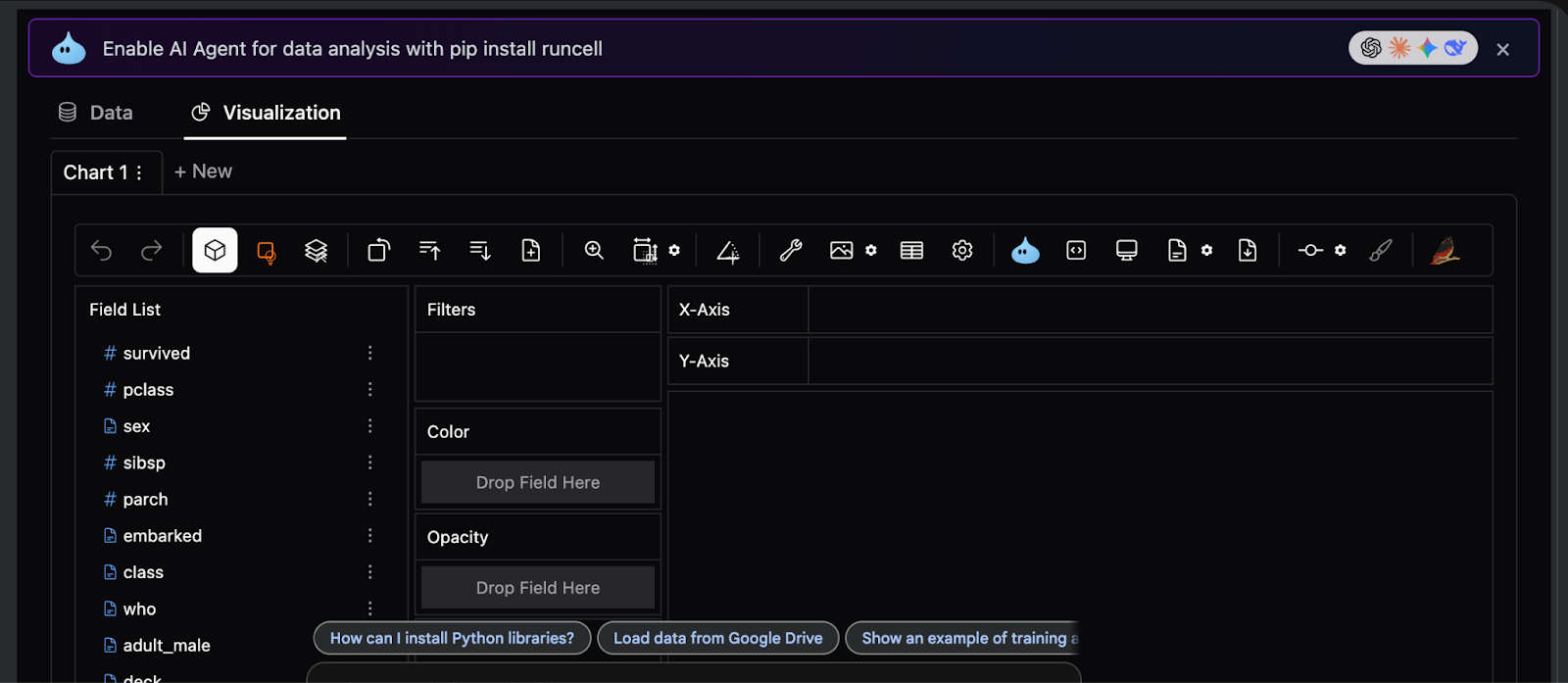
In conclusion, we established a strong sample for superior EDA that scales far past the Titanic dataset whereas remaining absolutely notebook-native. We confirmed how cautious preprocessing, kind security, and have design permit PyGWalker to function reliably on advanced information, and the way combining detailed data with aggregated summaries unlocks highly effective analytical workflows. As a substitute of treating visualization as an afterthought, we used it as a first-class interactive layer, permitting us to iterate, validate assumptions, and extract insights in actual time.
Try the Full Codes right here. Additionally, be happy to observe us on Twitter and don’t neglect to hitch our 100k+ ML SubReddit and Subscribe to our E-newsletter. Wait! are you on telegram? now you possibly can be a part of us on telegram as properly.