



**From Identity to Purpose: The Hidden Challenges of Federal Retirement**
Federal employees often spend decades preparing for retirement. They calculate annuities, max out their TSP, compare health insurance options, study survivor benefits, and time their departure down to the precise pay period. However, according to Wilder Smith, national security professional and author of *After the Badge: the federal retiree’s field manual for identity, marriage, and the life you didn’t plan for*, many overlook the one question that determines whether retirement feels liberating or surprisingly lonely: Who will you be once your work no longer defines you?
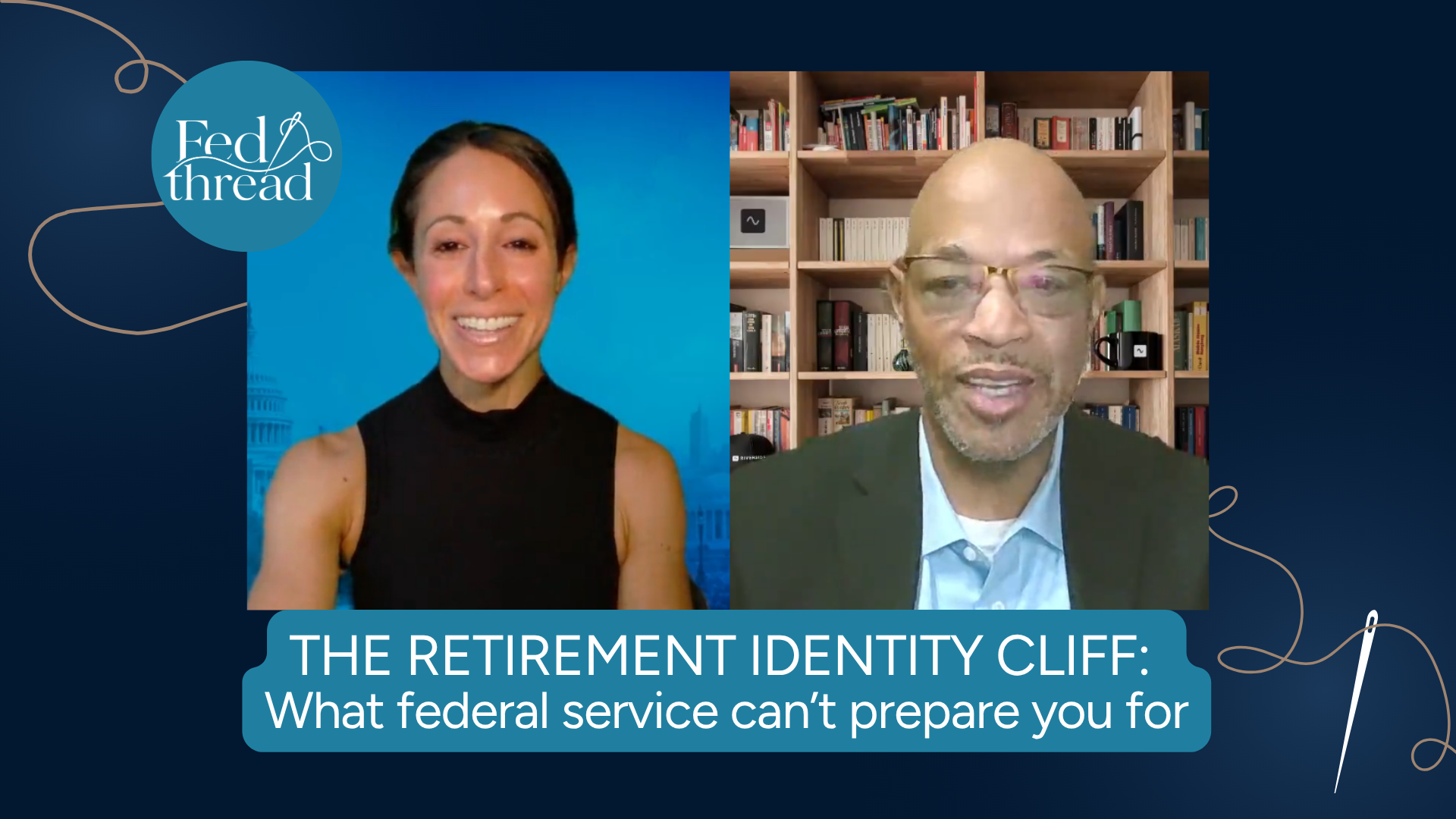
On the *Fed Thread* podcast, Smith explains why some of the hardest retirement challenges are not financial, and why waiting until the last day on the job to think about life afterward may be too late.
### Most People Prepare for Retirement, but Few Prepare for Who They’ll Be After
“The retirement calculator tells you whether you can afford to leave,” Smith explains. “It doesn’t tell you who you’ll be on Monday.”
This distinction became the driving force behind his book. Smith wrote *After the Badge* after observing colleagues postpone retirement—not because they lacked financial security, but because they couldn’t imagine life without the mission that had defined them for decades.
For many federal employees, serving a mission larger than themselves becomes the core of their identity over 20 or 30 years. When that chapter ends, they discover they didn’t simply leave a job—they left an identity.
### Retirement Takes Away More Than a Paycheck
Smith says retirees often underestimate what disappears on their final day. It’s not just the office; it’s the daily structure, the title, the people who depended on you, the routine that dictated where you’d be every morning, and the team that reinforced your sense of purpose.
By his analysis, retirees lose three key things all at once:
* **Structure**
* **Status**
* **Belonging**
That’s why retirement can feel unexpectedly disorienting, even when it’s something you’ve looked forward to for years. “They’re not just losing a job,” Smith says. “They’re losing their identity and their sense of mattering.”
### Don’t Just Retire from Something, Retire *To* Something
One of the biggest mistakes Smith sees is treating retirement like an ending instead of a transition. Many people carefully optimize the logistics—paperwork, finances, travel plans, moving schedules—but never ask themselves a much deeper question: Who am I without this role?
His advice is simple: start building your next identity before you need it. Develop hobbies that have nothing to do with your career. Volunteer. Strengthen friendships outside work. Join organizations where nobody knows your title. Invest in interests that don’t depend on federal service. Because the goal isn’t simply to leave work, it’s to build a life worth entering.
### Your Spouse Has Been Preparing for This Longer Than You Have
One of the book’s themes is how retirement reshapes marriages. While many retirees focus on what they’re leaving behind, Smith argues their spouse has often been preparing for this transition for years. They’ve watched identities become wrapped up in careers, built routines while their partner was at work, and then suddenly, retirement changes the rhythm of the entire household.
Smith joked that many senior federal leaders unknowingly bring executive leadership skills home and begin applying them to ordinary household decisions. Running multimillion-dollar programs is one thing, but trying to manage dinner that same way is another.
His advice? Don’t simply ask your spouse to adjust to your retirement. Let them help lead the transition. They know you and your blind spots, and they can be incredibly helpful, if you let them.
### Missing Your Career Isn’t Something to Be Embarrassed About
Smith also describes the loss retirees experience when they hang it up for good. They miss the people, the camaraderie, the shared mission and the conversations. But there’s something else they’re often reluctant to admit—they miss the feeling of being needed.
After decades of mentoring colleagues, celebrating promotions, solving problems together, and serving alongside the same people, retirement can feel less like a career change and more like losing an entire community overnight.
That sense of loss is real, says Smith, but he assures you, it’s entirely normal.
### Retirement Depression Doesn’t Always Look Like Depression
Smith devoted one of the most difficult chapters of his book to a topic retirees are often hesitant to discuss: depression. And the signs aren’t always obvious.
In his book, he explains that it usually doesn’t take the form one might expect—such as being unable to get out of bed. Instead, it can show up as an abundance of unsolicited advice, uncharacteristic irritability over seemingly small things, an unhealthy fixation on the news, or sometimes a steady creep in alcohol consumption that one could dismiss as “kicking back a little more post-retirement.”
Underlying many of those feelings is the difficult realization that the agency moves on. Your work mattered, but your position gets filled. Coming to terms with being replaceable at work while rediscovering that you’re irreplaceable elsewhere is one of retirement’s most important emotional milestones.
### Success Isn’t Measured by What You Left Behind
When asked how he defines a successful retirement, Smith shares advice that’s stayed with him from another retiree: A successful retirement means waking up with a reason to get up. Not because your calendar says you have meetings, or because your boss expects you, but because you’ve been able to replace an assigned purpose with one that’s entirely your own. That, he says, is the difference between simply ending a career and beginning a meaningful next chapter.
—
### FAQ
**Q: Why do financial planners often miss the biggest retirement challenges?**
A: Financial planners are excellent at ensuring you have the money to leave the workforce, but they cannot predict who you will become once you are free from work. Identity, purpose, and social structure are non-financial elements that require separate planning.
**Q: How early should I start planning for life after retirement?**
A: Smith advises starting well before the last day on the job. Developing hobbies, volunteer interests, and social circles outside of work should happen during your career so that these resources are ready to support you when you retire.
**Q: Is it common to feel lost after retiring from federal service?**
A: Yes. The loss of structure, status, and belonging is a common experience. Missing the camaraderie and feeling of being needed is a normal part of grief associated with leaving a long-term career.
**Q: How can I help my spouse adjust to retirement?**
A: Invite your spouse into the planning process. Recognize that they may have been preparing for this transition for years and have valuable insight into how the household needs to adapt. Let them help lead the change.
**Q: What are the signs of retirement depression?**
A: Signs can include irritability, unsolicited advice-giving, obsessive news consumption, increased alcohol use, or a general sense of listlessness. These often mask the deeper feeling of no longer feeling necessary or needed.
**Q: What defines a successful retirement?**
A: Success is defined by waking up each day with a personal reason to get up, driven by your own purpose rather than an external schedule or obligation.
—
### Conclusion
Retirement for the federal employee is rarely just a financial decision; it is an identity crisis waiting to happen. As Wilder Smith illustrates, the true challenge lies not in balancing the budget, but in rebuilding a sense of self. By acknowledging the loss of structure, status, and belonging—and actively working to replace them with new passions and community—retirees can transform a potentially disorienting end into a meaningful new beginning. The goal is not merely to leave a career, but to courageously begin a life.
