



# Teenage Suspect Arrested in Connection with Major Ransomware Operation Across Europe
**A coordinated international law enforcement operation has resulted in the arrest of three individuals allegedly connected to a sophisticated ransomware group that targeted hundreds of organizations worldwide. Among those detained was a teenager, highlighting the growing involvement of young individuals in cybercrime.**
## The Arrests
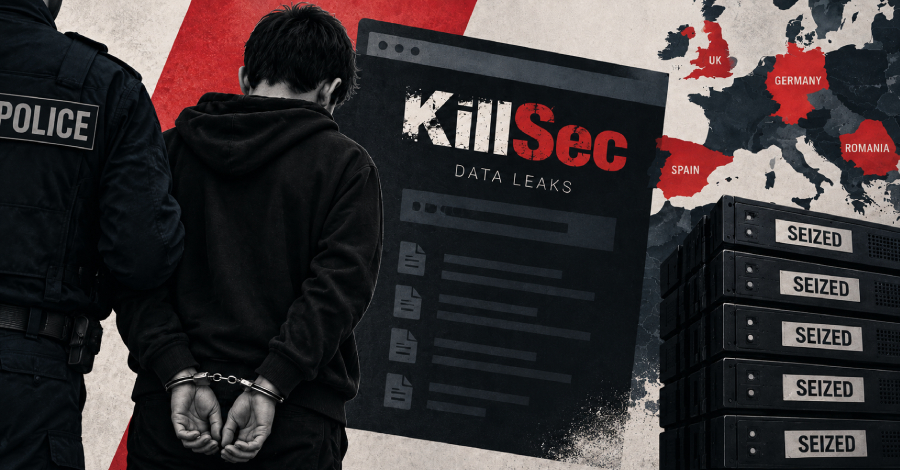
Law enforcement authorities in Spain carried out the detentions on September 30, seizing a 16-year-old suspect believed to be the mastermind behind the operation. The teen was taken into custody in Alicante province, where officers also searched a residence and a hotel office. Two additional suspects, both in their twenties, were separately detained — one in the United Kingdom and the other in Romania.
Hamburg authorities in Germany spearheaded the investigation and publicly identified the minor on October 1 as the group’s primary administrator and operational leader. The arrests have been characterized as provisional, with the 24-year-old Romanian suspect placed under a 30-day custody order by a Bucharest court while the case continues to develop. He is presumed innocent until proven guilty.
## International Cooperation Led to Success
The operation brought together agencies from multiple countries. The Spanish Guardia Civil and Mossos d’Esquadra worked closely with German prosecutors, Europol, and Eurojust to coordinate the multi-country raids. U.S. authorities, including prosecutors in Puerto Rico and the FBI’s San Juan branch, also contributed to the effort. The U.S. has filed an extradition request for the suspect apprehended in Britain.
Security firms Bitdefender and Group-IB provided technical support throughout the probe, which began in early 2025 after the Guardia Civil initiated its investigation following cooperation with the FBI’s Puerto Rico office. The Mossos d’Esquadra separately launched their case after a cyberattack on a Catalan organization earlier this year, which caused damages estimated near one million euros.
## Scope of the Criminal Activity
The group, known for its data-theft-and-extortion tactics, is believed to have carried out approximately 1,000 suspected attacks globally. Around 500 of those have been confirmed as successful, though that number could grow as investigators analyze the vast amount of seized material.
Spanish police estimate the group has victimized more than 280 organizations and accumulated significant ransom payments in cryptocurrency. Europol described the volume of financial gain as “substantial.”
## How the Operation Worked
The group gained entry to corporate networks by exploiting software vulnerabilities and weak security configurations, with a particular focus on poorly protected cloud storage environments. Once inside, members copied sensitive internal data to servers they controlled and then published the victims’ names on a dark web leak site.
Victims were given an ultimatum: pay the demanded ransom or have their confidential files made publicly available — or even freely downloadable — for anyone to access. In some cases, the group went further by threatening to sell the stolen data to other criminal organizations if their demands were not met.
They also purchased access credentials from dark web marketplaces, used those to breach additional targets, and sent victims samples of their own compromised data as proof of theft to pressure them into paying. Authorities noted that the group employed artificial intelligence tools to help build and manage its infrastructure and to identify potential targets.
## What Was Seized
During the operation, law enforcement conducted eight searches across Spain, Greece, the United Kingdom, and Romania. Investigators took control of the group’s dark web leak site and secured at least 110 terabytes of data, preventing further unauthorized release. Hamburg police shut down five servers, including the group’s central server and multiple machines used to store stolen victim data, and placed seizure notices on five domains tied to the organization.
In Spain specifically, officers confiscated computers, mobile phones, and cryptocurrency wallets. Early financial analysis revealed transaction records that appear to match ransom payments received from several victims.
## Identifying the Players
Investigators have mapped out four distinct roles within the group: an administrator, a developer, a negotiator, and an affiliate. Affiliates are external partners who use the group’s malicious tools to carry out attacks on their own targets.
The suspected developer has been identified but has not yet been taken into custody. Notably, this individual turned 18 in August, meaning they were a minor at the time some of the alleged offenses occurred. Authorities have not disclosed which specific role the two other arrested suspects held.
## What Comes Next
Eurojust confirmed that the participating authorities successfully dismantled the group’s operations and that a deeper investigation is now underway. Hamburg police stated that inquiries into additional possible members remain ongoing.
Investigators are currently examining all seized devices and data, tracing cryptocurrency transactions, and following the money trail to identify further victims, attacks, and suspects who may still be at large.
—
## Frequently Asked Questions (FAQ)
**Q: What is ransomware?**
A: Ransomware is a type of malicious software that either encrypts a victim’s files or threatens to publish stolen data unless a ransom is paid. In data-extortion campaigns like this one, the attackers may not even encrypt files — they simply threaten to leak sensitive information publicly.
**Q: Why was a teenager involved in this operation?**
A: The exact motivations are not yet fully understood, but this case highlights a broader trend of younger individuals becoming involved in cybercrime. The suspected developer in this group also turned 18 during the timeframe of some alleged offenses, suggesting the group may have attracted participants who were minors at the time of certain attacks.
**Q: How did law enforcement find the suspects?**
A: The Guardia Civil’s investigation started from a single profile image provided through cooperation with the FBI’s Puerto Rico office. From that image, investigators traced the suspect to Alicante province in Spain. The Mossos d’Esquadra independently opened their case after linking a cyberattack on a Catalan organization to the same group.
**Q: What happens to the seized cryptocurrency?**
A: Cryptocurrency wallets were among the items confiscated during the raids in Spain. Authorities are now conducting detailed financial analysis to trace the flow of ransom payments, which could help identify additional victims and support future prosecutions.
**Q: Were all the stolen data recovered?**
A: Investigigators secured at least 110 terabytes of data when they took control of the leak site, preventing further unauthorized distribution. However, the full extent of what was stolen and whether all copies have been recovered is still being determined.
**Q: Is the group completely shut down?**
A: While the core infrastructure has been dismantled and key members arrested, Eurojust noted that the investigation continues. Hamburg police also stated that searches for additional possible members are ongoing.
—
## Conclusion
This landmark operation demonstrates the power of international law enforcement collaboration in tackling cybercrime. By bringing together agencies from Spain, Germany, the UK, Romania, the United States, and EU-level coordination bodies, authorities were able to dismantle a ransomware group responsible for hundreds of attacks and victimizing over 280 organizations. The involvement of a 16-year-old suspect underscores the urgent need for greater awareness around cybercrime recruitment among young people. While the group’s infrastructure has been significantly degraded, investigators stress that work remains to trace the financial flows, identify remaining suspects, and potentially uncover additional victims. This case serves as a reminder that no organization is beyond the reach of cybercriminals, and that robust cybersecurity practices — particularly around cloud storage and software vulnerability management — remain essential defenses against such threats.
Thank you for reading
