



**SpaceX Stock (SPCX) Underperforms: Can It Recover Like Meta?**
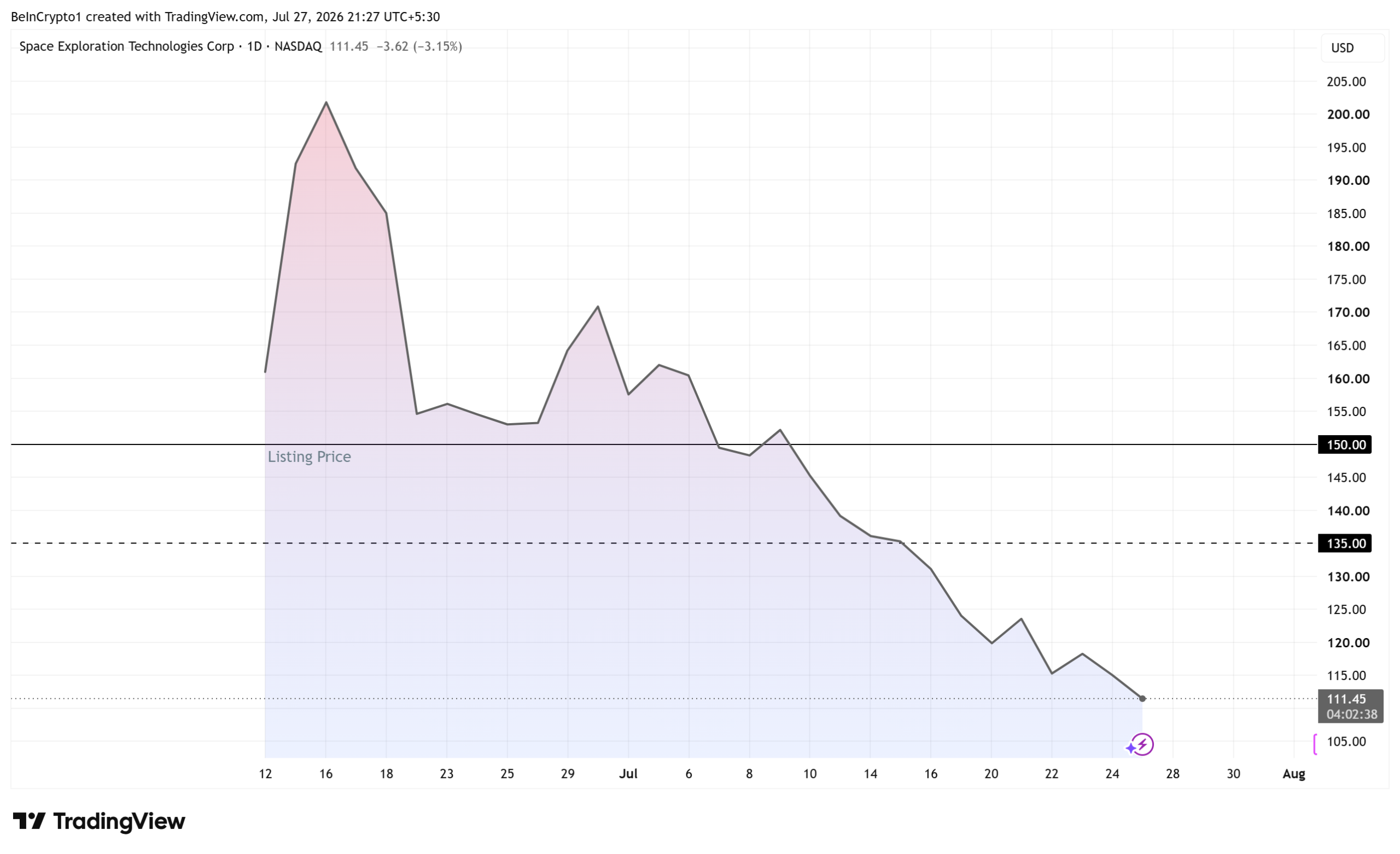
SpaceX’s public stock offering has faced turbulence since its debut. Trading near $115 last week, the stock sits about 15% below its $135 IPO price from June 12. This decline has left early investors searching for clues about a potential recovery.
Examining past IPO performances, particularly Meta’s, offers valuable insights. Meta (then Facebook) experienced a rocky IPO in 2012 but eventually rebounded. SpaceX now faces similar challenges and opportunities.
—
### What Just Happened to SpaceX Stock
SpaceX’s IPO was massive. The company sold 555.6 million shares at $135 each, raising nearly $75 billion and valuing the company near $1.77 trillion. The debut was strong: shares opened at $150 and hit $161 on the first day, peaking at $225.64 by June 16.
However, sentiment shifted. By July 22, the stock had fallen 6.7% to $115.26, roughly 49% below its June high. The company’s value dropped to about $1.52 trillion, and earlier declines had already shaved $500 billion from Elon Musk’s fortune.
Three key issues contributed to the drop:
– Starship setbacks
– New funding for rival Blue Origin
– China successfully landing an orbital booster, a feat SpaceX achieved first in 2015
Pundits compared the drop to a broader market correction, noting that IPO investors now face nearly a 20% loss.
—
### Why Two Dates in August Matter So Much
SpaceX reported earnings for the first time on **August 4**, with a key unlock event occurring on **August 6**. This timing is crucial due to lock-up agreements.
Initially, 911.5 million shares became eligible for trading after earnings were released. Unlike typical lock-ups tied to calendar dates, SpaceX’s was tied to its earnings release.
Elon Musk is unaffected in the short term—his shares are locked for 366 days and cannot be sold until June 2027.
**Follow us on X to get the latest news as it happens**
—
### The Huge Batch of Shares That Will Not Be Sold
Another 455.8 million shares were scheduled to unlock in August. However, most will not enter the market because the stock price must reach $175.50 on five of ten specific days. With the stock trading near $115, this condition is unlikely to occur.
As a result, roughly half of the expected August supply has been removed from the market, reducing immediate selling pressure.
—
### Why Meta Fits Better Than Tesla
Many compare SpaceX to Tesla, but a more accurate parallel is Meta.
– Tesla went public in 2010 with a $226 million raise.
– Meta priced at $38 in 2012 and raised $16 billion.
– SpaceX raised approximately $75 billion—about 330 times more than Tesla.
Like Meta, SpaceX sees its founder maintain significant control. Musk holds 82.4% of voting power while owning less than half the shares, using a dual-class structure.
Small investors had access to about 20% of SpaceX’s offering, down from an expected 30%.
| Metric | SpaceX (2026) | Meta (2012) | Tesla (2010) |
|——–|————–|————-|————–|
| IPO Price | $135.00 | $38.00 | $17.00 |
| Money Raised | $75.0B | $16.0B | $226M |
| Value at Listing | $1.77T | $104B | ~$2B |
| First-Day Close | $161 (+19%) | $38.23 (+0.6%) | $23.89 (+41%) |
| Founder Voting Power | 82.4% | Majority | None special |
| Worst Fall Below IPO Price | 15% so far | 53.3% | Recovered quickly |
| Time to Return to IPO Price | Pending | 14.5 months | Weeks |
—
### What Meta’s Lock-Up Actually Did to the Stock
Meta’s experience is a cautionary tale. In 2012, it faced two unlock events:
– August 16, 2012: 271 million shares released, stock fell 6.3%
– November 14, 2012: 1.19 billion shares released, stock rose 12.6%
Before these events, the stock hit a low of $17.73—a 53.3% drop from the IPO price, far worse than SpaceX’s current decline.
> “This is an example of why it’s so dangerous to rush into buying a heavily hyped IPO during its first few days of trading,” — Peter Schiff
—
### What Would Turn SpaceX Stock Around
Meta recovered not from hope, but from results. On July 24, 2013, it reported mobile ads made up 41% of revenue, up from 14% three quarters earlier. Revenue grew 53%, and the stock jumped 30%, returning to IPO price 14.5 months later.
SpaceX needs its own catalyst. Starlink profitability, launch frequency, and Starship progress are potential drivers. Analysts offer price targets ranging from $156 to $239.
Technical patterns also interest chart watchers—a falling wedge often signals upward movement. Cathie Wood remains a long-term bullish holder, while Google’s stake remains locked.
With its first earnings report just two days before major selling begins, August 4 could be the moment SpaceX proves its recovery potential.
—
### FAQ
**Q: Why is SpaceX stock down since its IPO?**
A: The stock has declined due to Starship delays, increased competition from Blue Origin, and China’s successful booster landing, which reduced the uniqueness of SpaceX’s achievement.
**Q: What is a lock-up period, and why does it matter for SpaceX?**
A: A lock-up period prevents insiders from selling shares immediately after an IPO. For SpaceX, the lock-up expires after earnings on August 4, potentially allowing 911.5 million shares to be sold.
**Q: Will all the scheduled shares be sold in August?**
A: No. A second batch of shares only unlocks if the stock reaches $175.50 on five of ten days before August 6—a condition currently unlikely given the stock’s price.
**Q: How does SpaceX compare to Tesla?**
A: While often compared, SpaceX raised far more capital than Tesla did in its IPO. A more accurate comparison is with Meta, given the scale of fundraising and founder control structure.
**Q: When could SpaceX stock recover?**
A: Recovery may depend on strong earnings on August 4, particularly regarding Starlink performance and Starship progress. Historical examples, like Meta, show IPO slumps can reverse after positive results.
—
### Conclusion
SpaceX’s post-IPO decline mirrors early challenges faced by other high-profile tech stocks. While the current 15% drop from offering price is significant, it remains relatively modest compared to Meta’s 53% fall. The coming days are critical: August 4’s earnings report could define the stock’s trajectory for months. Investors will watch not just the numbers, but the signals about growth, innovation, and execution that will determine whether SpaceX can unlock its next upward phase.
