



The cybersecurity panorama is accelerating at an unprecedented price. What’s rising will not be merely an increase within the variety of vulnerabilities or instruments, however a dramatic enhance in pace. Velocity of assault, pace of exploitation, and pace of change throughout fashionable environments.
That is the defining problem of the brand new period of digital warfare: the weaponization of Synthetic Intelligence. Risk actors, from nation-states to classy felony enterprises, are now not simply attacking. They’re automating your entire kill chain.
On this AI arms race, conventional defensive methods are now not adequate. Periodic point-in-time assessments, handbook triage, and human-speed response have been already underneath stress in fast-moving environments. In opposition to AI-enabled adversaries, they’re more and more insufficient.
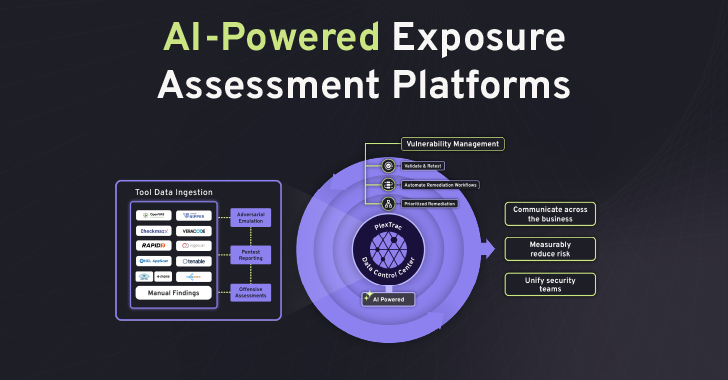
Options like PlexTrac are constructed to assist organizations transfer past fragmented findings, disconnected instruments, and sluggish handbook workflows by unifying publicity administration, remediation, and validation in a single operational system. Because the hole between discovery and exploitation continues to shrink, safety groups want a solution to constantly assess publicity, prioritize what issues, and drive motion shortly sufficient to maintain tempo.
To maintain up with adversaries utilizing AI, defenders should use AI as effectively. Particularly, they want the convergence of two crucial capabilities: Autonomous Publicity Evaluation and Steady Risk Evaluation powered by Agentic AI.
The Fashionable Adversary – AI within the Arsenal of Risk Actors
To grasp the protection, it’s vital to know the assault.
AI has change into a drive multiplier for risk actors. Adversaries are utilizing generative AI to create extremely focused phishing campaigns at scale. They’re utilizing machine studying to investigate defenses, determine vulnerabilities mechanically, and chain collectively advanced assault paths sooner than any human operator. Maybe most alarming is the rise of polymorphic malware, which might rewrite its personal code in actual time to evade signature-based detection.
Gone are the times of manually researching and discovering vulnerabilities, figuring out whether or not a number of might be chained collectively, and deciding whether or not they can be utilized to succeed in a goal. At the moment, that cycle might be compressed into hours or days by way of AI-driven automation.
Briefly, risk actors are actually working with higher pace, stealth, and effectivity than ever earlier than.
Staying Forward with Unified Publicity Administration
1. Sustainable Autonomous Publicity Evaluation
On this high-velocity surroundings, understanding the assault floor is the inspiration of protection. However conventional vulnerability administration is damaged. It’s too sluggish, too noisy, and produces flat, disconnected knowledge.
That is the place AI-powered publicity evaluation platforms like PlexTrac matter.
PlexTrac features because the sensory system of a contemporary protection technique. It doesn’t simply scan for CVEs. It ingests knowledge from throughout the ecosystem — cloud misconfigurations, id dangers, utility flaws, pentest findings, and extra — to create a unified, dynamic view of threat.
With PlexTrac, organizations can:
Reduce by way of the noise
Apply context-aware scoring to prioritize the vulnerabilities that really current significant threat, as an alternative of overwhelming groups with hundreds of “critical” alerts.
Visualize the assault path
Transfer past remoted findings and see how a risk actor might chain seemingly minor weaknesses right into a domain-wide compromise.
Transfer from reactive to proactive
Use automated assessments and predictive perception to determine the place threat might emerge subsequent, so groups can strengthen defenses earlier than assaults happen.
2. Steady Risk Evaluation with Agentic AI
Publicity evaluation gives visibility, however visibility alone is just a prerequisite to motion. To remain forward within the AI arms race, organizations want autonomous, steady validation. That is the place Agentic AI turns into vital.
Agentic AI represents a significant shift from conventional AI copilots. Reasonably than ready for prompts, agentic programs can plan, cause, and execute multi-step duties with higher autonomy.
This transforms Steady Risk Evaluation from an idea right into a sensible functionality.
Autonomous Pentesting
Agentic AI can function as an artificial purple teamer, constantly testing defenses. It doesn’t sleep, it doesn’t fatigue, and it might probably simulate fashionable AI-driven assault methods in actual time.
This contains the flexibility to:
Plan and adapt assault paths
Reasonably than operating by way of a static guidelines, these programs can analyze community topology, prioritize targets, and assemble multi-stage assault paths. In the event that they encounter a barrier, they will regulate techniques in ways in which higher resemble a talented human operator.
Emulate adversary behaviors
Utilizing foundational fashions skilled on giant units of risk intelligence, these programs can emulate recognized TTPs or simulate rising AI-enabled assault strategies.
Validate defensive stack effectiveness
They’ll constantly check whether or not SIEM, EDR, and XDR instruments are literally detecting the suitable behaviors and alerting the suitable individuals, offering proof of defensive effectiveness slightly than assumed protection.
Adapt in actual time
As community configurations change or new risk intelligence emerges, agentic programs can replace their evaluation logic and testing procedures to maintain tempo with the true risk surroundings.
By automating a lot of the repetitive work of purple teaming, organizations can free human operators to give attention to really novel, subtle, and nuanced assault vectors.
3. Closing the Loop – AI-Pushed Remediation and Validation
Discovering a vulnerability will not be sufficient if it nonetheless takes weeks to repair. Adversaries exploit this delay.
This is the reason PlexTrac’s position in closing the loop is so vital. Publicity administration can not cease at detection. It should prolong into remediation and validation.
When an exploitable path is recognized, AI-enabled workflows inside an publicity administration platform might help transfer that subject into motion sooner:
Instantaneous context and ticket creation
The second a crucial path is validated, an in depth remediation ticket might be generated in programs like Jira or ServiceNow, full with replica steps, severity context, and required motion.
Automated coverage updates
If a firewall is misconfigured, the mandatory configuration change might be drafted and ready for human approval earlier than deployment.
Orchestrated patch administration
For crucial vulnerabilities, the workflow can prioritize the patch, help testing in staging, and speed up deployment to scale back imply time to remediate.
Automated validation
Brokers can validate whether or not the controls put in place to remediate a problem have truly taken impact, serving to groups scale back threat whereas gaining higher worth from their current safety stack.
By integrating Agentic AI-powered purple teaming, remediation, and validation into an publicity administration platform, PlexTrac offers organizations the flexibility to struggle AI with AI. That is how safety groups transfer from fixed vulnerability to provable, steady posture assurance.
A New Path Ahead for Cybersecurity Resilience
Cybersecurity resilience now is determined by proactive perception, steady validation, and the flexibility to maneuver sooner than handbook workflows permit. The objective is to maneuver from a chaotic, reactive posture to at least one that’s intentional, resilient, and measurable.
PlexTrac is targeted on serving to safety groups make that shift by combining unified publicity administration with AI-driven capabilities that automate the tedious, consolidate the fragmented, and speed up motion.
The AI arms race is right here.
The query is now not whether or not organizations will probably be focused by risk actors utilizing AI. The query is whether or not they may develop the resilience, perception, and bounded autonomy required to resist them.
Be aware: This text was expertly written and contributed by Rohit Unnikrishnan, Chief Product & Know-how Officer at PlexTrac. Rohit is a seasoned cyber safety government with a background in Product Administration, Market Evaluation, Technique, Gross sales and Engineering. Over the past twenty years, he has worn many hats – engineer, operator, gross sales, product supervisor and entrepreneur. Along with his various expertise, he brings a novel capacity to handle cross-functional groups and execute on multi-disciplinary engagements.
