



# Why Bitcoin Hasn’t Soared Alongside US Debt: Understanding the Shifting Macro Landscape
**The United States federal debt has surpassed $40 trillion. Government deficits remain close to 6% of GDP, and long-term borrowing costs have stayed elevated for months. Yet Bitcoin is trading near $80,000 — roughly 37% below its all-time high from late 2025. For fans of the “debasement thesis,” this disconnect raises a pressing question.**
If fiscal recklessness and the erosion of fiat currency are supposed to drive capital toward scarce stores of value, why has Bitcoin spent much of 2026 in a downtrend?
## The Debasement Thesis: What It Means and Why It Matters
At its core, the debasement trade is built on a straightforward chain of logic. Governments running persistent, large-scale deficits eventually face a choice: either cut spending dramatically or allow borrowing costs to spiral out of control. Most policymakers choose a middle path — they tolerate some level of monetary accommodation to keep debt service manageable.
When that happens, the purchasing power of the currency tends to decline over time. Investors historically respond by reallocating capital toward assets that cannot be printed or inflated away: gold, real estate, and increasingly, Bitcoin.
The thesis has had its moments of validation. When deficit fears peaked in certain periods, Bitcoin rallied sharply. But the trade depends entirely on **expectations** about future policy — not just on current data points.
## How the Trade Unraveled Earlier in 2026
The debasement narrative weakened considerably in early 2026. Bitcoin dropped below $62,000 at one point, and precious metals like gold and silver also pulled back from their peaks. What changed?
Analysts pointed to shifts in the political and institutional landscape. The nomination of certain figures to lead the central bank raised concerns among traders that monetary policy might stay tighter for longer. Even though the fiscal deficit remained enormous, the expected path toward easier money became murkier.
In essence, investors were still watching the same enormous debt numbers, but they started to doubt that policy would bend in favor of asset prices. When confidence in a currency debasement scenario falters, so does the trade built on that scenario.
## The Bond Market Steps In
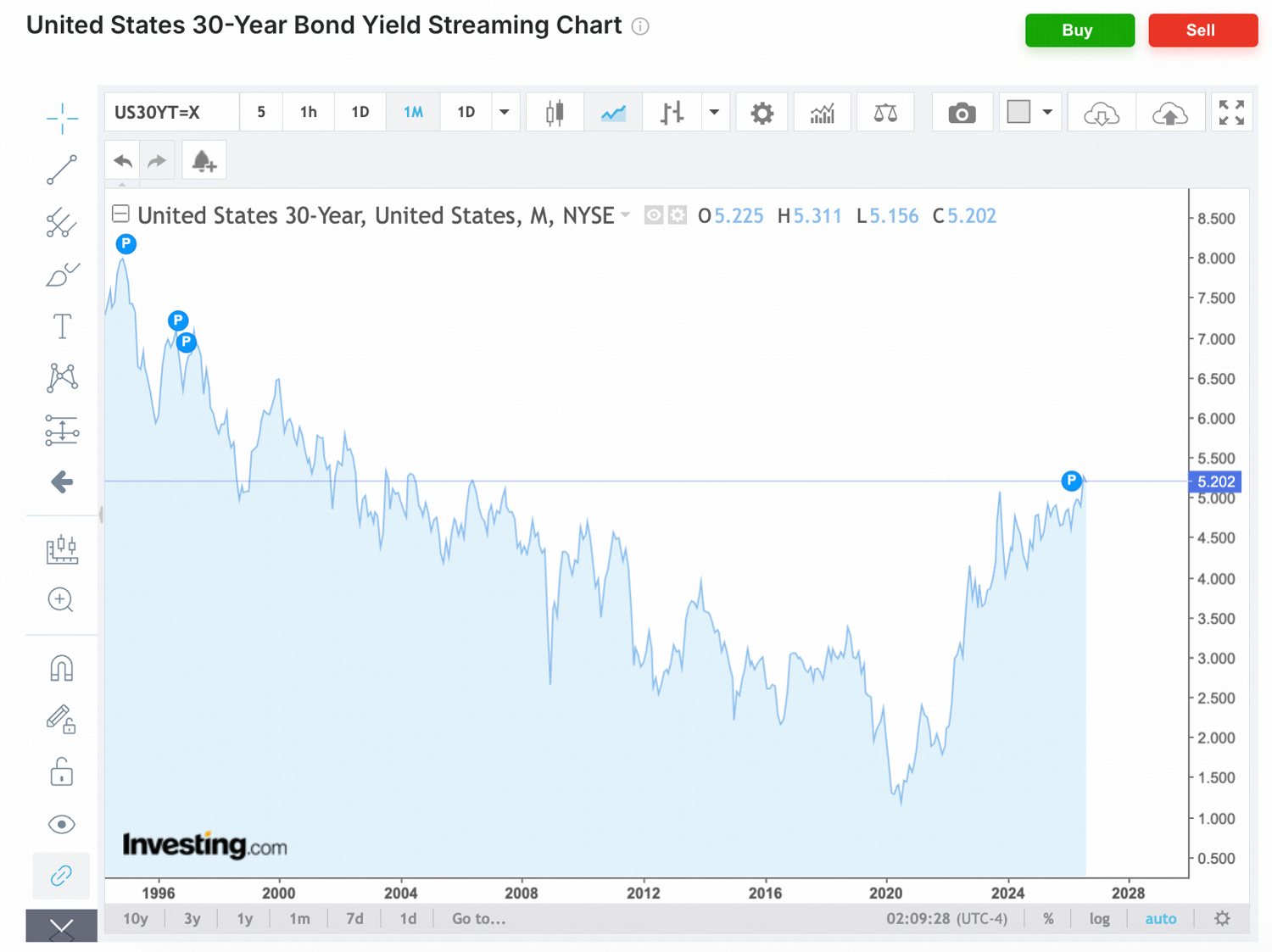
Something shifted in August. The 30-year US Treasury yield climbed to levels not seen since 2007, signaling deep unease among bond markets about the sustainability of government borrowing.
Shortly afterward, the Treasury announced a significant expansion of its buyback program for medium- and long-term bonds, more than doubling the maximum size of individual operations. In the days that followed, Bitcoin surged roughly 25%, while gold added approximately 15%.
The timing is hard to ignore. When a government moves aggressively to support its own bond market immediately after a sharp selloff in long-term yields, it sends a signal: **there appears to be an informal ceiling on borrowing costs.**
This is different from directly printing money. It is a policy response that suggests authorities are no longer willing to let the bond market dictate the cost of government debt without intervention.
## Why Treasury Buybacks Are Not the Same as Central Bank Money Creation
It is important to draw a distinction. The Treasury does not have the power to create money the way a central bank does. Buybacks are funded through existing cash reserves, tax receipts, or by issuing new debt in the short term. Mechanically, this is not the same process as large-scale balance-sheet expansion by the monetary authority.
However, markets often respond to **signals and direction** as much as to mechanical liquidity effects. If investors begin to perceive a pattern — that rising long-term yields will consistently trigger government action to suppress them — they may start pricing that expectation into asset values.
The result is a subtler form of the same dynamic: a gradual erosion of confidence in the real return of fixed-income assets, which benefits scarce and decentralized alternatives over time.
## Bitcoin’s Real-Yield Problem Remains Unresolved
Despite the improving fiscal backdrop, a significant headwind persists for Bitcoin: **real yields are still positive and meaningful.**
Current data shows US public debt hovering around 101% of GDP, with the annual deficit projected near $1.9 trillion. Meanwhile, the money supply has resumed its expansion. Yet 10-year real Treasury yields — adjusted for inflation — remain at levels that offer investors a respectable inflation-adjusted return with virtually no risk.
Why would a rational investor take on the volatility and regulatory uncertainty of cryptocurrency when a government bond delivers a solid real return? That is the question Bitcoin bulls must answer convincingly.
This real-yield environment also explains why Bitcoin’s 2026 price action has largely followed a more traditional cryptocurrency cycle pattern. The asset peaked approximately 534 days after the halving event in April 2024, which aligns closely with the timing of prior cycle peaks in 2017 and 2021. After that peak, Bitcoin fell by more than half before staging a recovery.
The four-year cycle dynamics remain very much in play, at least for now.
## Historical Precedents: When Governments Bent the Rules
History provides a striking parallel. During and after World War II, the Federal Reserve maintained an explicit cap on long-term Treasury yields at 2.5% through 1951. This policy allowed the government to finance massive wartime borrowing at manageable costs. In the years that followed, inflation steadily eroded the real return of those bonds, pushing yields deeply negative in inflation-adjusted terms.
Bitcoin does not require an identical scenario to benefit. It only requires a growing belief among investors that governments will increasingly defend their debt markets against the pressure of their own borrowing costs.
## What Comes Next: A Fragile Equilibrium
Right now, Bitcoin sits at an inflection point. On one side, a traditional crypto cycle explains much of the weakness seen so far in 2026. On the other side, the fiscal environment — historically unprecedented debt levels, persistent deficits, and market stress at the long end of the yield curve — is pushing scarce assets higher again.
The critical variable going forward is **policy response.** If real yields begin to decline while fiscal pressure remains elevated, the debasement thesis gains significant traction. If instead, policymakers hold firm and allow rates to stay higher for longer, the headwinds to speculative and scarce assets could persist.
August 2026 may have been the moment when the bond market started making its preferences clear. Whether that translates into sustained price appreciation for Bitcoin remains an open and actively debated question.
—
## Frequently Asked Questions
**Q: What is the “debasement trade” in simple terms?**
A: The debasement trade is the idea that when governments run large deficits and expand their money supply over time, the purchasing power of their currency declines. Investors then move money into assets that cannot be inflated away — such as gold, real estate, and Bitcoin — causing those assets to rise in value.
**Q: Why did Bitcoin fall if US debt keeps growing?**
A: Rising debt alone does not automatically lift Bitcoin. The debasement trade depends on expectations about **future monetary policy**. If investors believe the central bank will keep rates high and avoid aggressive money creation, the incentive to flee into scarce assets weakens — even if the debt numbers are enormous.
**Q: Are Treasury buybacks the same as the central bank printing money?**
A: No. The Treasury cannot create money directly. Buybacks are funded from existing cash, tax revenue, or new short-term borrowing. However, the **perception** that rising yields will trigger government intervention can influence market behavior in ways similar to monetary easing.
**Q: What role do real yields play for Bitcoin’s price?**
A: When real yields are high, government bonds offer strong inflation-adjusted returns with minimal risk. This makes riskier assets like Bitcoin less attractive by comparison. Bitcoin tends to perform better when real yields fall or turn negative, reducing the opportunity cost of holding non-yielding assets.
**Q: Does the traditional four-year Bitcoin cycle still apply?**
A: As of mid-2026, Bitcoin’s price movement still largely tracks the pattern of previous cycles, with a peak roughly 534 days after the 2024 halving followed by a significant correction. Whether the macroeconomic environment will override this cyclical pattern remains uncertain.
**Q: Could Bitcoin benefit even without extreme monetary debasement?**
A: Yes. Bitcoin does not need a full-blown currency crisis to benefit. It mainly needs investors to increasingly believe that governments will continue to defend their debt markets and that long-term real yields will stay suppressed. Even a modest shift in that direction can support demand for scarce digital assets.
—
## Conclusion
The relationship between exploding government debt and Bitcoin’s price is far more nuanced than the simplest version of the debasement thesis would suggest. Massive fiscal deficits create the long-term conditions for a shift away from traditional store-of-value assets, but short-term market dynamics — real yields, institutional expectations, policy signals, and cyclical patterns — all shape when and how that shift materializes.
The bond market’s stress in 2026, combined with the government’s aggressive use of buybacks to manage long-term yields, suggests that something is changing in how markets price the interaction between fiscal policy and asset values. Bitcoin remains caught between a familiar four-year cycle and a macro backdrop that is increasingly unfavorable for traditional fixed-income instruments.
The debasement trade is not dead. It may simply be entering a more complex and conditional phase — one where timing, policy credibility, and real yield movements matter more than ever before.
Thank you for reading
