



**Supreme Court Justices Testify Before Congress on Threats, Ethics, and Security Concerns**
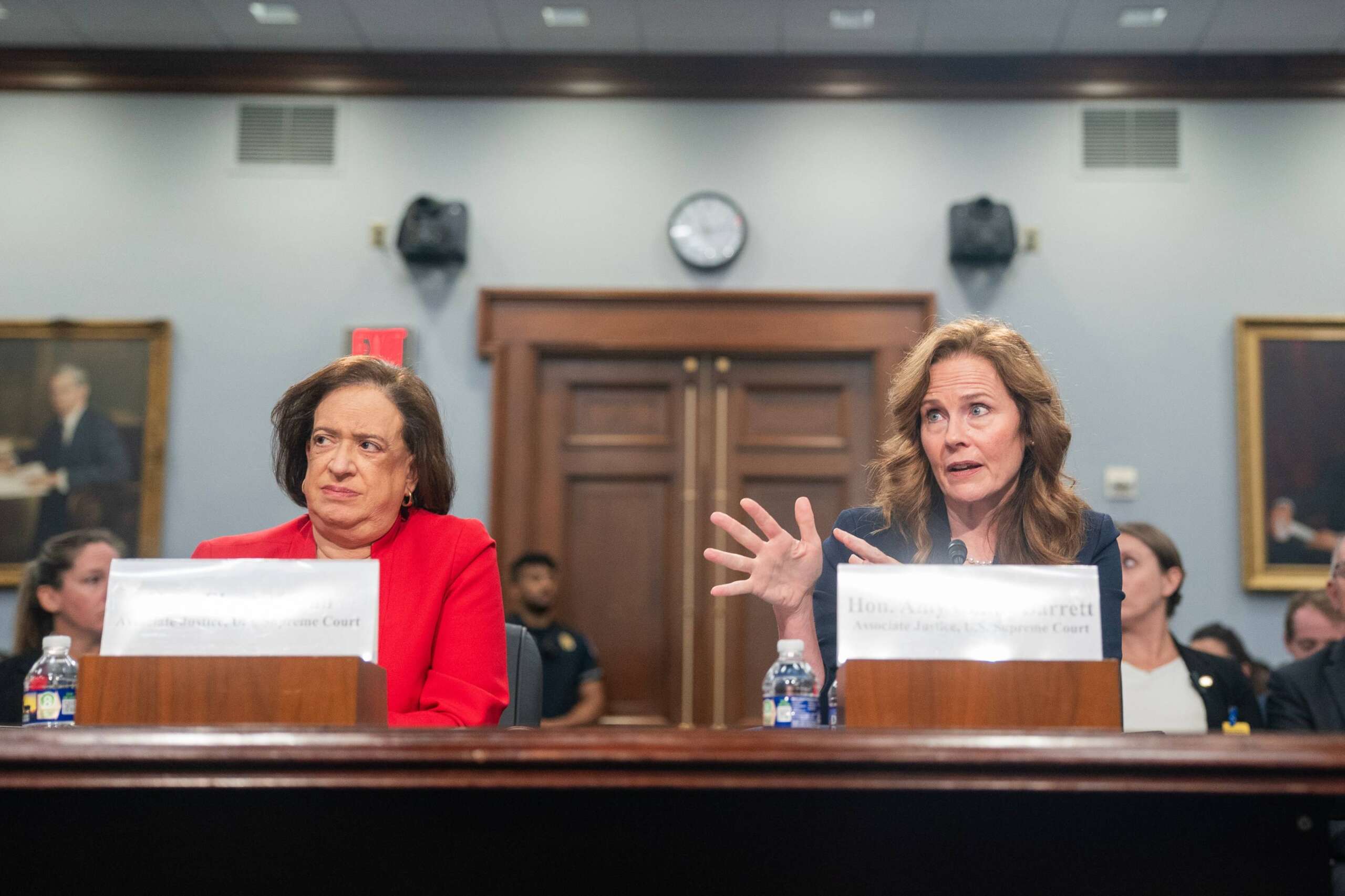
In a rare occurrence, Supreme Court Justices Amy Coney Barrett and Elena Kagan testified before Congress in 2026, addressing growing concerns about threats, ethics, and security funding for the justices. This appearance marked the first testimony by Supreme Court justices before Congress since 2019 and came after a series of high-profile rulings that have sparked intense public and political scrutiny.
The hearings underscored a critical issue: the rising threats and challenges facing members of the Supreme Court in the current polarized climate. Both justices detailed the increasing dangers, with Barrett revealing she had to take a bulletproof vest home to explain to her son why she needed it, while Kagan reported a sharp rise in threats in recent years.
—
### **Security Demands a Top Priority**
Security emerged as the dominant theme of the testimonies. The Supreme Court has requested $228 million for the next fiscal year, a 10% increase from the previous budget. A significant portion of this—$14.6 million—aims to bolster personal protection for justices by adding six more agents per justice.
The U.S. Marshals Service reported 564 threats in the last fiscal year, reflecting a broader trend of threats against federal judges. The justices themselves have been targeted, including through swatting incidents, bomb threats, and even an attempted assassination involving Justice Brett Kavanaugh in 2022 following the leak of the Roe v. Wade draft opinion.
Barrett and Kagan both emphasized the growing intensity of threats and their impact not only on personal safety but also on the functioning of the judiciary.
—
### **Ethics and the Shadow Docket Under Scrutiny**
The testimonies also explored critical questions about ethics and the court’s controversial “shadow docket,” where emergency rulings are made with minimal explanation. Democrats pushed for greater accountability, particularly after the adoption of the court’s ethics code in 2023 amid backlash over undisclosed gifts and trips.
Kagan argued for the need for an enforcement mechanism, although she acknowledged the complexities such a system might present. Barrett, on the other hand, expressed skepticism, stating uncertainty about how enforcement could be implemented effectively.
—
### **Emergency Appeals: A Growing Concern**
Kagan also highlighted issues related to the increasing use of emergency appeals, which allow the court to make swift decisions on cases still in lower courts. While such rulings are often temporary, they can have immediate and far-reaching consequences. The surge in emergency appeals, particularly during Trump’s second term, has raised concerns about insufficient briefing and lack of thorough deliberation.
—
### **FAQ**
**Q: Why did the Supreme Court justices testify before Congress in 2026?**
The testimonies were primarily focused on addressing the growing security threats faced by the justices and discussing the Supreme Court’s budget requests. Ethical concerns and the rising use of emergency appeals were also key topics.
**Q: What was the main request in the Supreme Court’s budget proposal?**
The Supreme Court requested $228 million for the next fiscal year, with $14.6 million allocated to expanding personal protection for justices by adding six more agents for each justice.
**Q: What concerns were raised about the shadow docket?**
Democrats scrutinized the lack of transparency and accountability in the shadow docket, particularly following the adoption of the ethics code in 2023. Questions were raised about enforcement mechanisms for the code.
**Q: What are emergency appeals, and why are they controversial?**
Emergency appeals allow the Supreme Court to issue quick decisions on cases still in lower courts. They are controversial because such rulings often lack detailed explanations and can have immediate real-world impacts, especially during politically sensitive moments.
—
### **Conclusion**
The testimonies of Justices Amy Coney Barrett and Elena Kagan marked a significant moment in the relationship between the judiciary and Congress. The hearing illuminated the escalating threats faced by Supreme Court justices, the complexities of enforcing ethics standards, and the challenges posed by emergency rulings. As the nation continues to grapple with the role and function of its highest court, these critical issues demand attention and action to safeguard the judiciary’s independence and security.
—
*Copyright © 2026 The Associated Press. All rights reserved.*
