



# The New Reality of Industrial Transformation: How UK Manufacturers Are Embracing Intelligent Technology
## The Shift from Innovation to Operations
The engineering and manufacturing landscape across the United Kingdom is undergoing a profound transformation. Technologies that were once confined to research labs and pilot programmes are now entering production floors at an unprecedented pace. Industrial artificial intelligence, digital twins, cyber security frameworks, electrification strategies and advanced automation systems are no longer futuristic aspirations — they are becoming practical, day-to-day tools for improving output, safeguarding operations and building long-term industrial capability.
The question confronting UK manufacturers today is not whether these technologies hold value, but rather how they can be deployed in ways that deliver measurable gains in productivity, strengthen operational resilience and sustain competitive advantage over time.
## The Pace of Change is Accelerating
Recent discussions across the engineering and manufacturing sector reveal a clear trend: the speed of industrial change is quickening rapidly. What was once a distant conversation about digital potential has become an urgent, present-day priority. Technologies such as artificial intelligence, machine learning and connected automation are being positioned as immediate levers for performance improvement, not as abstract concepts for future consideration.
This shift is evident in the way businesses are framing their investment decisions. Rather than asking whether a particular technology works, manufacturers are increasingly asking how it can be integrated into existing workflows, how it compares in cost to the gains it delivers, and what level of workforce training is required to make it effective.
## The Real Challenge Lies in Implementation
For many manufacturers, the path from ambition to execution is fraught with complexity. A significant portion of industrial capacity still relies on legacy equipment that was not designed with modern connectivity in mind. Skills gaps continue to slow transformation efforts, and the growing interconnectivity of industrial systems has expanded the attack surface for cyber threats.
On top of these technical hurdles, companies face mounting pressure to simultaneously improve throughput, reduce environmental impact, diversify supply chains and maintain cost discipline. Balancing all of these priorities demands a clear-eyed approach to technology adoption — one that prioritises practical outcomes over novelty.
The conversation around artificial intelligence has matured considerably. The industry is moving past the initial enthusiasm phase into a more rigorous evaluation stage. Key questions now include: where can AI genuinely enhance quality control and predictive maintenance? How should human decision-making remain central in automated environments? What does responsible, compliant deployment look like in settings governed by strict data regulations? And perhaps most critically, how can organisations prevent promising digital initiatives from stalling after the pilot stage?
## The Broader National Context
These challenges unfold within a wider national industrial strategy that places increasing importance on technological self-sufficiency and advanced manufacturing capability. The UK government has signalled that AI, automation and sovereign digital infrastructure are central to its vision for economic growth and industrial resilience. Manufacturers are expected to think not only about operational efficiency but also about national capability, supply chain friend-shoring and the ability to scale advanced production at pace.
Investment in research, advanced materials and intelligent systems continues to grow, demonstrating how digital tools can compress development timelines, improve manufacturing throughput and build durable industrial capacity. However, these developments also highlight a fundamental truth: technological adoption depends on collaboration between industry, academia and technology partners just as much as it depends on the sophistication of the tools themselves.
## Applied Intelligence and Smart Factory Integration
One of the most notable developments in the sector is the growing focus on applied artificial intelligence and smart factory integration. This means bringing together data from legacy machinery, siloed sensor networks and modern analytics platforms to create a unified digital intelligence layer across the operation.
Manufacturing intelligence platforms are emerging that can ingest information from older equipment, normalise it with data from newer connected assets, and present actionable insights to plant managers in real time. The goal is not merely digitisation for its own sake, but creating a coherent operational picture that supports better decision-making across maintenance planning, quality assurance and production scheduling.
Digital twin technology — virtual replicas of physical assets and processes — is also moving from experimentation into practical use. These digital models allow engineers to simulate changes, predict failures and optimise performance without disrupting live production. When combined with cyber security protocols and IT/OT convergence strategies, they offer a powerful framework for modernising industrial environments while managing risk.
The emphasis across the sector has become clear: there is far less interest in theoretical promise and far more interest in return on investment, scalability and technologies that perform reliably beyond proof-of-concept demonstrations.
## The Role of Industry Forums
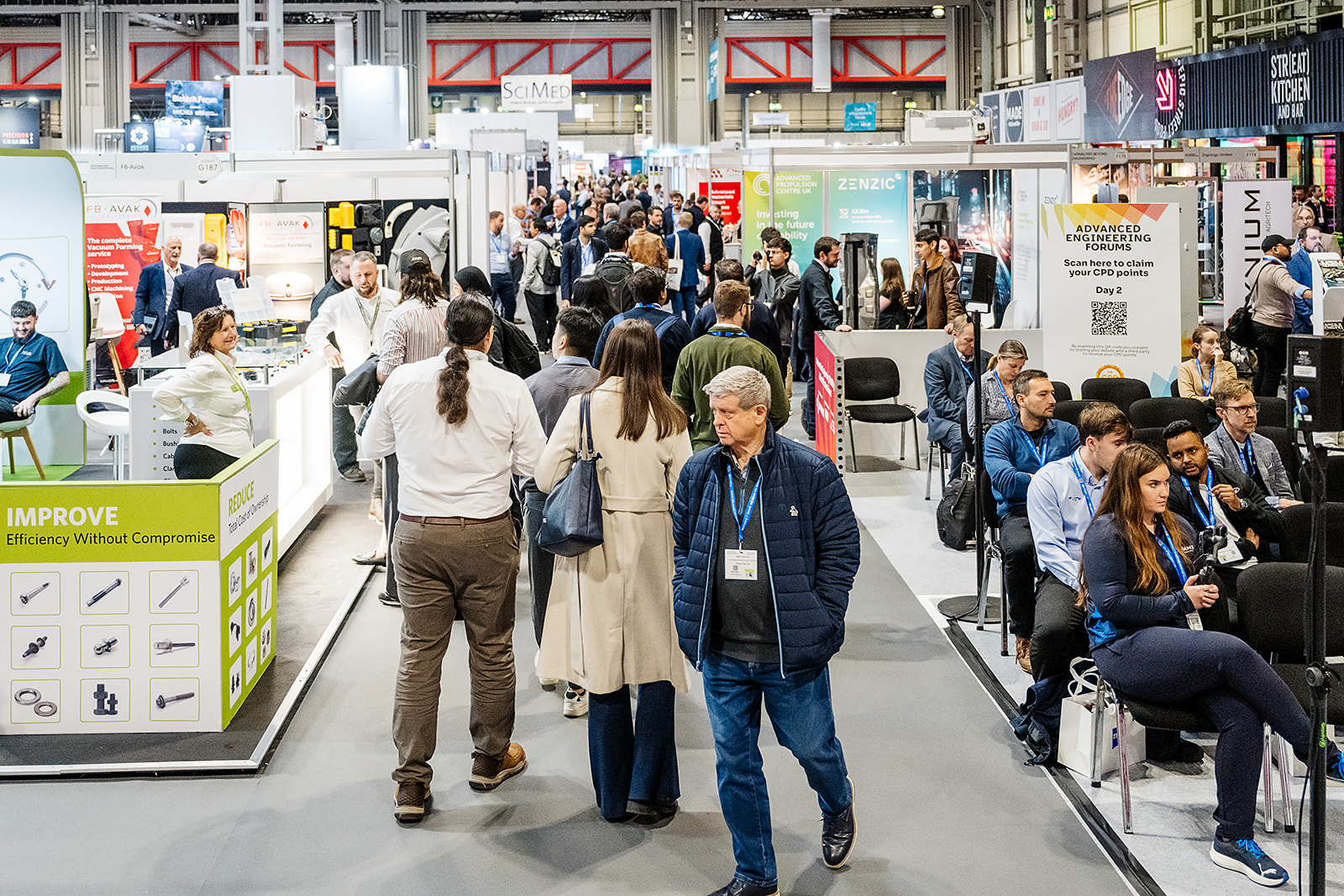
Industry gatherings and technical forums have taken on a new kind of significance during this period of transition. Their value extends beyond product showcases and technology demonstrations. These events serve as essential meeting points for engineers, manufacturers, technology providers and strategic decision-makers who are all navigating the same changes from different perspectives.
In periods of rapid transformation, the opportunity to discuss shared challenges, exchange practical insights and explore collaborative solutions becomes invaluable. Forums and conferences help translate broad technological trends into context-specific, actionable strategies for individual businesses.
## Frequently Asked Questions
**Q: Which industrial technologies are currently having the greatest impact on UK manufacturing?**
A: Industrial AI, digital twins, advanced automation, cyber security solutions and electrification are among the most influential technologies right now. Each addresses a different aspect of modern manufacturing — from predictive maintenance and quality optimisation to supply chain resilience and energy efficiency.
**Q: Why is implementation proving more difficult than adoption of the technology itself?**
A: Implementation challenges stem from legacy equipment incompatibility, workforce skills gaps, rising cyber security risks and the complexity of integrating new systems with established workflows. Manufacturers also need to ensure that digital initiatives deliver measurable commercial returns rather than remaining confined to pilot programmes.
**Q: How can manufacturers ensure their digital investments deliver real results?**
A: The most successful approach involves starting with a clear operational problem rather than a technology preference, running focused pilot projects with defined success metrics, ensuring strong data governance, and building in human oversight mechanisms. Scalability and integration with existing infrastructure are key considerations from the outset.
**Q: What role does the government play in supporting industrial technology adoption?**
A: The UK government has positioned AI, automation and advanced manufacturing as pillars of its industrial strategy, channeling investment into research infrastructure, skills development and schemes that encourage innovation collaboration between businesses and academic institutions.
**Q: Is cyber security becoming a bigger concern for manufacturers?**
A: Yes. As industrial systems become more connected and reliant on data-driven decision-making, the potential attack surface grows. Manufacturers are increasingly needing to embed robust cyber security into both their operational technology and information technology environments to protect against disruptions and data breaches.
**Q: How are digital twins being used in manufacturing settings today?**
A: Digital twins are being used to simulate production processes, monitor asset health in real time, predict maintenance needs and test process changes virtually before applying them to physical equipment. This reduces risk, minimises downtime and accelerates optimisation.
## Conclusion
The industrial sector stands at a pivotal juncture. The technologies that were once considered experimental are now essential tools for maintaining competitiveness, ensuring operational continuity and building the advanced manufacturing capabilities the UK economy needs. Success will depend not just on access to these technologies, but on the ability to implement them wisely — with commercial discipline, strong cyber security, workforce development and genuine collaboration at the centre of every initiative.
Manufacturers that move decisively from experimentation to scaled, well-governed deployment will be best positioned to thrive in an increasingly complex and competitive global landscape. The time for practical action is now.
Thank you for reading
