



# America’s Army: Building the Foundation of a Stronger Joint Force
The annual gathering of the Association of the United States Army (AUSA) is one of the most important events on the defense calendar each year. This year’s convention carries a clear and deliberate message: America’s Army serves as the backbone of the joint fighting force, and that role has never been more critical.
## The Army as the Cornerstone of Joint Operations
For decades, military planners and leaders have recognized a fundamental truth: no matter how advanced aircraft become or how powerful naval fleets grow, ground-based operations remain the linchpin of any successful joint campaign. The Army provides logistics, medical support, communications infrastructure, and the physical presence on land that enables air, sea, and cyber operations to succeed.
This concept has deep historical roots, stretching back to World War II when joint operations first became a formal doctrine. Today, the joint force encompasses domains ranging from air and land to sea, space, and cyberspace. Across all of these domains, the Army remains the stabilizing foundation that allows the broader force to project power and maintain readiness.
Leaders argue that a robust and well-equipped Army is the single greatest deterrent against potential adversaries. The logic is straightforward — no rational actor would initiate hostilities against a nation whose combined military capabilities are so deeply integrated and formidable that victory would be virtually impossible.
## Navigating a Complex and Rapidly Evolving Landscape
The Army currently faces a period of significant transformation. Budgetary constraints, shifting global threats, and the accelerating pace of technological change all present formidable challenges. Traditional equipment needs — tanks, aircraft, naval vessels, ammunition stockpiles — must be maintained even as emerging technologies like unmanned aerial systems reshape modern warfare.
The acquisition process itself has come under scrutiny. Military officials acknowledge that getting new capabilities into the hands of soldiers quickly enough remains one of the most pressing operational challenges. The speed of change across society — driven by digital connectivity, instant communication, and an overwhelming volume of information — has only intensified the pressure to adapt faster.
At the same time, the Army must preserve the fundamental skills and doctrines that have kept it effective for generations. The tension between maintaining proven traditions and embracing innovation is a delicate balancing act that military institutions worldwide are grappling with right now.
## Alliances, Partnerships, and the Importance of Joint Training
The United States benefits from some of the most extensive military alliances in the world. NATO stands as a testament to the power of collective defense, while partnerships in the Pacific and beyond extend the reach and credibility of American security commitments.
Military exercises play a vital role in sustaining these relationships. Large-scale training events bring together forces from dozens of nations, testing interoperability, communication systems, and shared tactics under realistic conditions. These exercises are enormously complex, requiring coordination across language barriers, equipment standards, and operational doctrines.
When geopolitical tensions rise, adjustments to the scope and visibility of such exercises are sometimes made. Reducing the profile of a training event does not mean abandoning cooperation — it reflects a thoughtful approach to avoiding provocation while still maintaining readiness and coordination. The key is ensuring that allies and partners continue to work together, even if the scale or public profile of certain activities shifts.
This year’s AUSA meeting reflects the growing depth of global partnerships, with over 100 countries participating. Defense companies from around the world will showcase their capabilities, and hundreds of meetings between allied nations, their industries, and American counterparts will take place.
## The Defense Industrial Base and Collaborative Solutions
One of the most striking examples of partnership-driven problem-solving in recent years has been the response to ammunition shortages in the defense industrial base. When demand for specific artillery rounds surged — driven by conflict in Europe — no single nation could meet the shortfall alone. Through collaborative production agreements with European allies and partner nations, supply chains were diversified and production capacity was expanded far beyond what any one country could achieve independently.
This model of shared industrial effort is becoming increasingly central to how the United States approaches defense procurement. By leveraging the capabilities of allied defense industries, the U.S. military can access a broader talent pool, more diverse manufacturing capacity, and innovative technologies that might not be available domestically.
## The Drone Revolution and Counter-Drone Capabilities
Unmanned aerial systems have fundamentally altered the modern battlefield. Drones offer unprecedented surveillance, precision strike capability, and force multiplication at a fraction of the cost of traditional platforms. However, they also introduce new vulnerabilities and tactical challenges.
Counter-drone technology has emerged as one of the most critical areas of focus within defense circles. Effective counter-unmanned aerial systems can neutralize enemy drone threats, protecting formations, bases, and critical infrastructure. The interplay between offensive drone capabilities and defensive counter-drone systems is shaping the tactical doctrine of armies around the world.
A major theme at this year’s gathering will be how drone technology changes the fundamentals of warfare. With enhanced surveillance making concealment increasingly difficult — particularly in the air and at sea — military forces must rethink how they deploy, move, and disguise their assets. Massing forces in traditional formations without adequate deception or protection can now result in devastating losses.
The conversation extends to the broader question of how technology should be integrated without abandoning the core competencies that have always defined military effectiveness. The best forces will be those that can blend cutting-edge capabilities with time-tested fundamentals.
## Innovation at the Exhibition Floor
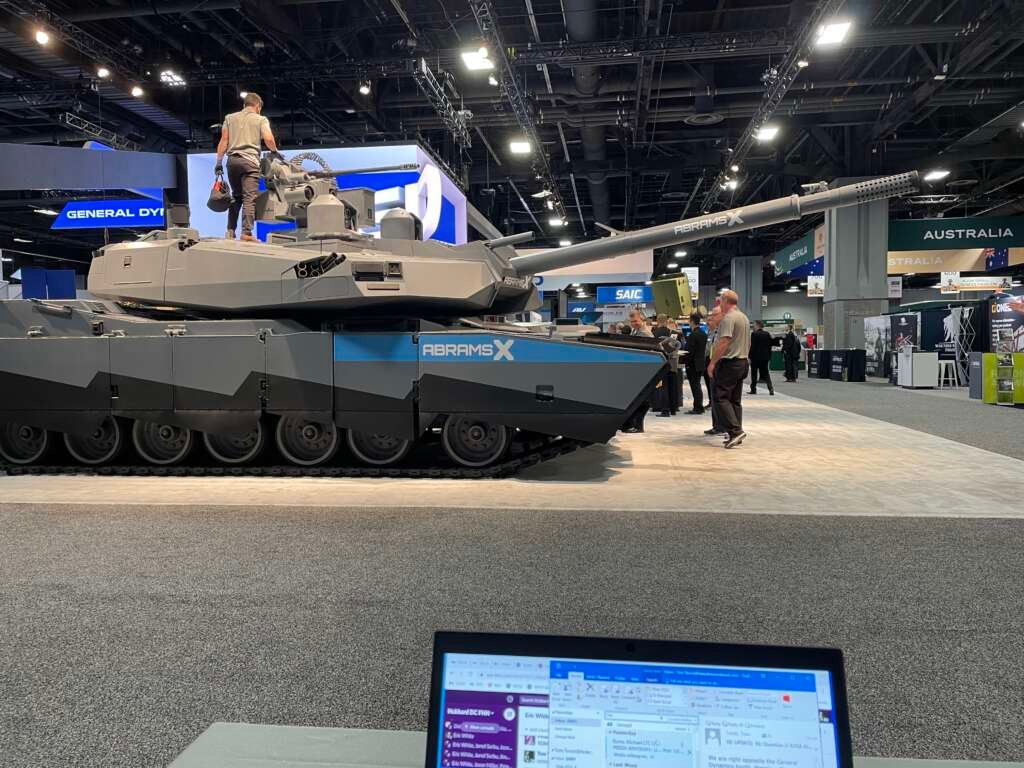
The convention also serves as a showcase for the defense industry. Over 760 companies are expected to participate, with dozens of new entrants bringing fresh ideas and technologies. An outdoor exhibition pavilion has been added this year to accommodate the growing number of exhibitors, reflecting the event’s continued expansion.
New programs focused on soldier education and family support are being highlighted, connecting military personnel with universities and educational institutions. Industry roundtables are also being expanded to create more direct channels between defense companies and military operators, enabling faster feedback loops and more responsive procurement processes.
The underlying philosophy is simple but powerful: get new equipment and capabilities to soldiers as early as possible, gather real-world feedback, and refine the product accordingly. This iterative approach stands in contrast to the lengthy development cycles of the past, where years of work could sometimes result in systems that did not fully meet operational needs.
—
## Frequently Asked Questions (FAQ)
**What is AUSA?**
The Association of the United States Army is a nonprofit educational organization dedicated to supporting the American soldier and promoting a strong defense posture. Its annual meeting brings together military leaders, industry partners, and international allies for discussions on defense policy, technology, and joint operations.
**Why is the Army considered the foundation of the joint force?**
The Army provides essential ground-based capabilities including logistics, medical support, communications, and physical presence on land that all other branches rely upon to complete their missions effectively. Without a strong land component, joint operations across air, sea, space, and cyber domains would lack the logistical and tactical support needed to succeed.
**What role do military exercises play in alliance management?**
Large-scale military exercises test the interoperability of allied forces, ensuring that different nations can communicate, coordinate, and fight together seamlessly. They also serve as a powerful deterrent signal to potential adversaries, demonstrating the cohesion and capability of the coalition.
**How are drones changing modern warfare?**
Drones have introduced new opportunities for surveillance and precision strike while also creating vulnerabilities. They make it harder for forces to conceal their positions, and they have lowered the cost of aerial engagement significantly. This has forced military planners to rethink traditional approaches to force deployment and battlefield concealment.
**What is the defense industrial base and why is it important?**
The defense industrial base refers to the network of companies, suppliers, and manufacturing facilities that produce military equipment and materiel. A robust industrial base is critical because it ensures the military can acquire the weapons, vehicles, and supplies it needs — and partnerships with allied industries help expand production capacity during periods of high demand.
**How is the Army addressing the speed of technological change?**
Military leaders are working to streamline acquisition processes, create faster feedback loops between soldiers and industry, and integrate emerging technologies without abandoning proven doctrines and fundamentals. The goal is to transform while maintaining the ability to fight and win today’s conflicts.
—
## Conclusion
The themes explored at this year’s annual meeting reflect the challenges and opportunities facing the modern Army. From the importance of alliances and joint training to the transformative impact of drone technology and the need for a responsive defense industrial base, the conversations taking place among military leaders, industry partners, and international allies will shape the future of American defense.
The central message remains unchanged: a strong Army is the foundation upon which the entire joint force is built. Investing in that foundation — through equipment, training, partnerships, and innovation — is essential to maintaining peace through strength and ensuring that the nation is prepared for any threat it may face.
As technology continues to evolve and global dynamics shift, the principles that have guided the Army for generations — readiness, adaptability, and collaboration — will remain the cornerstones of success. The annual meeting serves as a vital forum for advancing those principles and strengthening the bonds that connect the nation’s defense community.
Thank you for reading
