



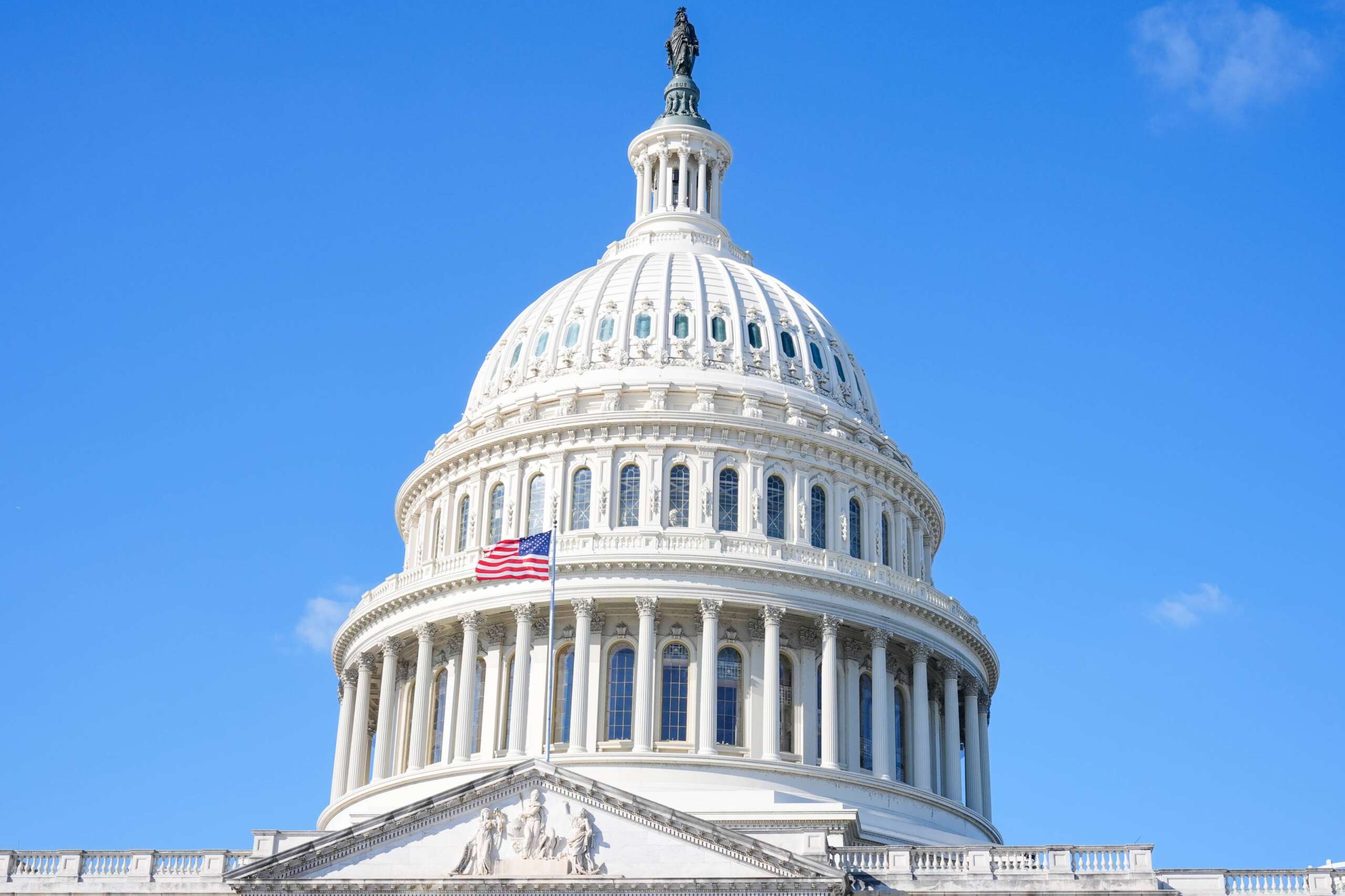
The Senate resolution will take effect after the general election on Nov. 3.
Michele Sandiford
- Senators have unanimously passed a resolution to stop receiving their own pay during any future government shutdowns. The bipartisan measure comes as shutdowns have grown longer and more frequent. In the past, members of Congress continued to receive their salaries during funding gaps, while many federal workers were forced to go without pay. The resolution will become active following the general election on November 3. It does not extend to the House of Representatives.
- Lawmakers are raising alarms about preparedness shortfalls at the Federal Emergency Management Agency. Democrats serving on the House Homeland Security Committee are pressing FEMA to fill staffing and leadership gaps before the Atlantic hurricane season begins on June 1. In a letter to leaders at the Department of Homeland Security and FEMA, they cautioned that about half of FEMA’s 38 senior leadership roles remain unfilled, and ongoing staffing reductions could leave the agency understaffed. They also called on DHS and FEMA to release delayed disaster relief funds and reinstate emergency planning contracts.
- Federal agencies reported nine separate Anti-Deficiency Act violations during fiscal year 2025. A new Government Accountability Office report reveals these cases of agencies exceeding their approved budgets spanned several years, with one dating as far back as 2017. GAO noted that the Department of Agriculture filed two reports last year for breaching the law. Additional violations were reported by the Department of Labor, the Board of Veterans Appeals, the National Science Foundation, and the Army National Guard. Each agency outlined to GAO the corrective measures it has taken to prevent future violations.
- Agencies will soon find it simpler to upgrade their grant management systems. Companies that offer grant management services and technology will soon be assigned their own dedicated special item number on the GSA schedule. As part of Multiple Award Schedule Refresh 32, launching in June, GSA will introduce SIN 518210GM to take the place of the shared services marketplace under the grants management quality service management organization. The new grants management SIN will cover core grant management systems along with a wider array of services, including program management support, single audit support, transaction processing, and operations and maintenance of existing systems. The Grants Quality Service Management Office stated that this update will make the marketplace more adaptable to agencies’ current and future requirements.
- The Defense Department Mobility Unclassified Capability program is being retired. The Army is upgrading its mobile communications by phasing out all DMUC devices and moving to the Army Mobility Program, or AMP. The Defense Information Systems Agency will end support for all Army DMUC devices by May 30. The transition follows a new mobile device management framework from DISA that is no longer compatible with the Army 365 environment, requiring the Army to discontinue the DMUC program. Lt. Gen. Jeth Rey, deputy chief of staff for the G-6, said the new program will offer soldiers a “flexible, secure, and user-friendly way to stay connected to the mission without the hassle of carrying a second device.”
- After a surge in job searching and widespread burnout among federal employees, there are now signs of recovery. A significant gap that showed up in 2025 employment data has narrowed, and job searching among federal workers has dropped closer in line with their state and local government peers. However, engagement levels for federal employees still trail those of other U.S. workers. Gallup researchers say fresh data from the Bureau of Labor Statistics suggests federal employees may be beginning to adjust to recent workforce changes.
- The Pentagon’s deferred resignation program and other civilian workforce reduction initiatives have resulted in staffing shortages in essential installation support positions, leading to rising costs, insufficient oversight of installation projects, and delays in project design and execution. Dale Marks, assistant secretary of defense for energy, installations, and the environment, said the Defense Department is monitoring personnel losses in key installation support roles and has granted waivers to allow installations and the military services to continue filling those critical positions. Marks also committed to delivering a report to Congress detailing how many employees in engineering, housing oversight, facilities maintenance, and service member support roles the department has lost due to the deferred resignation program.
- The Cybersecurity and Infrastructure Security Agency continues to expand its workforce. This week, CISA posted an opening for a new chief information officer. Longtime CIO Bob Costello departed the agency for the private sector earlier this year. The cybersecurity agency received approval from Department of Homeland Security leadership to make more than 300 mission-critical hires this year. CISA had lost approximately 1,000 staff members, representing roughly a third of the agency’s workforce, since the start of the second Trump administration.
Copyright
© 2026 Federal News Network. All rights reserved. This website is not intended for users located within the European Economic Area.
