



**Robots Don’t Run Themselves: The Workforce Powering Physical AI**
As robotic systems move from pilots into scaled deployments, a pattern is becoming harder to ignore: The limiting factor is rarely the robot itself. It’s the workforce required to operate, maintain, and continuously adapt it in the real world.
Most robotics programs begin with a familiar model—small, tightly coordinated teams supporting early deployments. Engineers are close to the system, operators are highly trained, and issues are resolved quickly because everyone is in the loop. That structure works well when there are five or 10 robots in controlled environments.
But it starts to break down when deployments scale to dozens of sites across multiple shifts and inconsistent physical environments. At that point, robotics stops behaving like a product launch and starts behaving like a distributed operations business.
**Physical AI Deployments Shift Labor Priorities**
A useful parallel can be found in how AI labor has evolved over the past decade. Early computer vision systems relied heavily on simple, task-based data labeling that could be distributed broadly.
As models shifted toward large language models, the work itself became less about discrete tasks and more about judgment, nuance, and quality control. That change drove a shift away from loosely coordinated crowd work toward more structured, trained teams with clearer accountability.
Physical AI is now going through a similar transition, but with higher stakes. When intelligence is embodied in machines operating in warehouses, hospitals, factories, or public spaces, “quality” is no longer just a model metric. It becomes uptime, safety, hardware integrity, and customer experience in dynamic environments.
That shift exposes a gap in how many teams think about workforce design. Traditional gig-style or purely task-based labor models struggle in environments that require consistent shift coverage, safety training, site-specific protocols, and escalation procedures. In practice, many robotics deployments are finding that accountability and repeatability matter more than raw throughput.
This is driving a quiet move toward hybrid workforce structures. Some organizations are building a stable core of trained, hourly W-2 operators and technicians who own baseline execution, standard operating procedure (SOP) adherence, and escalation paths.
Around that core sits a more flexible layer of surge capacity for pilots, new site launches, and specialized deployments. While exact configurations vary, a common pattern is an even split between fixed and variable capacity, adjusted as systems mature and incident volume stabilizes.
**New Roles Present Organizational Challenge**
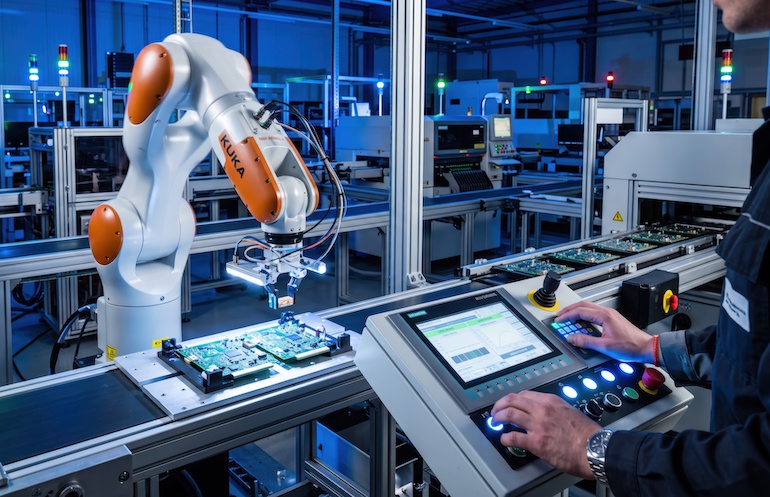
Within these teams, new role types are emerging that don’t map cleanly to traditional job families. Robot operators, field technicians, teleoperators, QA validators, and data capture specialists all sit between engineering and operations. They are responsible not only for running systems, but also for interpreting edge cases, documenting failures, and translating real-world behavior into engineering feedback loops.
In this context, incentives matter as much as structure. Speed-only metrics, common in earlier forms of digital labor, can actively degrade performance in physical environments.
Instead, teams are placing more weight on adherence to procedures, quality of documentation, escalation accuracy, and safe behavior under uncertainty. What’s becoming clear is that scaling robotics is not just a technical challenge. It is an organizational one. Success depends on whether companies can build workforce systems that are as robust and adaptive as the machines themselves.
In other words, the next phase of robotics scaling won’t be defined only by better autonomy. It will be defined by whether teams can reliably scale human judgment alongside machine intelligence, across sites, shifts, and real-world conditions that rarely behave as expected.
—
### About the Author
Christopher Bower is co-founder, chief revenue officer, and president of HireArt, a New York–based company whose stated mission is to reinvent flexible employment by connecting workers and businesses and supporting their productivity. HireArt’s platform allows customers to build and manage a modern contract workforce with a single tool, handling employer of record, on-demand sourcing, vendor management, and freelancer management in the same self-serve user interface.
Bower has worked at HumanEdge, Tandym Group, and Access Confidential. He is also a voluntary career coach at the New York Public Library.
—
### FAQ
**What is physical AI?**
Physical AI refers to artificial intelligence systems embodied in robots or machines that operate in real-world environments such as warehouses, hospitals, factories, and public spaces. Unlike purely digital AI, physical AI must interact with and adapt to unpredictable physical conditions.
**Why is workforce scaling a challenge for robotics deployments?**
Robotics deployments often begin with small, expert teams but struggle when scaled to multiple sites and shifts. Real-world environments introduce variability, safety requirements, and maintenance needs that outstrip the capabilities of purely task-based or gig-style labor models.
**What is a hybrid workforce in the context of robotics?**
A hybrid workforce combines a stable core of trained, full-time operators and technicians with flexible surge capacity for pilots, new launches, and specialized tasks. This structure balances consistency with adaptability as systems mature.
**What new roles are emerging in robotics operations?**
Roles such as robot operators, field technicians, teleoperators, QA validators, and data capture specialists are becoming common. These positions bridge engineering and operations, focusing on execution, documentation, and feedback.
**How do incentives affect physical AI performance?**
Speed-only metrics can degrade performance in physical environments. Greater emphasis is now placed on SOP adherence, documentation quality, escalation accuracy, and safe behavior under uncertainty.
**What makes scaling robotics different from scaling software AI?**
Scaling robotics is an organizational as well as technical challenge. It requires robust workforce systems that can manage human judgment, safety, and real-world variability at scale, not just improve model accuracy.
—
### Conclusion
Scaling robotics is less about achieving ever-greater autonomy in machines and more about building equally sophisticated human systems. As physical AI moves into broader deployment, companies must evolve their workforce strategies to match the demands of real-world operations. The most successful organizations will be those that can reliably scale human judgment alongside machine intelligence, ensuring resilience, safety, and quality across distributed sites and shifting conditions. In the end, robots don’t run themselves—it’s the people behind them that make the difference.
