



# When Machines Mimic Nature: How Robotic Animals Are Reshaping Our World
Picture a tiny insect creeping through a collapsed building, locating survivors trapped beneath debris. Imagine a mechanical crab digging into alien soil on the surface of the moon, or a robotic falcon soaring along an airport runway, keeping real birds safely away from landing planes. These aren’t scenes from a futuristic movie — they’re real technologies being developed right now.
Robotic animals are smart, sensor-rich machines designed to look and move like living creatures. They combine artificial intelligence, cameras, microphones, and advanced materials to replicate how animals navigate the world. Some serve as rescue workers. Others act as therapy companions for elderly people or children. And a few might even explore distant planets.
Let’s explore how these remarkable machines came to be and what they can do.
—
## Tiny Insects, Big Impact
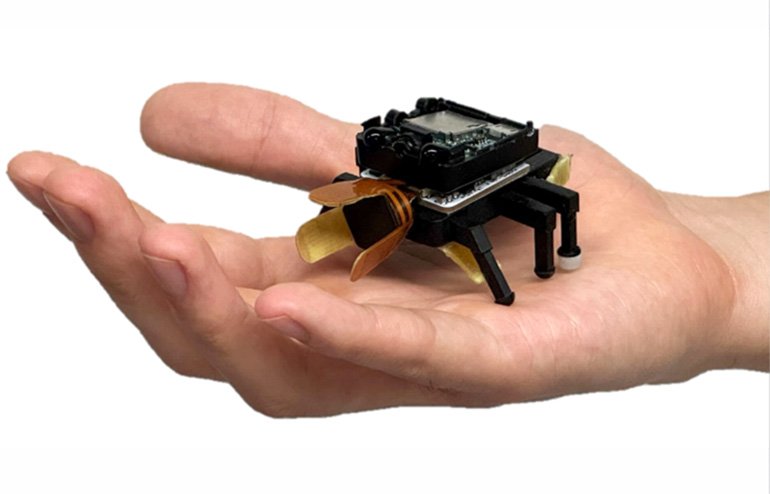
At first glance, a robot the size of a beetle might seem like a novelty. But researchers at a leading South Korean technology institute see far greater potential. By mimicking insects, engineers are creating machines that can slip into spaces too small for humans or conventional robots.
### Cockroaches That Save Lives
One of the most innovative rescue ideas comes from a university in Singapore. Scientists have turned the Madagascar cockroach into a living machine — a cyborg capable of entering disaster zones where people are trapped. A small electronic pack is strapped to the insect’s back, housing a tiny computer, sensors, and an infrared camera with thermal imaging.
Here’s the clever part: the cockroach’s nervous system is gently connected to a remote control system. Small electrical signals guide its direction — a light pulse to one side makes it turn that way, while signals to both sides send it charging forward. Because cockroaches are naturally fast and can squeeze through the tiniest gaps, they’re ideal for scanning rubble after an earthquake or building collapse.
The pack runs on solar power, allowing the cyborg to operate for extended periods. A single unit can scan an area of over 100 square meters. The operator watches a live feed from the thermal camera to locate warm bodies beneath the wreckage.
There’s a limitation, though — fully surveying a large structure would require hundreds of these insects and just as many human operators. And while they can pinpoint where survivors are, they can’t pull anyone free. That’s still a job for rescue workers.
### Ants With Super Strength
Engineers at a prestigious American university have built mechanical ants that can carry loads more than 2,000 times their own weight. To put that in perspective, it would be like a person lifting a 150-ton object. Just four of these small machines working together can move an adult human.
The secret lies in their feet. Inspired by geckos, their paws are coated with thousands of tiny rubber hairs that create a natural adhesive effect. When the pull is strong, they grip tightly. When tension is released, they let go. This gives them an extraordinary ability to climb and carry across virtually any surface.
For now, these ants are connected to a power cable in industrial settings because their batteries drain quickly under heavy loads. But the engineering breakthrough opens the door to future untethered versions.
—
## Snakes, Crabs, and Birds: Machines That Move Like Nature
### Underwater Pipeline Inspectors
Norwegian engineers have designed a five-meter robotic snake built for underwater work. It slithers along oil pipelines, inspecting them for damage, sending video back to a control center, and even performing basic repairs when it finds a problem. Equipped with gripping tools at both ends, it can swap out valves and clear away buildup inside pipes. These robotic snakes can work at depths of up to 500 meters and remain operational for months at a time, recharging at dedicated stations along the pipeline route.
### Digging Machines for the Ground — and Beyond
At a well-known university in California, a team has created a small robotic crab that burrows into the ground using fabric scoops on its claws. It collects soil samples, runs analyses, and reports back on the composition of the earth. Potential uses range from construction site surveys to detecting underground pollution. Looking even further ahead, scientists plan to send similar machines to the lunar surface, where they could explore and collect samples in places wheeled rovers can’t reach.
### Robotic Falcons on Airfields
Birds near runways pose a serious danger to aircraft. Traditional methods like noise cannons lose their effectiveness over time because birds get used to them. A team at a Dutch university took a different approach: mechanical falcons. These birds of prey are deployed at airports in Canada and Germany. They exploit birds’ natural instinct to flee from predators, actively chasing real birds away from danger zones rather than just making noise.
### Pinhead-Sized Bees for Space Exploration
Harvard researchers have built a robotic bee smaller than a fingernail. While it could theoretically help with pollination, its primary purpose is reconnaissance. Outfitted with sensors that mimic insect vision and antennae, it can capture three-dimensional images and transmit them to a remote operator. It can fly, swim, and dive — all while running on less power than a standard light bulb thanks to solar-rechargeable batteries. Scientists believe these tiny scouts could one day explore canals on Mars, craters on the moon, or even the thick, toxic clouds of Venus.
—
## Robotic Dogs: From Labs to Living Rooms
The dog has long been the go-to model for four-legged robots, and for good reason. Canine movement — walking, running, jumping — translates beautifully into mechanical design. Modern robotic dogs can travel more than 30 kilometers on a single charge and haul loads up to 180 kilograms. Some can respond to voice commands and assist in carrying injured people.
A Russian university introduced one of the first such machines in Eastern Europe several years ago. Weighing about 15 kilograms, it was powered by strong electric motors and tested in unique conditions — including visits to a zoo to study how real animals reacted to it. Users can control it with a joystick, and it navigates using cameras and laser-based sensors. Its basic walk is a trot, and it can switch gaits, sit, stand, lie down, and even shake a paw.
More recently, a newer companion model has been introduced that is specifically designed for families and elderly users.
—
## Healing Hearts: Robotic Animals as Therapy Companions
One of the most emotionally powerful applications of robotic animals is in healthcare and therapy. Studies have shown that interacting with animals reduces stress, lowers blood pressure, and improves mood — particularly for elderly individuals with dementia, children with developmental challenges, and hospitalized patients. But live animals require feeding, exercise, and care, and many hospitals restrict them.
This is where lifelike robotic companions step in. New Zealand-based researchers found that people respond to these machines in much the same way they respond to real animals. They don’t trigger allergies, they don’t need food or walks, and their behavior is consistent and predictable.
### Soft-Furred Cats and Dogs
A line of companion animals from a New Zealand company features realistic cats and dogs covered in plush fur. The cats purr, blink, groom themselves, and roll over when petted. The dogs bark at voices, wag their tails when hugged, and their simulated heartbeat even changes with interaction. Built-in touch and light sensors allow them to respond naturally to their environment. They seem to enjoy a cuddle — and they also seem to sleep when the lights go out.
Researchers at an Ivy League university have been working on software to turn these companions into practical helpers for older adults, reminding them to take medications or locate misplaced items like glasses and keys.
### A Golden Puppy Named Jenny
A startup from New Zealand has created a realistic golden Labrador puppy designed for children with autism and older adults. Unlike many robotic pets, Jenny doesn’t walk — she stays in one place to avoid creating tripping hazards. She responds to touch, follows voice commands, wags her tail, whines, and even snores while resting. Inside her body are dozens of sensors and motors, most of them concentrated in her face, giving her a surprisingly expressive range of movement. An accompanying app lets users name her and customize her behavior.
### A Therapeutic Seal Pup
Perhaps the most celebrated therapy robot is a baby harp seal developed in Japan. Named PARO, it is recognized by an international record book as the most effective therapeutic robot in the world. PARO is covered in soft fur and equipped with sensitive whiskers and touch sensors. It moves its flippers, makes seal-like sounds, recognizes its own name, and responds to being petted or spoken to. If left alone too long, it cries. Its charger is shaped like a baby pacifier, and when it’s removed, PARO makes a grumpy squeak. Over time, PARO’s personality shifts based on how it’s treated — becoming more playful, more affectionate, or more shy.
### Sony’s Iconic Puppy
A highly advanced robotic dog from a Japanese electronics giant was one of the most sophisticated consumer robot pets ever made. It featured a built-in camera, numerous sensors, and incredibly fluid movement powered by more than 20 motorized joints. Its eyes were bright OLED screens, and through cloud connectivity, it could remember shared experiences, develop a unique personality, and learn new tricks over time. It could patrol a home, bark at strangers, and even send photos back to its owner. Despite its impressive capabilities, the company eventually stopped selling the product, highlighting the commercial difficulties of bringing advanced robot pets to market.
—
## Looking Ahead
Robotic animals are no longer science fiction. They are increasingly found in hospitals, nursing homes, disaster zones, industrial sites, and research labs. In Japan, where aging populations create enormous demand for elder care, these electronic companions are already woven into the healthcare system. Europe and North America are actively exploring their use in similar settings.
Whether it’s a tiny insect scouting through rubble, a seal comforting a lonely patient, or a dog keeping an elderly person company, robotic animals are proving that the line between technology and companionship is blurring — and that’s a good thing.
—
## Frequently Asked Questions
**What exactly is a robotic animal?**
A robotic animal is a machine designed to replicate the appearance, movement, and sometimes the behavior of a living creature. It uses sensors, motors, processors, and often artificial intelligence to interact with its environment.
**Are robotic animals only toys?**
No. While some are designed for entertainment, many serve serious purposes. They assist in search-and-rescue missions, inspect dangerous infrastructure, provide therapy for elderly and disabled individuals, and even help explore other planets.
**How are cyborg insects controlled?**
A small electronic backpack is attached to the insect, containing a microcomputer and sensors. Gentle electrical signals sent to the insect’s nervous system guide its direction and speed. An operator remotely controls the system and monitors sensor data.
**Can robotic animals really help with mental health?**
Studies have shown that interacting with robotic pets can reduce stress, ease anxiety, and improve emotional well-being, particularly in elderly individuals with dementia and children with developmental conditions. They don’t replace human connection, but they can provide meaningful comfort.
**Do robotic animals need food or water?**
No. They run on rechargeable batteries — often solar-powered or plugged in — so they don’t require the biological needs of living creatures.
**Why are dogs the most common model for robotic animals?**
Dogs are familiar to humans as companions and assistants, and their way of moving — walking, running, jumping — translates efficiently into mechanical designs. Their size and behavior range also offers flexibility for engineers.
**Are robotic animals expensive?**
Costs vary widely. Simple companion toys are affordable, while advanced research models or therapy-grade robots can cost thousands of dollars, depending on their complexity and capabilities.
—
## Conclusion
The world of robotic animals is vast and growing. From insect-scale rescuers that can crawl through rubble to gentle seal pups that comfort patients in hospital beds, these machines demonstrate how technology inspired by nature can solve real human problems. They serve as disaster responders, industrial inspectors, space explorers, therapy companions, and beloved pets. As engineering and artificial intelligence continue to advance, we can expect these creations to become even more lifelike, capable, and integrated into daily life. The future of robotic animals isn’t just about mimicking nature — it’s about enhancing the human experience.
Thank you for reading
