



# Data Broker Empire Stripped From Owners After Ignoring Privacy Lawsuits
A network of consumer data broker websites linked to a family of Russian-born brothers has been stripped of control over more than a dozen domains after a New Jersey court ordered their transfer to a privacy-focused company that has been waging a multi-year legal campaign against data brokers who refuse to remove the personal information of public officials.
## The Daniel’s Law Enforcement Action
The legal battle centers on a New Jersey statute known as Daniel’s Law, which grants state law enforcement officials, government employees, judges, and their families the right to demand the complete removal of their personal information from commercial data brokerage and people-search platforms. The law also imposes penalties of $1,000 for each instance in which a data broker ignores a formal removal request.
In early 2024, Atlas Data Privacy Corp filed suit against a prominent people-search platform after repeated attempts to have personal details belonging to public officials scrubbed from the site were met with silence and evasion. The company, led by president and CEO Matt Adkisson, had been systematically pursuing data brokers accused of violating the New Jersey statute.
## A Pattern of Evasion
What followed was a legal chess match spanning years. The operators of the targeted data broker network employed a strategy now described by observers as “island-hopping” — constantly shifting the legal entities and jurisdictions associated with their websites to avoid accountability.
Privacy policies changed frequently, and shell companies appeared and vanished in quick succession, surfacing in locations such as the Marshall Islands, the British Virgin Islands, and the Seychelles. When the defendants updated their terms of service to claim the platforms were suddenly managed by a newly registered entity in the Marshall Islands, investigators hired by the plaintiffs discovered that the purported managing company had not yet been formally established.
The legal representatives for the data broker side delayed appearing in court, only showing up at the last possible moment and then arguing that the lawsuits had failed to properly name the actual owners and operators of the sites.
## The Domain Transfer
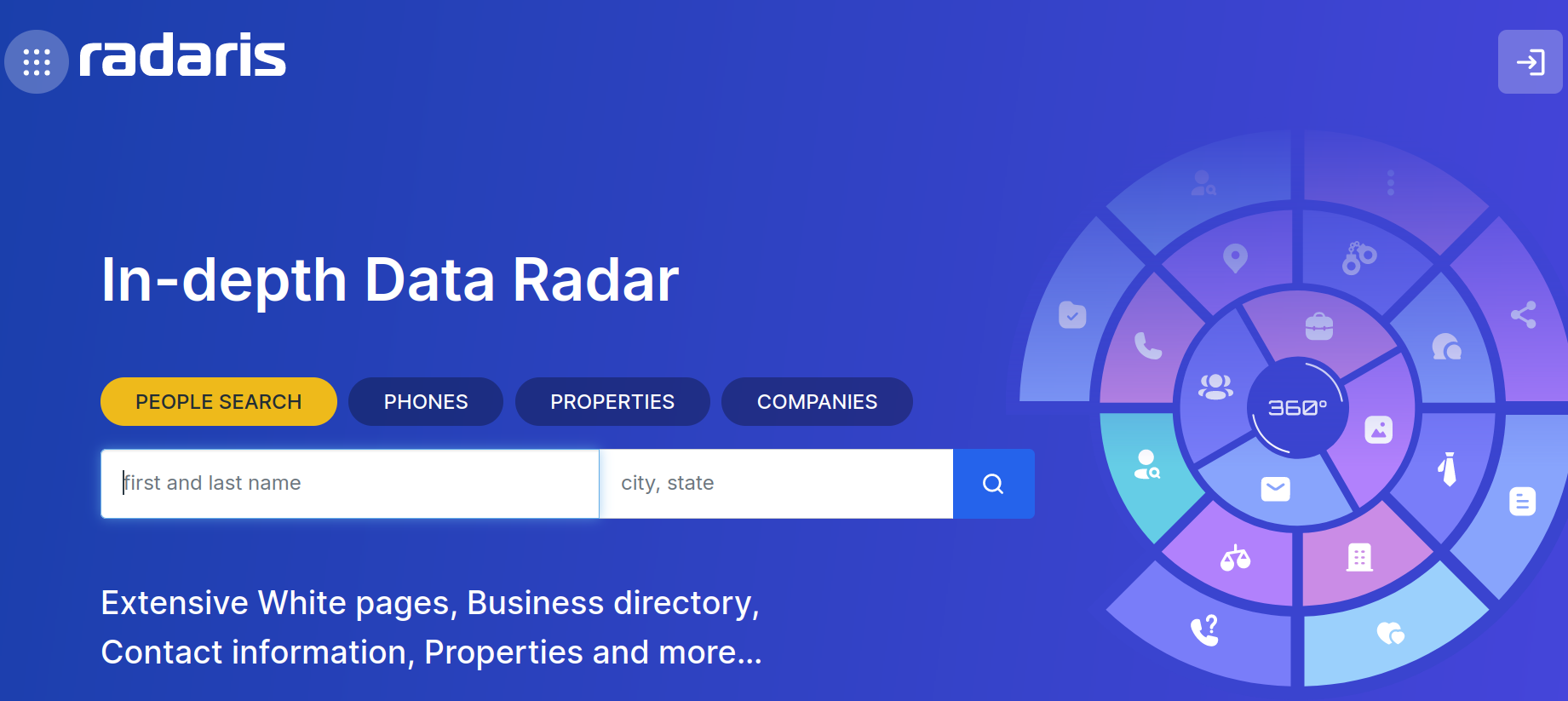
After the defendants repeatedly failed to appear and defend the claims against them, the presiding judge ruled that the domains in question would be transferred to the plaintiff company as part of a default judgment. In total, 14 domains associated with the Radaris family of data broker sites were transferred to Atlas.
The operators of the network filed appeals, with their current legal counsel arguing that the default judgment was void because the entity named in the case is not a recognized legal person and therefore cannot be sued. They have announced plans to pursue further appeals, asserting that the domain transfer constitutes an unconstitutional forfeiture.
## The Business Behind the Data
Documents and emails obtained during the litigation paint a detailed picture of how the network operated. Internal corporate records, bank statements, payment processor data, and correspondence from hosting providers and domain registrars all point to the same conclusion: the dozens of people-search websites were all run by a small group based in the Boston area, operating out of shared email accounts and a single virtual office address.
The websites generated significant revenue through partnerships with marketing and advertising firms. One of the data broker sites earned roughly $42,000 per month, while a sister platform brought in approximately $45,000 monthly through a collaboration with a marketing company that also operated several other well-known people-search brands.
Additionally, the network earned as much as $25,000 per month from partnerships with a service that claimed to help consumers remove their personal information from people-search sites — raising questions about the sincerity of those opt-out mechanisms.
## The Broader Landscape
The case is part of a growing trend of state-level legislation aimed at curbing the power of consumer data brokers. Daniel’s Law has inspired at least 14 other states to pass similar measures, with more considering comparable legislation.
However, the data broker industry has fought back aggressively. At least 70 of the lawsuits filed against data brokers by the plaintiff company have been moved to federal court, where the industry is challenging the constitutionality of these state laws on First Amendment grounds. A federal district court in West Virginia recently ruled that a similar statute in that state was facially unconstitutional. The broader constitutional challenge is expected to eventually reach the U.S. Supreme Court.
Privacy experts say the outcome of these legal battles will have far-reaching implications for the future of personal data in the United States. Without comprehensive federal privacy legislation, they argue, people-search companies will continue to operate with minimal restrictions, exploiting loopholes in laws that exempt public records from privacy protections.
“Most people assume that if something is publicly available, it should be freely usable by anyone,” said a privacy policy author and expert currently writing a book about the data broker industry. “But the reality is that the aggregation and commercial exploitation of that data creates risks that most people don’t fully understand until it’s too late.”
## FAQ
**What is Daniel’s Law?**
Daniel’s Law is a New Jersey statute that allows state law enforcement officials, government personnel, judges, and their family members to demand the complete removal of their personal information from commercial data broker websites. It also imposes fines of $1,000 per violation for companies that ignore such requests.
**What is a consumer data broker?**
A consumer data broker is a company that collects, aggregates, and sells personal information about individuals. This information can include names, addresses, phone numbers, employment history, property records, and more. These companies often operate people-search websites that allow anyone to look up details on U.S. residents.
**Why did the court transfer the domains?**
The court transferred the domains after the defendants — the operators of the data broker websites — repeatedly failed to appear in court and defend themselves against allegations that they were violating Daniel’s Law by refusing to remove the personal information of public officials.
**What is “island-hopping” in this context?**
Island-hopping refers to the practice of frequently changing the legal entities and offshore jurisdictions associated with a website or business to make it difficult for plaintiffs to identify and hold the actual owners accountable. This can involve registering companies in places like the Marshall Islands, the British Virgin Islands, or the Seychelles.
**Are other states considering similar laws?**
Yes, at least 14 states have passed laws modeled after Daniel’s Law, and additional states are considering similar legislation. However, some of these laws have faced legal challenges, with industry groups arguing they violate First Amendment protections.
**What happens next in this legal battle?**
The operators of the affected data broker websites have filed appeals and are challenging the constitutionality of the default judgments. The broader constitutional challenge to state data broker laws is expected to work its way through the federal court system and could eventually reach the U.S. Supreme Court.
**Can ordinary consumers be affected by data brokers?**
Yes. While Daniel’s Law currently focuses on protecting public officials, privacy advocates note that ordinary consumers are also vulnerable to the widespread collection and sale of their personal data. The lack of comprehensive federal privacy legislation means that data brokers can legally collect and monetize a vast amount of personal information with minimal oversight.
## Conclusion
The transfer of these domains marks a significant turning point in the ongoing fight between privacy advocates and the consumer data broker industry. It demonstrates that persistent legal action, even against well-resourced and legally elusive opponents, can result in meaningful consequences.
At the same time, the case highlights how fragmented and incomplete American data privacy laws remain. With the industry actively challenging state-level protections and federal legislation stalled by intense lobbying, millions of Americans’ personal information continues to be collected, packaged, and sold with few meaningful safeguards.
The outcome of the constitutional challenges currently working through the courts will shape the future of data privacy for years to come. In the meantime, this case serves as a stark reminder of the vast amount of personal information that is readily available online — and the lengths to which some companies will go to keep it there.
Thank you for reading
