



**One American Stock Benefits as Smartphones, MRI, and AI Servers Want the Same Chip**
The race for the next-generation phone, hospital scanner, and AI server is being decided not by brand or design, but by a single, critical component: the memory chip. A powerful convergence is occurring where three very different technologies now compete for the same DRAM and NAND silicon, creating a supply squeeze that has quietly rewired the global electronics market. The unlikely beneficiary of this high-stakes battle is one American semiconductor giant—Micron Technology.
—
### Why One Wafer Now Has Three Buyers
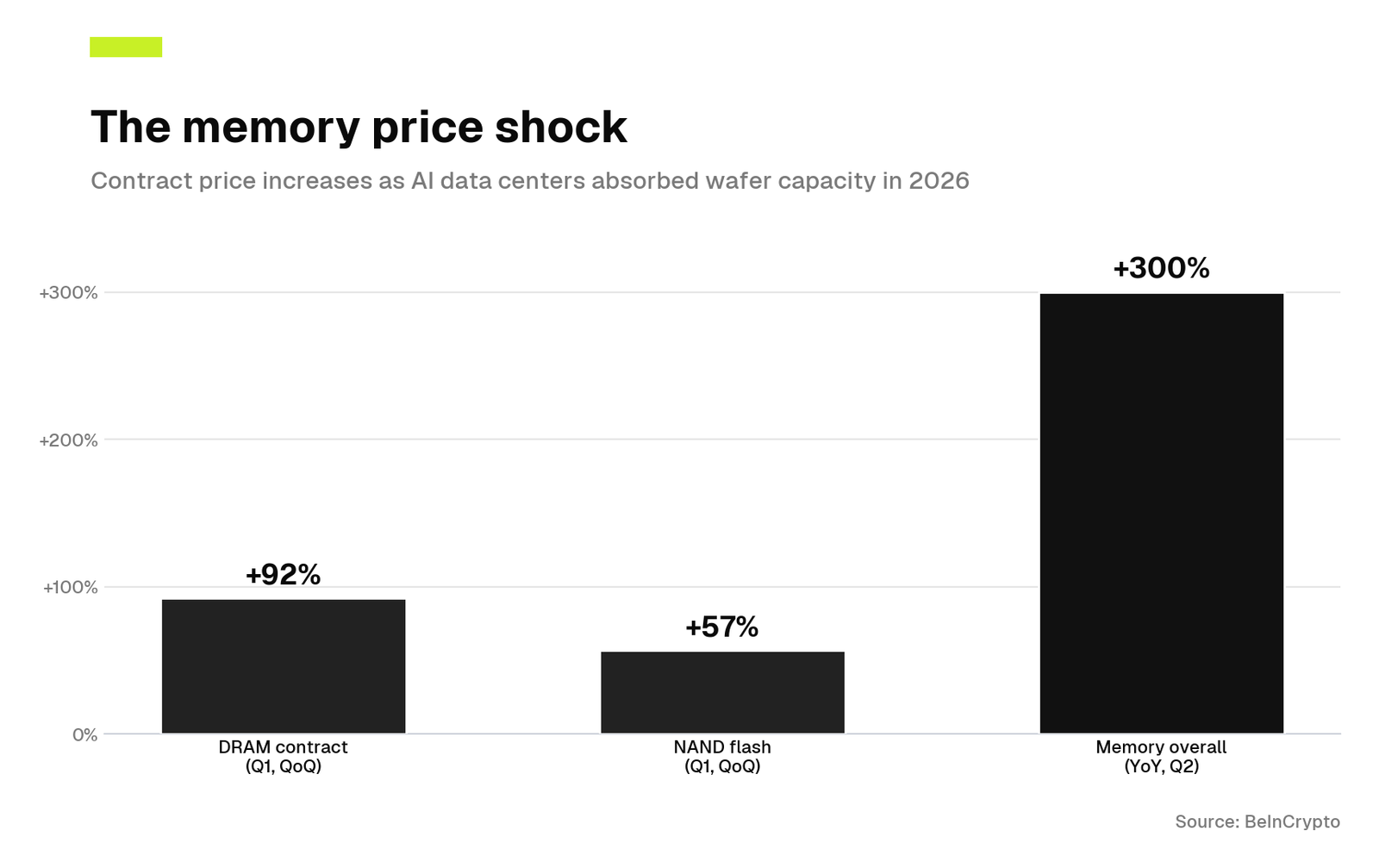
At the heart of this story is the insatiable appetite for memory within AI data centers. A single AI server demands 10 to 20 times more memory than a standard PC or laptop. As hyperscalers race to build out their infrastructure, data centers currently consume roughly 70% of the world’s memory chip output.
The bottleneck is simple physics and manufacturing economics. High-bandwidth memory (HBM), required for AI workloads, is produced on the same production lines as conventional DRAM found in smartphones, medical scanners, and consumer devices. Chipmakers cannot simply run the fabs at maximum capacity for both; prioritizing one category means deprioritizing the other.
Furthermore, each high-bandwidth wafer effectively replaces two or more standard memory wafers. Consequently, every AI server deployed actively removes potential capacity from the pool available for phones, laptops, and medical equipment.
**The result is a zero-sum game for a finite pool of chips.**
—
### Your Phone Is Paying for the AI Boom
The consumer segment feels the impact of the shortage immediately and directly. Since smartphones and data centers rely on the same memory families, handset manufacturers were among the first to feel the pinch. The average smartphone price is projected to reach a record high of approximately $523 in 2026, representing a 14% year-over-year increase.
To protect profit margins in the face of soaring component costs, some manufacturers have made visible sacrifices. Reports indicate that certain models are seeing reductions in camera quality, display resolution, and—most notably—a reduction in RAM (with some base models reverting to 4GB, a specification last seen in 2020).
Ultimately, the AI boom is driving up the cost and lowering the specs of the devices billions of people use every day.
—
### The Hospital Scanner Cannot Just Wait
While consumers can delay upgrades and developers can optimize software, the medical sector operates under rigid constraints. Hospital scanners, robotic surgical systems, and advanced monitoring equipment rely heavily on the same DRAM and NAND chips. Crucially, these are not consumer-grade parts; they are specialized components supplied through Micron’s embedded business, which ensures compliance and longevity.
The critical difference lies in the qualification lifecycle. A hospital cannot simply swap a memory module inside a $2 million MRI machine as they might in a server rack. Medical components undergo multi-year certification processes to ensure safety and reliability. Because of this, healthcare buyers have almost zero leverage in the bidding war. They cannot wait for the shortage to ease; they must either pay a significant premium or face delays in life-improving and life-saving technologies.
—
### The AI Server Outbids Everyone
Sitting at the top of the supply chain is the AI cloud provider. These entities possess the deepest pockets and the most urgent need for high-bandwidth memory. HBM represents the most profitable use of every silicon wafer in the factory, making it the highest priority for allocation.
Micron, one of only three global suppliers of HBM, holds a significant structural advantage. The company has reported sold-out HBM supply for months and recently entered a strategic partnership with Anthropic to optimize memory specifically for AI models. This combination of scarcity and strategic alignment solidifies the AI server’s position at the front of the queue.
With limited wafer capacity, the market effectively funnels chips to the highest bidder.
—
### The Stock That Collects
This unique positioning—acting as a supplier to all three conflicting demands—translates directly into shareholder value for Micron Technology. Analysts are overwhelmingly bullish on the stock, with 28 of 29 covering firms issuing a “Buy” rating. The consensus price target sits near $1,569, implying roughly 75% upside from the current trading level of around $893.
Wall Street has been aggressively repricing the stock. Targets have swung from $190 last fall to a peak of $2,200 this summer. Despite a recent pullback following weaker guidance from rival SanDisk, the fundamental story remains intact. Micron trades at a relatively low forward earnings multiple (approximately 5x) despite massive profit growth, suggesting the market may still be underestimating the longevity of the AI cycle.
—
### FAQ
**Q: Why are smartphones becoming more expensive?**
A: Smartphones are facing a dual pressure: the cost of memory chips has surged due to high demand from AI data centers, and the components required for advanced camera and display systems have also risen. The “memory shortage” has forced manufacturers to either raise prices or downgrade specifications to maintain margins.
**Q: Why can’t hospitals just upgrade their scanners with the latest chips?**
A: Medical equipment undergoes rigorous regulatory and safety testing. Memory modules used in MRI and CT scanners are specifically qualified over several years. Unlike a phone or server, which can be upgraded easily, a hospital scanner is locked into its hardware for the duration of its operational life, making it a price-taker rather than a competitive buyer.
**Q: Is the memory shortage ending in 2026?**
A: No. While demand from phones and PCs may normalize, AI server demand is projected to grow exponentially. Analysts and manufacturers like SK Hynix have warned that shortages could persist well beyond 2026, ensuring continued competition for silicon.
**Q: Why is Micron the primary beneficiary rather than Samsung or SK Hynix?**
A: While Samsung and SK Hynix are larger overall, Micron holds a uniquely balanced portfolio. The company is one of the few vendors that can provide both cutting-edge HBM for AI *and* high-density standard DRAM for consumers. Furthermore, the specific integration of Micron’s memory into critical medical devices creates a durable, long-term demand stream that is difficult for competitors to replicate overnight.
—
### Conclusion
The conflict between the smartphone, medical, and AI server industries is not a temporary blip; it is a fundamental restructuring of the semiconductor value chain. The introduction of AI has created a bottleneck that exposes the fragility of a supply chain optimized for incremental, rather than exponential, growth.
As long as AI servers demand 10 to 20 times the memory of a standard PC, the fight for silicon will remain intense. In this environment, the company that sells to all three markets—without the burden of legacy business conflicts—collects the premium. For Micron Technology, the AI boom is not just a headwind; it is the most powerful tailwind imaginable, justifying its position as the primary stock that benefits from the battle over the next-generation phone, the hospital scanner, and the AI of tomorrow.
