



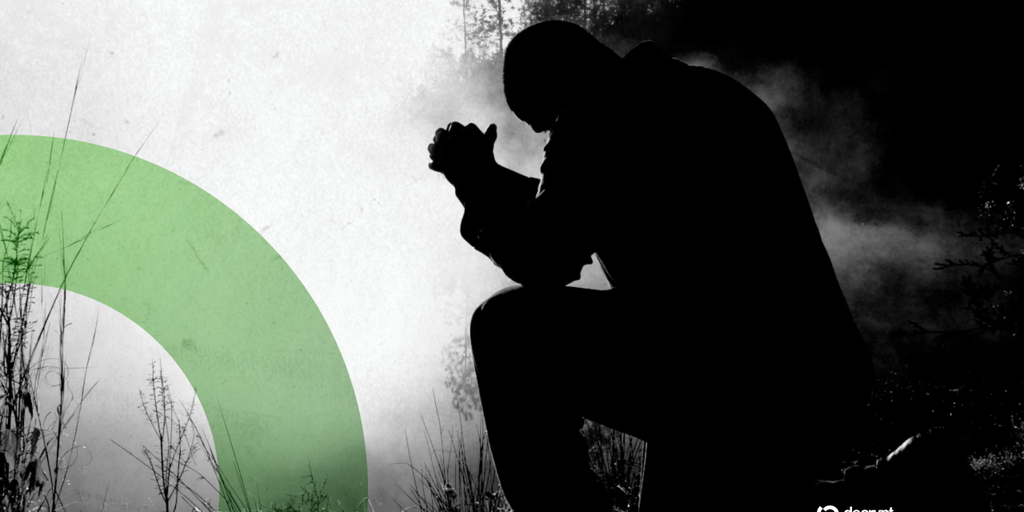
Pedro rubs the drowsiness from his eyes, gives his wife a kiss on the cheek, and reaches for his phone to check on his Luna Classic validators. In his everyday life, he’s the head brewer at a local beerhouse. But online, he goes by Vegas—one of the most prominent figures in the Terra Luna Classic community.
Terra Luna Classic is the original blockchain that was split off and left behind after Terraform Labs founder Do Kwon tried to rescue his failing empire in 2022. Kwon has since been found guilty of fraud and handed a 15-year prison sentence for the $40 billion collapse of Terra. Yet the network he and his company built—being decentralized as it is—continues to operate, sustained by people from all over the world who have invested considerable time and money into keeping it alive.
Vegas shared with Decrypt that he had roughly $50,000 tied up in Terra when it crashed, which put him right at the center of efforts to revive the project.
These days, as he heads downstairs each morning with his phone in hand, he checks the Terra developer group chat first, then scans his emails for any security concerns, and scrolls through the community Telegram and Discord channels while preparing breakfast. On most days—whether in the morning or during work hours—Vegas serves as a go-to person for community members with support questions or developers needing assistance with proposals.
“On top of all that, I have to deal with all the drama flooding Twitter,” the Portuguese-born Vegas told Decrypt, describing it as a round-the-clock, seven-day-a-week commitment. “If you ask my wife, she’d say I’m out of my mind, but I disagree. I believe there’s still hope for this chain. I think there’s enormous potential for it to become a top 10 blockchain again.”
Despite his commitment, Vegas has his share of critics. When Decrypt joined the Terra Luna Classic Telegram group to interview Vegas, we received multiple direct messages accusing him of being a scammer. Vegas says that’s just part of the reality—the downsides of decentralization and internal power struggles, even within a community that has endured one of the worst collapses in crypto’s brief history.
“Decentralization is wonderful, but at the same time, it’s harsh because people crave the spotlight,” Vegas told Decrypt. “I’ve faced real-life problems with people calling the police to my home, to my workplace, and other things … truly awful, awful times.”
Where did it all start?
When Terra collapsed in 2022, the LUNA token price was plummeting, the network’s native stablecoin UST had lost its peg, and Do Kwon posted his now-famous “steady lads” message on social media to rally his supporters.
As a final attempt to save the project, Terraform Labs executed a hard fork to eliminate the depegged algorithmic stablecoin UST, leaving the original chain behind under the new name Terra Luna Classic—similar to how Ethereum Classic came about.
Deploying more capital – steady lads
— Do Kwon 🌕 (@stablekwon) May 9, 2022
With the original creators walking away from the Terra Luna chain, a group of community members known as the Terra Rebels began gathering on Discord. In the early days, the Discord server also served as a support network, with a pseudonymous moderator called “K_raucks” setting up something resembling a suicide helpline.
“A lot of people needed someone to talk to. And since these spaces are anonymous, we gave them a place to share those feelings,” K_raucks told Decrypt. “It’s devastating when people have lost everything.”
The community’s first move to rebuild the chain was proposal 3568, which introduced a 1.2% burn tax on all Terra Luna Classic transactions—the token trades as LUNC. The idea was that this would help increase demand for LUNC and, in turn, drive up its price. Vegas authored the proposal, and it drew his first wave of criticism from skeptics who argued it was nothing more than a publicity stunt.
The Terra Rebels pressed on through the summer and fall of 2022, working to rebuild the chain. Things reached a breaking point in December when the Terra Rebels received $150,000 from the community pool to separate the Rebel Station wallet’s infrastructure from Terraform Labs. This sparked outrage within the community and led to accusations that the Terra Rebels were trying to centralize control over the chain, and the group ultimately disbanded.
Tensions within the LUNC community then boiled over.
“The situation is easy to explain: If you see someone who you think is making money
“They’re after your spot in the chain, and they’re determined to profit from it. They’ll go to any lengths to make your life incredibly difficult,” Vegas stated.
Because of these chaotic political battles, Vegas noted that numerous developers have abandoned Terra Luna Classic over time.
Despite the ongoing power struggles, the community kept building. Among these initiatives is the lending platform Juris Protocol, designed to serve as an Anchor protocol replacement while avoiding the unsustainable tokenomics, according to its creator Puya Eghtessadi in an interview with Decrypt. Other community members have launched meme coins, blockchain-based games, and developed strategies to restore the chain’s stablecoins to their peg.
The community’s work has achieved some limited progress, with LUNC’s price climbing 17.3% over the last year, according to CoinGecko. However, the token has dropped 28.7% since proposal 3568 was initially put forward in 2022 and remains down 99.99% from its peak value of $119.
While Vegas dreams at night about LUNC reclaiming its place among the top 10 cryptocurrencies someday, many community members feel they’ve discovered a family united through shared hardship—and token price matters less than that bond. And like many families, it’s far from perfect.
“There’s a real sense of togethership—people are experiencing or have experienced difficult times, yet you still share a common purpose,” K_raucks shared with Decrypt. “Imagine if we could pull off one of the most remarkable comebacks in history? It’s the ultimate long shot.”
Daily Debrief Newsletter
Start every day with the top news stories right now, plus original features, a podcast, videos and more.
