



# How One Robotics Company Is Tackling the Industry’s Toughest Challenge: Robotic Manipulation
The world of warehouse automation has long been dominated by autonomous mobile robots (AMRs) that excel at navigation and transport. But one company believes the next frontier lies in the complex, nuanced task of robotic grasping and manipulation — and it’s making bold moves to get there.
Locus Robotics Corp. has already built an impressive track record. Its AMRs have logged countless miles across a variety of facilities and contributed to more than 6 billion picks over the years. Now, the company is turning its attention to a challenge that has eluded the broader robotics industry for decades: reliable, versatile manipulation in unstructured environments.
## A Bold Entry Into Robotic Picking
The company made its first significant move into the picking space in early 2025 with the unveiling of Array, a mobile manipulator equipped with a custom-developed, vision-guided picking arm. However, Locus soon recognized that to truly compete in manipulation, it needed more advanced gripping technology.
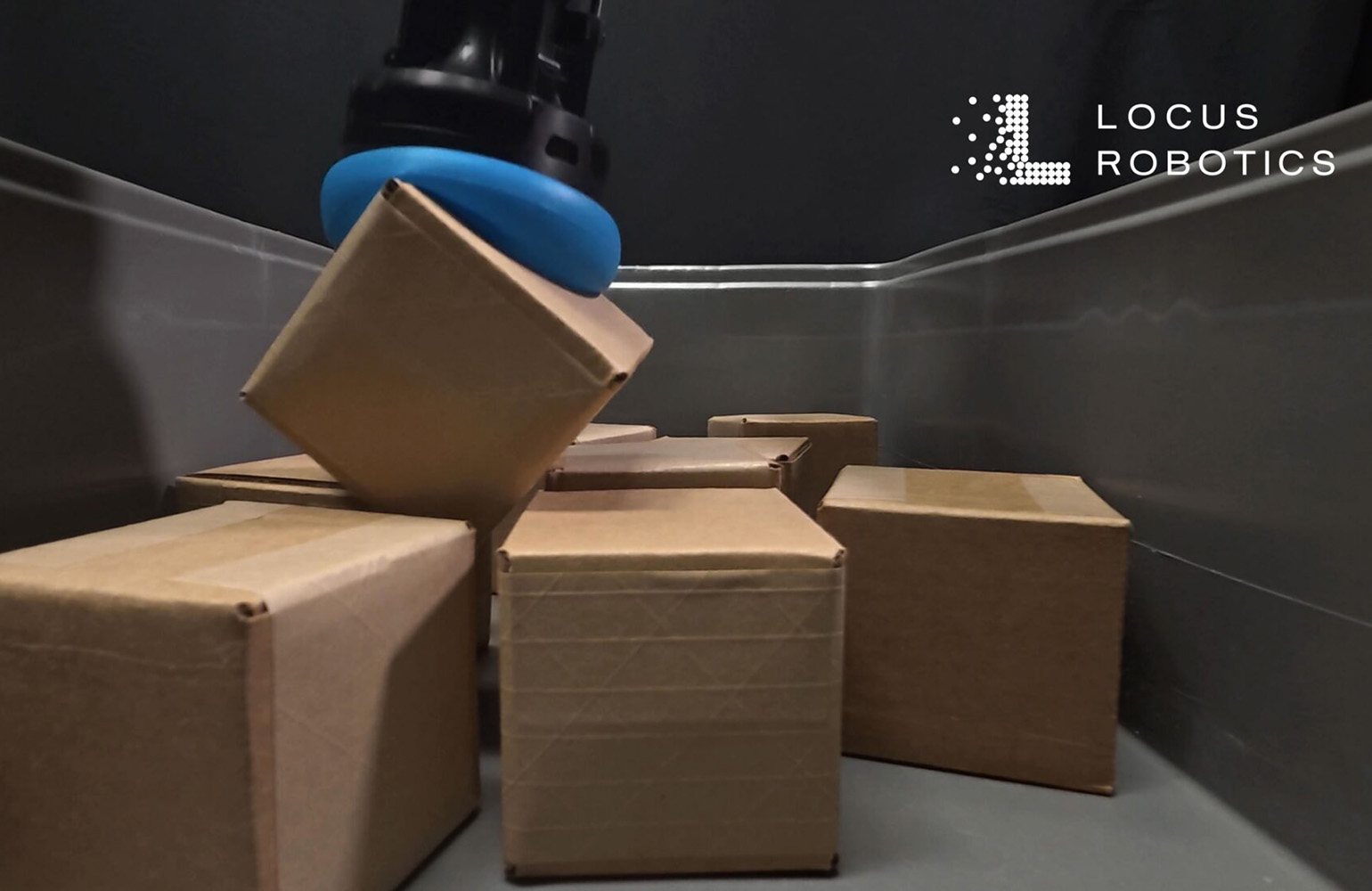
That realization led Locus to acquire Nexera Robotics, a Vancouver, Canada-based company renowned for its NeuraGrasp gripping innovation. Nexera had already spent years perfecting its unique soft end effectors through multiple product generations, and its technology had proven capable of handling a remarkably diverse range of items — from small rigid containers to porous polybags and soft cloth goods.
The acquisition brought together Locus’s expertise in deploying robots at scale within warehouse environments and Nexera’s deep knowledge of advanced gripping mechanisms. According to Roy Belak, who serves as the senior vice president of robotic grasping at Locus and formerly led Nexera as CEO, the partnership felt inevitable. By the time Nexera entered the picture, the company was on the cusp of a major technological breakthrough, and Lulus provided the perfect platform to accelerate its deployment.
## Bridging the Gap Between Suction and Pinch Grasping
One of the central insights driving the NeuraGrasp technology is an understanding of the spectrum on which robotic grasping operates. At one end sits suction-based grasping, which is exceptionally reliable and handles the majority of warehouse operations with ease. At the other end is pinch grasping, which offers greater versatility for irregularly shaped or delicate items but has historically struggled with consistency and robustness.
Belak noted that suction-based systems cover roughly 60% to 70% of typical warehouse picking scenarios. For the remaining 30% to 40% — the items that suction simply cannot handle reliably — pinch grasping becomes essential. NeuraGrasp’s soft gripping technology is designed to bridge this gap by combining both suction and pinching capabilities in a single end effector, providing the best of both worlds.
“The industry recognizes that pinch grasping will be incredibly influential in the future of robotic manipulation,” Belak said. “But we also believe suction gets you a long way — and if a technology works well, there’s no reason to abandon it.”
## Reliability Over Speed
A defining philosophy behind Lulus’s approach to picking is an unwavering commitment to reliability and pick quality. In industrial environments, Belak argues, the ability to consistently perform tasks without failure matters far more than raw speed. After all, a robot that picks quickly but frequently drops items, damages products, or double-picks orders creates more problems than it solves.
“Lorus Origin bots are already known for being very high-quality machines,” Belak explained. “We want to bring that same ethos to the picking arm.”
The company is placing particular emphasis on avoiding product damage, eliminating double picks, and minimizing missed selections — pain points that directly affect a customer’s bottom line. According to Belak, these quality metrics are often overlooked in marketing discussions around robotic picking, where the focus tends to skew toward throughput and return on investment figures.
“Once you have the quality dialed in, then you can start worrying about speed,” Belak added. “Quality comes first, always.”
## What’s Still Standing in the Way
Despite impressive advances, Belak identified two persistent roadblocks that continue to hold back the wider adoption of robotic picking technology. The first is the development of sophisticated artificial intelligence for manipulation tasks. While the robotics industry has invested heavily in building powerful hardware, the intelligence layer — particularly for pinch grasping — still lags behind what is needed for truly autonomous operation in diverse environments.
The second challenge centers on tactile sensing. Robots need a reliable sense of touch to handle delicate or irregularly shaped objects with the care and precision that human workers provide. Current touch-sensing technologies tend to degrade quickly under heavy use, and creating robust, long-lasting tactile feedback systems remains an unsolved problem.
“There’s a fundamental piece of the physical system that’s missing — the sense of touch on robots, and specifically the kind that remains reliable over extended use,” Belak said. He expressed skepticism that simulated data alone will bridge this gap, noting that real-world tactile feedback is too complex to replicate effectively in virtual environments.
Nexera already incorporates some tactile sensing into its NeuraGrasp system, and the company is actively exploring ways to advance these capabilities further. Lulus’s broader manipulation roadmap extends well beyond the current Array platform, with plans to apply these insights across a range of products and deployment scenarios, including stationary picking stations.
## Looking Ahead
Lulus is currently in the early stages of deploying Array with its original gripper to initial customers. As those deployments scale, the company expects to gather a wealth of performance data that will inform the integration of Nexera’s NeuraGrasp technology. Belak expressed optimism about the timeline, noting that he anticipates Array will be publicly displayed with Nexera’s gripping system in the near future.
The company sees this as just the beginning of a longer journey. Robotic manipulation — whether performed by mobile robots like Array, stationary systems, or future platforms — represents a core area of innovation that Lulus is determined to lead.
—
## Frequently Asked Questions
**What is Locus Robotics Corp.?**
Locus Robotics is a company that develops autonomous mobile robots (AMRs) for warehouse and fulfillment operations. It has deployed thousands of robots across various facilities and contributed to billions of picks over the years.
**What is Array?**
Array is a mobile manipulator developed by Locus Robotics. It features a custom-developed, vision-guided picking arm designed to perform robotic picking tasks in warehouse environments.
**What is NeuraGrasp?**
NeuraGrasp is a gripping technology developed by Nexera Robotics. It uses soft end effectors that combine suction and pinch grasping capabilities, allowing it to handle a wide variety of item types including rigid containers, porous polybags, and soft cloth goods.
**Why did Locus acquire Nexera Robotics?**
Locus acquired Nexera to integrate advanced gripping technology into its Array platform, enabling the robot to handle a much wider range of stock-keeping units (SKUs) and picking scenarios than was possible with its original suction-cup gripper.
**What is the advantage of combining suction and pinch grasping?**
Suction grasping is highly reliable and works well for a large portion of warehouse items. Pinch grasping, on the other hand, is better suited for irregularly shaped, delicate, or porous items. By combining both methods in a single end effector, NeuraGrasp can cover a broader range of picking scenarios while maintaining reliability.
**Why is Locus focusing on reliability instead of speed?**
In industrial warehouse settings, consistent and error-free performance matters more than raw speed. A fast robot that frequently misses picks, damages products, or causes double-picks ultimately costs customers more in the long run. Locus believes that mastering quality and reliability first creates a foundation for meaningful speed improvements later.
**What are the biggest challenges facing robotic picking today?**
The two main challenges are the development of sophisticated AI for manipulation decisions, and the lack of robust, long-lasting tactile sensing in robots. Without reliable touch feedback, robots struggle to handle delicate or complex objects the way human workers do.
**Will Array eventually use Nexera’s technology?**
Yes. Locus plans to integrate NeuraGrasp into Array and expects to showcase the upgraded system publicly in the near future.
**What other platforms is Locus developing besides Array?**
While Array is the current focus, Lulus has indicated that robotic manipulation is a core pillar of its innovation strategy. The company envisions applying its advances to a variety of platforms, including stationary picking benches and future-generation mobile manipulators.
—
## Conclusion
The pursuit of reliable, versatile robotic manipulation represents one of the most important frontiers in warehouse automation. With the acquisition of Nexera Robotics and the integration of NeuraGrasp technology into its Array platform, Locus Robotics is positioning itself at the forefront of this challenge. By prioritizing reliability, pick quality, and a balanced approach to gripping technologies, the company aims to set a new standard for what robotic picking systems can achieve in real-world environments. As data from early deployments flows in and tactile sensing technology advances, the gap between what robots can do and what human workers do will continue to narrow.
Thank you for reading
