



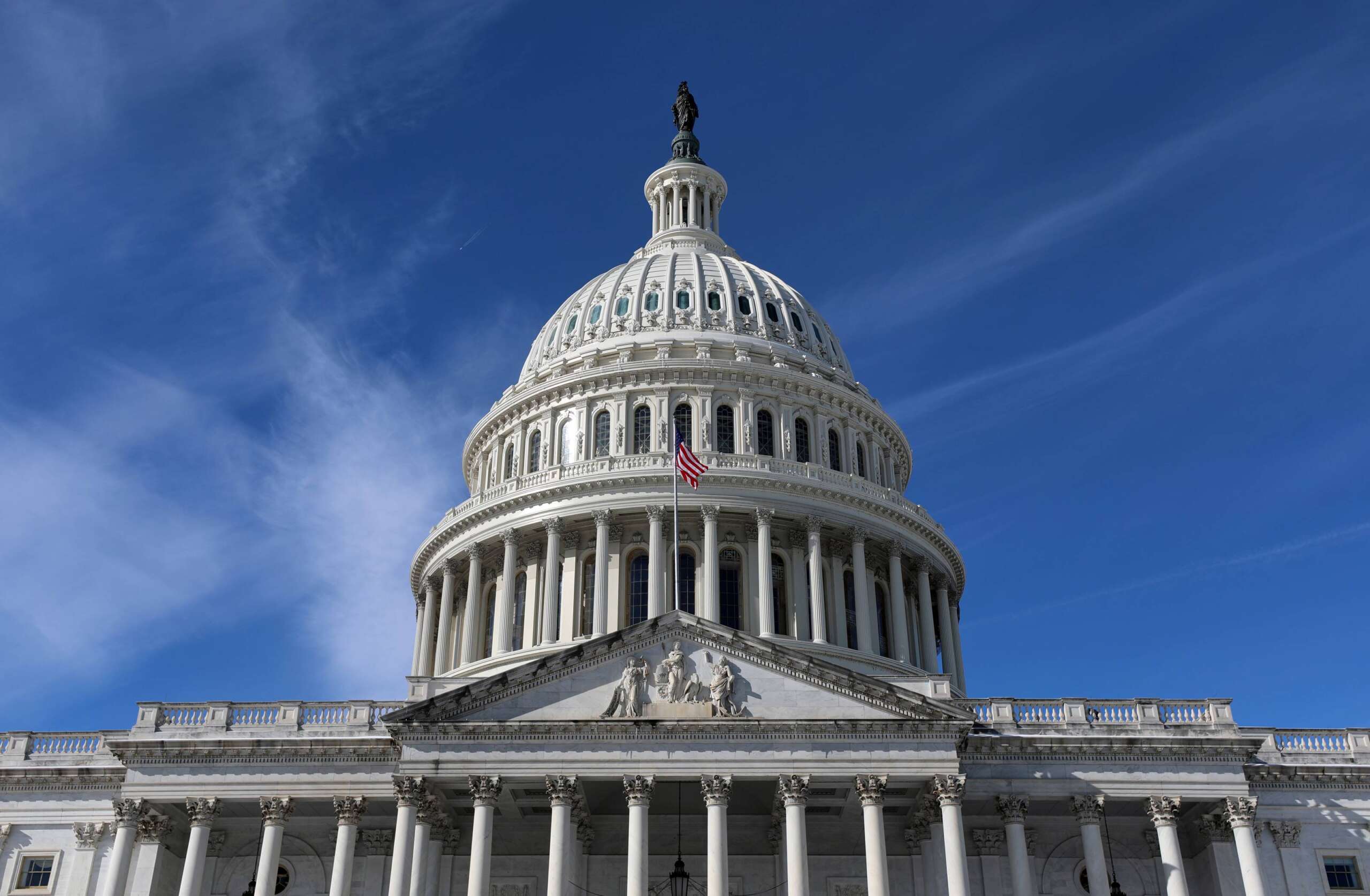
Over the past a number of weeks, lawmakers have been inspecting a variety of laws that will have an effect on federal workers in a technique or one other.
The Home Oversight and Authorities Reform Committee earlier this month thought of, and in the end superior, a few dozen payments, a few of which obtained sturdy bipartisan help from committee members.
Here’s a round-up of some current laws that will carry adjustments to advantages, pay and hiring practices for the federal workforce.
Elevating VSIP’s spending cap
One of many payments that superior out of the Oversight committee earlier this month would increase the spending cap for federal worker “buyouts” by way of the Voluntary Separation Incentive Cost (VSIP) program.
Presently, companies are restricted to providing workers as much as $25,000 in the event that they select to go away their jobs by way of VSIP — it’s a worth cap that has not modified for the reason that Nineties.
If enacted, the Federal Workforce Early Separation Incentives Act would enhance the restrict on VSIP funds, letting companies provide workers as much as six months of their wage, with approval from the company head, if they comply with give up. Supporters of the invoice stated tying the VSIP funds to wage somewhat than an across-the-board cap would enable the quantity to regulate over time with inflation.
Though this system has been round for many years, VSIP has extra not too long ago come into the highlight, because the Trump administration undertakes main reductions throughout the federal workforce. Rep. Nick Langworthy (R-N.Y.), who launched the laws, known as the present $25,000 cap “a barrier to responsible workforce management.” He added that the restrictions create “uncertainty” for workers and “leave agencies with fewer options.”
“This outdated cap has limited agencies’ ability to offer competitive, voluntary offramps,” Langworthy stated throughout a Feb. 4 committee markup. “As a result, the federal government often misses opportunities to reduce payroll costs early and instead turns to more expensive and disruptive alternatives, such as involuntary separations, extended administrative leave or simply paying positions that no longer align with mission needs.”
Throughout the committee markup, Rep. James Walkinshaw (D-Va.) additionally expressed help for the bipartisan laws, calling the proposed change “long overdue,” particularly contemplating that the VSIP fee cap is about 30 years outdated.
The invoice superior out of the committee in a unanimous, bipartisan vote of 43-0. Rep. James Comer (R-Ky.), the committee’s chairman, stated the laws would “make VSIP offers more attractive for downsizing agencies.”
“VSIP authority is often preferable to involuntary options, such as implementing a cumbersome reduction-in-force process,” Comer stated. “But given the status quo, too many employees would choose not to take the offer, leaving taxpayers on the hook for their continued salaries and benefits.”
Abilities-based federal IT hiring
One other invoice that lawmakers on the Oversight committee not too long ago accepted goals to open the doorways to a wider vary of federal job candidates for technology-related roles throughout authorities.
If enacted, the Cybersecurity Hiring Modernization Act would bar companies from setting training necessities for cybersecurity positions, until they’re legally required to take action. Moreover, companies would solely have the ability to think about a job candidate’s academic background if it straight pertains to the talents mandatory for the open place. The invoice applies to the GS-2210 IT administration collection and different cybersecurity positions designated by the Nationwide Initiative for Cybersecurity Schooling.
The invoice would advance a push towards skills-based hiring that’s already underway throughout the federal authorities. Lately, each the Trump and Biden administrations took steps to advertise a give attention to sensible abilities, somewhat than a job applicant’s academic background. As an example, the Trump administration’s Could 2025 “merit hiring plan” contains, amongst different facets, an emphasis on skills-based recruitment.
Rep. Nancy Mace (R-S.C.) launched the laws, saying that it will be “an important step to tearing through the paper ceiling,” whereas additionally pointing to workforce information displaying that federal IT workers are disproportionately older employees.
“Degree requirements function as a poor substitute for what actually matters in the labor market — merit, skills and talent,” she stated in the course of the Feb. 4 committee markup. “A diploma may signal someone mostly showed up somewhere for a few years, but it does not reliably indicate whether a worker can perform the tasks a job requires, adapt to new technologies or contribute productively.”
Along with eradicating diploma necessities, the invoice would additionally require OPM to publish an annual report on any adjustments that occurred in training qualification requirements for federal cybersecurity jobs, in addition to publish information on the training ranges of recent cybersecurity hires throughout authorities.
Rep. Shontel Brown (D-Ohio), a lead co-sponsor of the laws, stated skills-based hiring in federal cybersecurity roles would cut back hiring limitations and open the doorways to extra various and succesful job candidates.
“This bill does not lower the qualifications, but instead recognizes educational experience is not one-size-fits-all,” Brown stated. “It will help level the playing field for veterans, community college graduates, career changers and people who have had nontraditional educational pathways.”
Lawmakers on the committee unanimously voted in favor of the bipartisan invoice, leading to a vote of 44-0. The laws is now pending additional consideration within the full Home.
Federal pay increase prospects
In an effort to carry federal salaries nearer in step with non-public sector wages, in addition to rising prices of residing, lawmakers moreover reintroduced laws earlier this month that makes an attempt to safe a major pay increase for federal workers in 2027.
A brand new Democrat-led invoice proposes a 4.1% pay increase subsequent yr, beneath the newest iteration of the Federal Adjustment of Earnings Charges (FAIR) Act. It’s a mix of a 3.1% across-the-board increase and a 1% common locality pay adjustment. Though Democrats launched it in each the Home and Senate, the FAIR Act has not gained help from Republicans.
“Federal workers across the nation dedicate their lives to serving their fellow citizens and keep our government running,” Sens. Mark Warner (D-Va.) and Tim Kaine (D-Va.) stated in a joint Feb. 10 assertion on the FAIR Act. “It’s critical that we are recruiting and retaining individuals with the best experience and expertise.”
If it’s handed, federal workers would see a bigger increase in 2027, in comparison with the 1% pay enhance most workers obtained in January. In distinction, federal regulation enforcement personnel and navy members obtained a 3.8% increase earlier this yr.
The opportunity of the FAIR Act gaining traction forward of 2027 could also be slim. Regardless of its reintroduction annually for greater than a decade, Congress has but to go any model of the FAIR Act. The precise federal pay raises workers obtain fall wanting what the invoice has proposed most years.
Just lately, the FAIR Act has known as for considerably greater pay raises of 4.3% in 2026, 7.4% for 2025 and 8.7% for 2024. However the precise raises that the majority workers obtained in these years have been smaller by comparability: 1% for 2026, 2% for 2025 and 5.2% for 2024.
Doreen Greenwald, nationwide president of the Nationwide Treasury Staff Union, introduced additional consideration to the FAIR Act’s reintroduction throughout a Home Democrats’ listening to final week.
“It’s vital that federal employees are fairly compensated for the important work they do,” Greenwald stated in the course of the Feb. 12 listening to. “If the federal government is to compete for talent and rebuild the workforce, we need to offer competitive pay.”
Individually, in December, lawmakers on the Oversight committee superior a number of different payments that will impression federal workers. Republican-led laws to change insurance policies for the federal probationary interval, in addition to require detailed reporting on federal workers’ use of official time, superior alongside celebration strains.
Some laws with bipartisan help was additionally accepted by the committee in December, together with payments on coaching for federal supervisors, skills-based hiring of federal contractors and amending the system for relocation funds for federal workers. These payments are all at the moment into account within the full Home, however they haven’t seen a lot motion since advancing on the finish of 2025.
If you want to contact this reporter about current adjustments within the federal authorities, please electronic mail drew.friedman@federalnewsnetwork.com or attain out on Sign at drewfriedman.11
Copyright
© 2026 Federal Information Community. All rights reserved. This web site just isn’t meant for customers positioned throughout the European Financial Space.
