



Stay updated with ZDNET: Set us as your preferred source on Google.
Key Points from ZDNET
- Adaptive charging helps extend battery life by slowing down the charging speed.
- The Anker Nano 45W stands out as the top adaptive charger on the market.
- Using a low-power charger overnight can offer many of the same advantages.
No matter if you’re using a budget $10 charger or a pricier model, today’s USB chargers are incredibly advanced. They might seem like simple boxes connected to a wall socket and a cable, but there’s a lot happening behind the scenes.
As soon as you plug a charger into your device—be it a phone, tablet, laptop, or power bank—the charger activates, and both devices quickly agree on the safest and most efficient voltage and current levels before starting the charge. Throughout the process, the charger and device constantly check voltage, current, and temperature to make sure everything stays safe and avoids overheating or damage.
Also: 10 essential cables and connectors I rely on daily (and they’re budget-friendly)
Those days of chargers forcing maximum power into your device are long gone.
When your device nears full charge, the charger gradually reduces the voltage until the battery is completely charged, then stops.
If there’s a sudden surge in current or voltage, or a short circuit in the cable or device, the charger immediately cuts off power to prevent harm.
But what if chargers could be even more intelligent?
That’s where smart adaptive chargers come in. Like many new technologies, this feature goes by several names. Anker refers to it as Care Mode, while other brands use terms like “intelligent charging,” “smart regulated,” or even “AI.” Despite the different labels, they all describe a similar concept.
What Exactly Is Adaptive Charging?
In recent years, USB charger power outputs have skyrocketed (literally). Back when USB-A chargers delivered less than half an amp, we needed every bit of power available. But now that chargers can easily handle 140W or more, managing that power wisely is crucial.
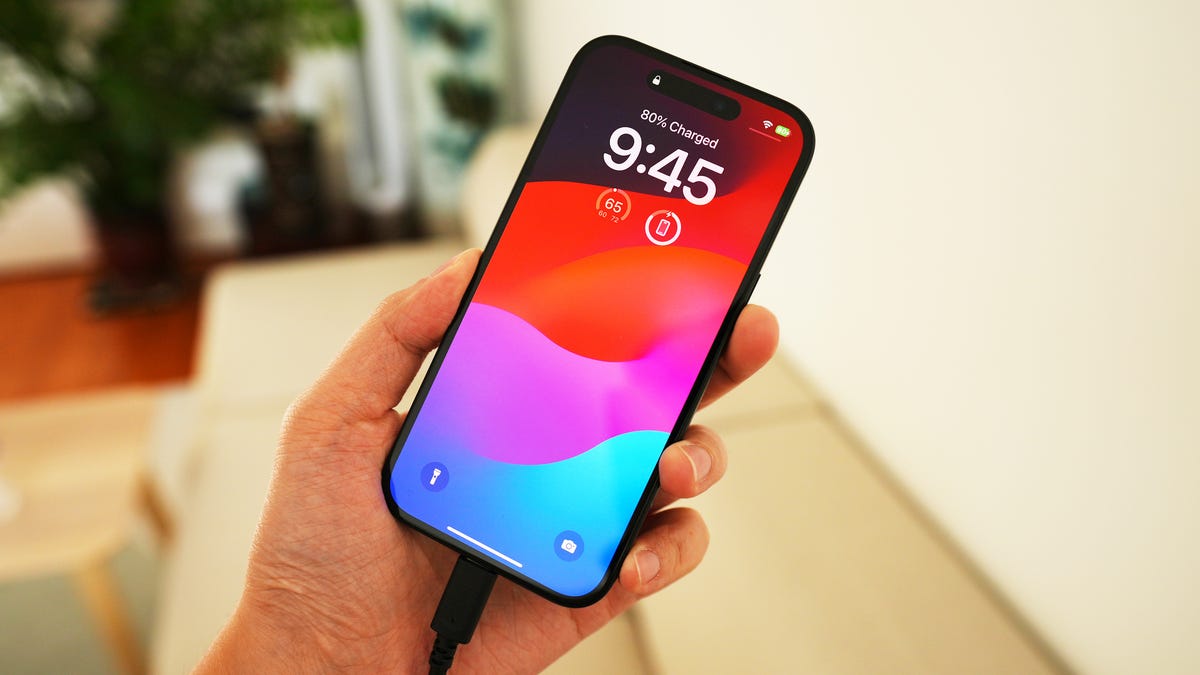
A USB power meter is a great tool for monitoring your charging sessions.
Adrian Kingsley-Hughes/ZDNET
Ideally, you’d want a fast charge to get your device from empty to about 20%, a steady charge to handle the main part up to 80%, and then a slow trickle charge for the last 20%.
It would also be helpful to have the option to disable this feature when you need to charge your device as quickly as possible.
Also: My new favorite Anker charger features a handy smart display (and it’s affordable)
This is precisely what adaptive chargers do. The charger talks to your device, they agree on the best charging strategy, and then the device moves through each stage accordingly. For example, the Anker Nano 45W starts at 45W, drops to 20–30W for the main charging phase, and then lowers to 10W for the final top-up.
This method is perfect for charging smartphones and keeping the battery in top shape, especially when your phone is plugged in overnight or for long periods.
Is Adaptive Charging Effective?
I was doubtful about adaptive chargers at first. After all, charging standards like Power Delivery already do a great job of keeping things safe, and most chargers support them now. Plus, I’ve seen plenty of marketing buzzwords over the years, so I know not to take claims at face value.
Modern smartphones can get quite warm during use.
Adrian Kingsley-Hughes/ZDNET
However, after running tests and monitoring power usage and temperatures, I noticed a significant drop in both charger and device temperatures (about 25°F and 6°F, respectively), which is great for the long-term health of your smartphone.
Also: A common charging habit was secretly damaging my iPhone’s battery—here’s how I fixed it
But (there’s always a catch): Adaptive charging doesn’t defy physics. The only way to reduce heat is to lower the power output, which naturally means longer charging times.
Does It Work with All Devices?
Full adaptive charging, like Anker’s Care Mode, isn’t compatible with every phone. So far, I’ve only seen support for the iPhone 17, 16, and 15 series, as well as iPad Pro models from 2020 onward. This is because the charger needs to identify the device it’s charging, and currently, only a limited number of devices can do this.
The Anker Nano 45W offers more than just device recognition!
Anker
This is the main drawback. Still, considering the hundreds of millions of iPhones that support this feature and the fact that more companies are working to expand compatibility, the future looks promising.
Don’t want to invest in a new adaptive charger? Try using a low-power charger for overnight charging—something around 20W works well—and save your fast chargers for daytime use and larger devices like laptops and power banks.
Is It Worth It?
This question is bound to spark discussion.
In the end, how fast your battery charges is managed by its own BMS (battery management system). Some might argue for pushing as much power as possible and letting the BMS handle it. That’s a reasonable point, but given how hot modern phones can get, I’m not convinced it’s the best approach for battery longevity. Heat and aggressive charging are the main causes of battery wear, so anything you can do to reduce them should help your battery last longer.
And with today’s smartphones costing $1,000 or more, that’s definitely a good thing.
Also:
After putting this Anker charger through its paces, I now wish every wireless charger came equipped with a built-in thermoelectric cooler.
That said, if heat during charging is a concern for you, there’s another smart option: go for a wireless charger that includes integrated cooling—like the Anker MagSafe 3-in-1 charging station. In my testing, this device kept my iPhone remarkably cool throughout the charging process.
The Anker Prime MagSafe 3-in-1 charger maintains a pleasantly cool temperature on the back of the iPhone.
Adrian Kingsley-Hughes/ZDNET
What should you buy?
For an adaptive charger, the top pick is the Anker Nano 45W. Priced at just $29, it’s affordable—and its moderate power output makes it perfect for overnight charging. This model features a TUV-certified Care Mode that starts with a fast initial charge, transitions to a lower-power phase for most of the session, and finishes with a gentle trickle charge.
Also: The best earbuds: Expert tested and reviewed
Another solid alternative is the Ugreen Uno 100W. While it doesn’t offer the same three-stage charging modes, it excels at switching to trickle mode once the main charging cycle is complete.
