



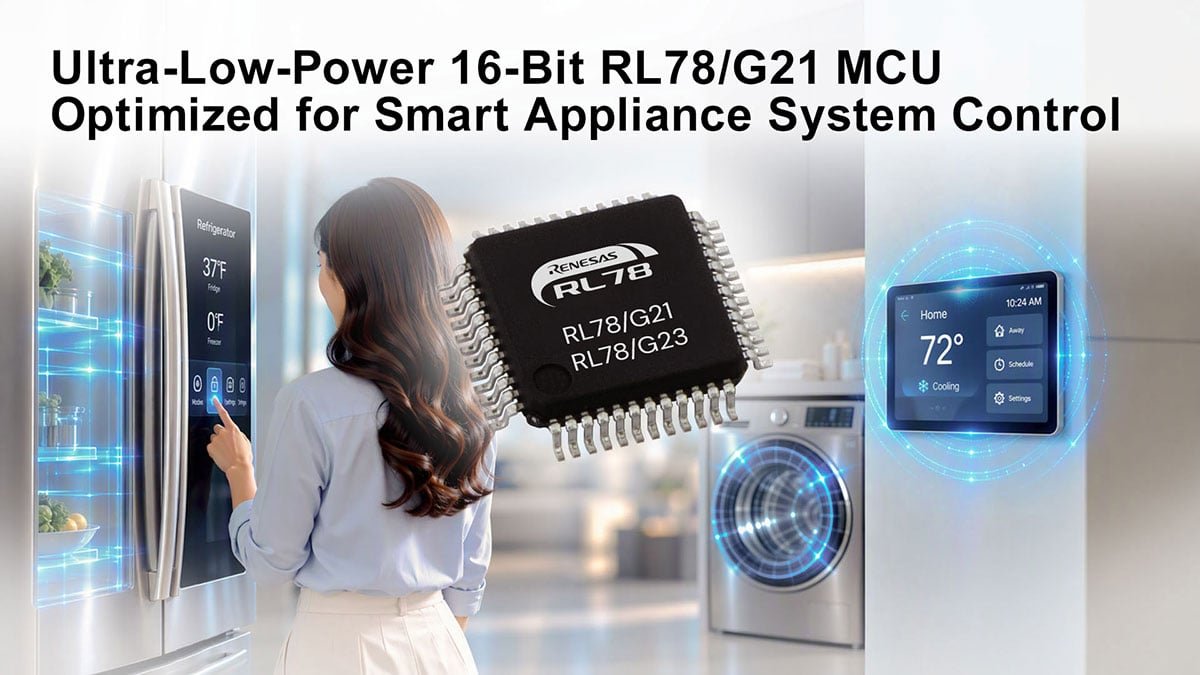
Next-Generation Microcontrollers Are Making Smart Appliances Smarter
A recent wave of innovation in home appliance technology is bringing better efficiency, enhanced security, and more intuitive user controls. At the heart of this shift are two newly developed microcontroller units (MCUs) designed specifically for modern smart systems. One chip focuses purely on efficient system control, while the other seamlessly combines system control with advanced user interface functions.
The dedicated system-control chip is built to minimize energy consumption. With an operating current of just 34 micro-amps per megahertz, it uses roughly half the power of previous industry leaders. This efficiency allows manufacturers to use smaller batteries, simplify power supply designs, and reduce overall system costs. Furthermore, the chip integrates a high-speed internal oscillator and built-in data memory, eliminating the need for external components and further lowering production expenses.
The integrated HMI (Human-Machine Interface) chip takes a different approach by consolidating functions. It handles both the core system logic and advanced touch inputs, allowing designers to combine what previously required two separate chips. This not only saves physical space on circuit boards but also significantly reduces the total cost of materials.
Security and reliability are critical in modern connected homes. These new chips feature robust protection against both physical threats, such as counterfeiting, and cyber threats, like unauthorized access and data tampering. The system-control variant, in particular, boasts a high tolerance to electrostatic discharge, ensuring the chip remains reliable throughout the manufacturing process and the entire lifespan of the appliance. Additionally, built-in self-diagnostic tools help meet strict international safety standards.
For appliances requiring complex touch screens or buttons, the HMI chip has been upgraded to support a much higher number of simultaneous touch points. This advancement allows for more sophisticated and responsive interfaces in devices like washing machines, microwaves, and refrigerators.
Because these chips are designed to be compatible with older generations, manufacturers can upgrade existing designs without costly and time-consuming overhauls. This makes it easy to transition to newer, more capable technology.
***
**FAQ**
**Q: Why is ultra-low power consumption important for home appliances?**
A: Lower power usage translates directly to reduced energy consumption for the end user. It also enables the use of smaller, cheaper batteries and less complex power management circuitry within the appliance, contributing to lower overall manufacturing costs.
**Q: How do integrated system-control and HMI chips save money?**
A: By combining multiple functions—like basic logic processing and touch input—into a single chip, manufacturers no longer need to purchase and place multiple separate components on the circuit board. This reduces the total number of parts needed and simplifies assembly, lowering the overall bill of materials.
**Q: Are these new chips difficult to integrate into existing appliance designs?**
A: No, they are specifically designed to be compatible with previous generations of the same product family. This means engineers can swap in the new chip with minimal effort, drastically cutting down on redesign time and costs.
**Q: What kind of security features are included?**
A: The chips include hardware-based defenses against cloning and counterfeiting, as well as software protections against hacking, unauthorized access, and data tampering. They also feature secure flash memory and unique identification codes to safeguard the device and its data.
***
**Conclusion**
The introduction of these new microcontrollers marks a significant step forward for smart home appliances. By balancing ultra-low power consumption, robust security, and highly integrated touch capabilities, manufacturers can now create devices that are not only more intelligent and user-friendly but also more reliable and cost-effective to produce. As smart homes continue to evolve, these foundational chips provide the perfect building blocks for the next generation of connected living.
Thank you for reading
