



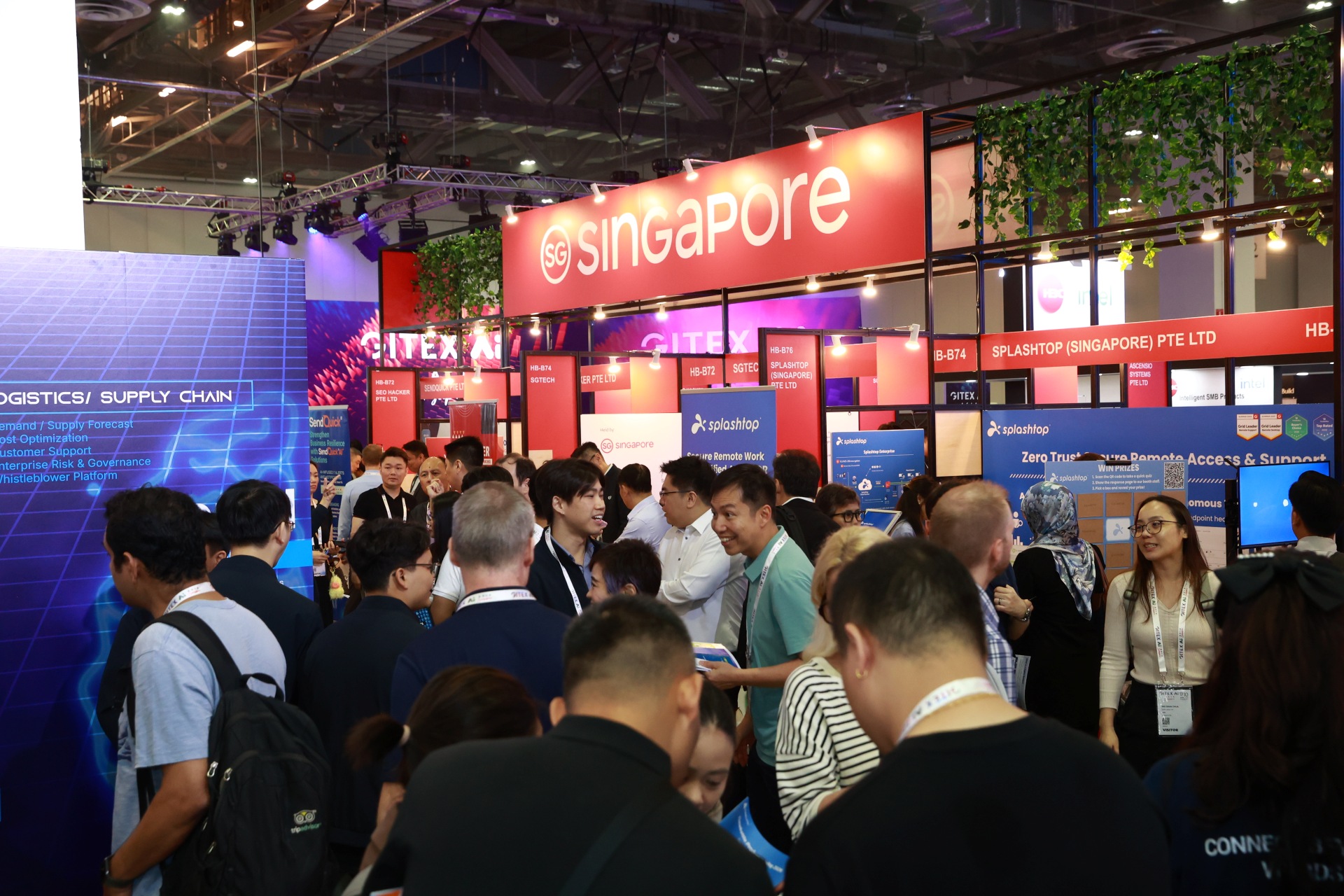
Day two of GITEX AI ASIA 2026 turned the highlight on the worldwide startups, scientists, traders and frontier applied sciences using Southeast Asia’s subsequent massive inflection level. The area is shifting past a foundational digital economic system right into a extra clever AI future, with AI funding in Southeast Asia projected to develop at a compound annual charge of 25% and surpass US$ 110 billion by 2028. Amid the AI surge, world tech companies, enterprise capitalists and startup ecosystems are rallying in direction of increasing within the area.
This momentum was evident at GITEX AI ASIA and its startup showcase, North Star Asia, offered by GITEX, one of many world’s largest tech and AI startup occasions community. Greater than 300 startups from over 50 nations met traders managing upwards of US$350 billion in property, creating one of many area’s extra concentrated areas this yr for startup discovery, deep-tech matchmaking and industrial scrutiny. Throughout the present flooring and the convention programme, the conversations sharpened across the applied sciences and enterprise fashions finest positioned to scale in an AI economic system formed by regulation, industrial urgency, crucial power and the race to show analysis into income.
North Star Asia attracts a brand new geography of startup scale
Alongside tech pavilions from Hong Kong, India, Japan, the Netherlands, Pakistan and South Korea, new first-time nation pavilions from Belgium and the Philippines mirrored not solely broader participation, but additionally the more and more cross-border scale of the innovation economic system converging at North Star Asia.
Hub.Brussels introduced firms working on the intersection of AI, enterprise software program and controlled industries. Amongst them, Artech targeted on digital product passports, AI-based compliance, safe knowledge trade and regulatory information modelling aligned with European frameworks – exactly the type of infrastructure prone to form new frontiers of collaboration and transparency. One other Belgian firm, AW Labs, utilized clever sensing and analytics to indoor air high quality, bringing scientific precision to airborne-risk administration.
From the Philippines, TAPI launched startups spanning AgriTech, Good Cities, Training and SaaS. Cerebro unified faculty working programs, from enrolment and attendance to grading and reporting, whereas GreenVisionsPh featured precision and sustainable farming instruments designed to revive soil well being and enhance productiveness.
Trade 5.0 brings security, sustainability and velocity into sharper focus
As AI programs start to make choices, amplify human productiveness, and sit deeper inside nationwide and industrial ecosystems, the central query is now not how shortly organisations can deploy them, however how intelligently they will govern them. This dilemma was addressed in probably the most intently watched periods the place Demetris Skourides, the chief scientist for analysis, innovation and know-how for the Republic of Cyprus, examined the governance angle of Trade 5.0: how firms preserve checks and balances as clever programs grow to be deeply embedded in on a regular basis life.
Demetris mentioned, “Sovereign AI is about far more than just running a model in your own country. It’s about whether you control the data, the decisions and the algorithms that define those decisions. Too often we treat AI as just the application layer and forget the full stack beneath it – the hardware, models, engineering and data science. That blind spot can create serious systemic risks, from bias in training data to over-reliance on specific infrastructure and vendors.”
One other pressing theme was the environmental footprint of business itself. With manufacturing alone accounting for one-fifth of world emissions and greater than 54% of world power use, the push in direction of greener manufacturing is quick changing into a matter of competitiveness.
At GITEX AI ASIA, Arvind Bodhankar, the chief sustainability officer at Arcelor Mittal Nippon Metal – one of many world’s largest metal firm by market capitalisation – set out how AI, robotics and next-gen supplies are necessary to constructing greener, round factories. Arvind shared: “We have adopted a three‑pronged approach: reduce, recycle and repurpose, so that materials are fed back into the steel-making process or used as substitutes in cement and road-building – exactly the kind of circular thinking that defines Industry 5.0, where the human angle and sustainability are embedded into the future of manufacturing.”
Traders push founders past imaginative and prescient to enterprise resilience
Traders from greater than 30 nations arrived not merely to scout the following era of firms, however to supply a clearer studying of an evolving funding local weather. A key theme operating by means of these discussions was the dual problem of commercialisation and chronic progress.
Addressing the realities of capital in a shifting macro setting, Saemin Ahn, a managing accomplice at Rakuten Capital, one of many world’s company enterprise capital companies, shared the teachings of previous funding cycles and the attributes that distinguish the following massive startup from the remaining. His remarks urged that capital is concentrating round startups in sturdy themes comparable to AI and infrastructure, significantly these fixing mission-critical issues for purchasers and proving themselves as indispensable enterprise enablers, not simply facet experiments.
In one other session, Yinghui Kuang, a accomplice of Granite Asia, a worldwide multi-asset funding platform and VC behind 127 unicorns, turned to the tougher finish of the startup spectrum: commercialising onerous science. He shared: “One pragmatic path is to get commercial traction and scale first, then keep building on the technology. Early-stage investing is hard because you often do not have product validation, so you are really backing the team. In the last 12 months alone, we have looked at more than 100 humanoid startups, and in many cases, we only write the cheque after knowing a company for three to five years and seeing how it executes.”
Supernova Problem rewards startups able to construct at market velocity
Throughout rounds of pitching, debate and scrutiny at North Star Asia’s Supernova Problem, the competitors examined not solely the technical advantage of startups, however their potential to speak industrial readability, market match and scalability below stress.
From a aggressive subject of high-potential founders, Ailytics was topped Supernova Champion, for its office security platform, which might convert commonplace CCTV into AI-powered monitoring instruments. The Singaporean-based winner obtained SG$30,000 in equity-free prize cash.
Tan Wei Zhuang (Lenard), the CEO at Ailytics, commented on the win and participation, “We were very happy to see GITEX come to Singapore last year, and we signed up this year almost immediately after the 2025 edition. The quality of footfall has been excellent. From a tech campus perspective, the ROI has been extremely strong at GITEX AI ASIA Singapore, and we look forward to continuing our support in the years ahead.”
Japan’s health-tech pioneer, Lifescapes, secured the primary runner-up prize of SG$20,000, whereas South Korea’s expertise upskilling and hiring platform, Codespresso, took second runner-up, receiving SG$10,000.
For extra info, please go to gitexasia.com
Touch upon this text by way of X: @IoTNow_ and go to our homepage IoT Now
