



Follow ZDNET: Add us as a preferred source on Google.
ZDNET’s key takeaways
- Roku TVs and devices can slow down when cache builds up.
- A hidden remote shortcut soft resets my Roku and clears cache.
- Clearing cache is a quick first step, as long as I remember to do it.
I own two Roku TVs, a 4K TV paired with a Roku streaming stick, and a Roku soundbar linked to multiple Roku speakers. I also have a pile of old Roku streaming devices stuffed in tech drawers that I really need to sort through. Speaking of tidying up, it’s time to clear the cache on my Roku devices once again. Why? Because whenever I actually remember to do it, the performance boost is noticeable.
I’m a big fan of Roku devices, but my main frustration is that they tend to get sluggish over time. Sometimes Netflix takes a few extra seconds to launch. Or Disney+ gets stuck on its logo just long enough for me to consider restarting the TV. I know there are bigger problems in life, but it’s incredibly annoying in the moment.
Also: Every Roku user should know these 15+ shortcuts
Some time ago, I came across ZDNET’s guide on clearing the cache on a Roku. I had searched for this option before but realized Roku doesn’t offer a “clear cache” button the way Amazon Fire TV devices do. I discovered that, on Roku, I need to use a remote shortcut to “soft reset” the device. This wipes out any temporary system clutter that might be causing slowdowns. So, I gave it a try, and wow.
Let’s just say clearing the cache on my Roku is like giving the entire system a refreshing kick-start.
Why does Roku even have cache?
Just like a computer or smartphone, Roku devices store temporary data, known as cache, to help apps load more quickly. So, when I launch a streaming app, instead of re-downloading elements like images, thumbnails, and login details, my Roku retains that information, allowing the app to open faster. Ironically, though, cache can accumulate, become disorganized and corrupted, and lead to problems.
Also: I replaced my bedroom TV with this $170 Roku projector
When I notice sluggish performance like apps freezing, audio-video sync issues, or error messages, I know it’s time to clear the cache. Unlike a browser on my computer or phone, though, I can’t navigate through settings to find a clear cache button. There’s no screen where I can purge cache, free up storage, or anything similar. Instead, I’m given the option to perform a soft reset or restart.
The button sequence is unusual, but it works
We all know how to restart a Roku, or at least we should. I can unplug it from the wall for a full power cycle, which is the most thorough method because it allows any electrical charge in the capacitors to dissipate, fully clearing the cache, or I can go to Settings > System > System Restart > Restart using my remote. I can use either the Roku app’s remote or my physical remote, which I’ve long since misplaced.
Also: Lost your Roku remote? Here are four ways you can still control your TV
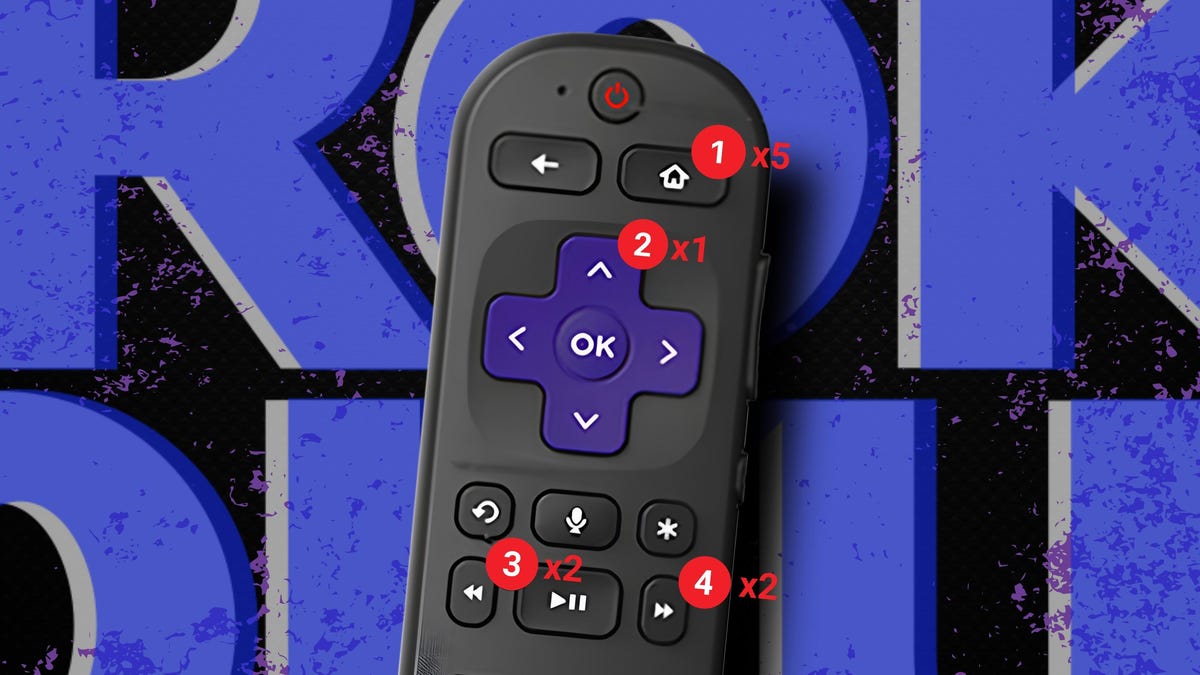
But there’s another method I can use with my remote to perform what’s called a soft reset, and it involves entering an unusual button sequence:
- Press Home five times.
- Press Up once.
- Press Rewind twice.
- Press Fast Forward twice.
That’s all there is to it. Unfortunately, whenever I do it, I don’t see a confirmation screen or a satisfying “cache cleared” notification. Instead, my Roku just freezes briefly and then restarts. This is what flushes out any problematic cache, and I find my system runs much better immediately afterward. Sluggishness? Gone. Crashes? No more. Everything feels fresh and responsive. Why on earth is this trick hidden?
Again, I don’t need the physical Roku remote. I can simply use the Roku mobile app’s remote to enter the button sequence.
It won’t fix everything
After performing a soft reset, apps that used to hang on the splash screen or behave erratically suddenly work smoothly. They’re faster and more responsive. All good, right? Not quite. While clearing cache is essential, sometimes I need to do a few additional cleanup tasks.
Also: 10 secret Netflix codes I use to find hidden movies
If an app is still loading slowly afterward, it simply means the issue wasn’t related to temporary data. In those cases, I’ll remove and reinstall the app, which forces a fresh download and usually resolves any lingering issues. Roku devices also have limited storage and memory, so if I see unused apps cluttering my home screen, I need to go through and delete any I haven’t used in months.
Still, clearing cache is a great first step because it’s quick, free, and takes only a minute to complete.
Remembering to clear my cache
Building habits is challenging for many people, myself included. I don’t need to clear my Roku cache every day. Constantly restarting my device would be more bothersome than beneficial. But I should do it once a month instead of waiting for my Roku to start noticeably misbehaving. So, I’ve set up a reminder on my iPhone. I have it trigger in the evening, when I’m most likely to be watching TV.
Otherwise, if I’m working during the day and get notified to do it, I’ll dismiss it, and I’ll never actually get it done. But also, if I’m in the middle of watching something and get the reminder, I won’t want to reset my Roku right then, so I’ll swipe the alert away and forget about it until next month.
Which brings me to the present.
Also: How to use MacOS Reminders (and why you should)
I’ve been ignoring my reminders and really need to clear the cache across all my Roku devices. It’s a low-risk fix that addresses my biggest complaint: that slow, sticky, sluggish feeling that builds up with Rokus over time. It makes my apps more responsive and resolves most glitches. So, if your Roku is lagging, freezing, or taking too long to open apps, give it a try.
And set a reminder to do it regularly. Just don’t be like me and ignore it for too long.
