



**Optimizing CI/CD for the Agentic Era: Techniques to Maximize Parallel Efficiency**
The landscape of software engineering is undergoing a dramatic shift. Coding agents, such as Claude Code, are rapidly evolving to the point where they are writing most, if not all, of the code required for various applications. Consequently, the primary bottleneck for developers has moved away from the act of writing code itself. The new challenges—and opportunities—lie in the subsequent stages of the development lifecycle, particularly in CI/CD (Continuous Integration and Continuous Deployment) and managing integrations with platforms like GitHub.
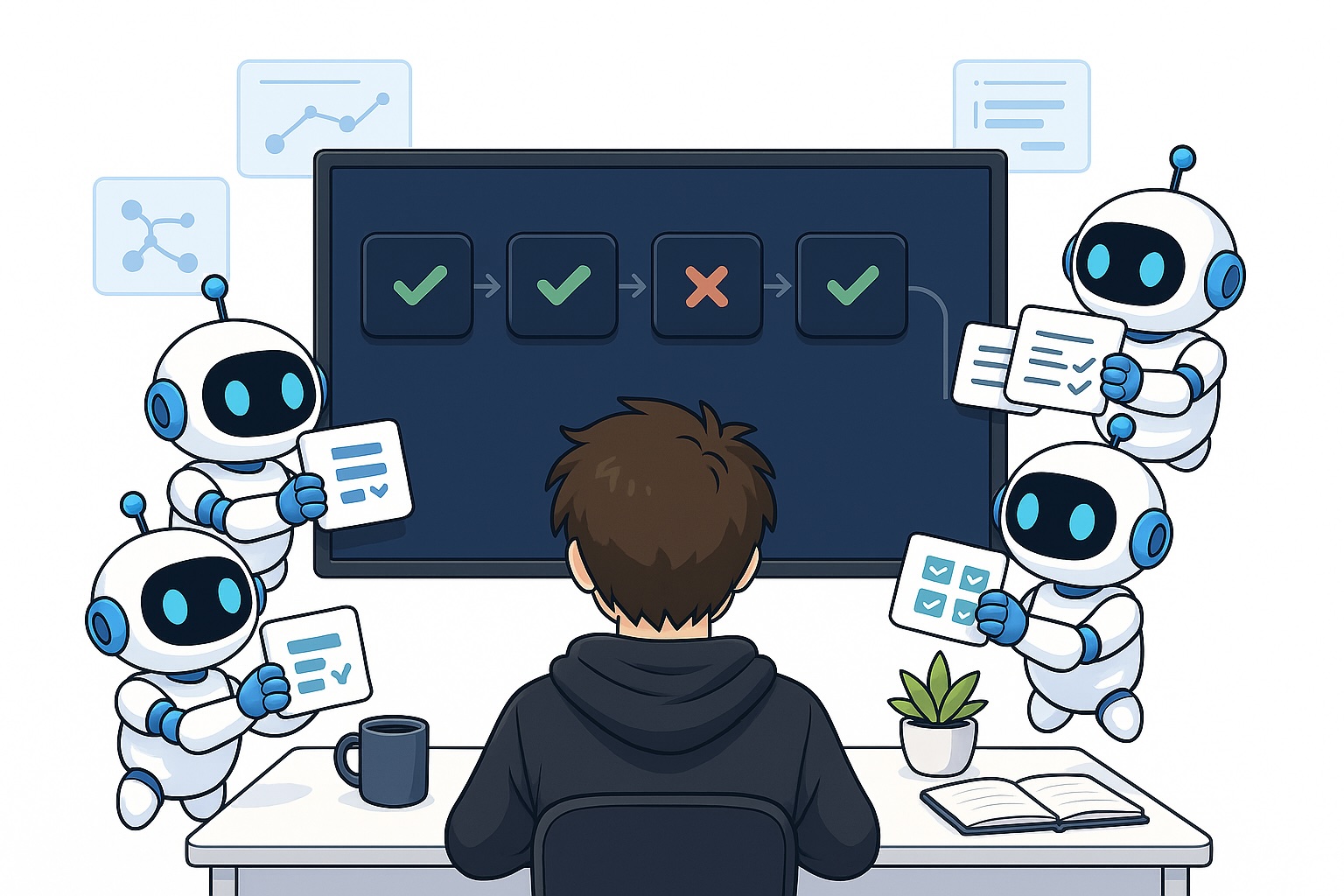
When multiple coding agents work in parallel to generate and deploy code, the complexity increases. Reviewing agent-generated output, managing human testing, and, above all, orchestrating the merge and deployment processes have become significant time sinks. This article will explore proven techniques to optimize your CI/CD pipeline, allowing you to harness the full power of coding agents for faster, more efficient deployments.
### Why CI/CD Has Become the New Bottleneck
CI/CD encompasses the entire process of taking code from its initial writing stage to its deployment in a production environment. This includes running automated tests, merging code into development or main branches, and ultimately deploying the finished product.
Previously, a developer’s time was split roughly 80/20 in favor of writing code. The advent of powerful AI coding tools has inverted this equation. Writing code is now incredibly fast, shifting the bottleneck toward the other critical 20%: the operational and coordination tasks of CI/CD. These tasks are fundamentally different from coding; they require meticulous coordination, review, and deployment orchestration, which are not as easily automated. Because these processes are now the primary constraint on delivery speed, optimizing them is essential for maintaining a high-velocity development environment.
### Techniques to Optimize CI/CD with Coding Agents
To overcome this bottleneck, we must adapt our strategies. Here are key techniques to make your CI/CD pipeline as efficient as your coding agents.
#### Automating Code Reviews
One of the most significant optimizations is the automation of code reviews. In most development scenarios, particularly for testing in a development environment, human code reviews are an unnecessary hurdle. Code written and reviewed by other AI agents, such as Claude Code and Codex, is statistically less likely to contain bugs than code written and reviewed solely by humans. Large-scale production data supports this, showing that agent-reviewed code introduces far fewer defects. By removing the human review step from the CI/CD loop for pre-production environments, you can drastically accelerate the flow of code from development to deployment.
#### Running Everything in Parallel
This may seem obvious, but it’s a frequently missed opportunity: you should run every task that can be executed in parallel. This includes running tests and code reviews concurrently, as well as ensuring that all individual tests within your suite are parallelized. The potential time savings are immense. For example, if a test suite runs three times per pull request and a developer creates 30 pull requests per day, even a one-minute reduction per test run translates to massive time savings over weeks and months. Prompt your coding agent to analyze your current CI/CD configuration for parallelization opportunities. It can often identify simple changes that yield significant time improvements.
#### Snapshot the Dev Branch to Merge to Main
A powerful technique for managing frequent integrations is to “snapshot” the development branch before promoting code to production. In active development environments with numerous daily pull requests, the main development branch is in constant flux, making it difficult to create a stable, tested version for production deployment. The solution is to create a snapshot: take a static copy of the dev branch at a specific point in time and promote that snapshot to production. This snapshot can then be reviewed as a complete, coherent unit by your AI agents. This allows the main development branch to continue evolving without disrupting the production release process, enabling a more stable and manageable deployment cadence.
#### Constantly Optimize
Finally, optimization is not a one-time task but an ongoing discipline. You should regularly review your CI/CD pipeline to identify new bottlenecks. Schedule a weekly review where you and your coding agents analyze the performance of the pipeline based on the code merged in the previous week. Look for areas where processes are slowing down, such as lengthy code reviews or failing deployment scripts. It is crucial to be an active participant in this process. While you can task agents with autonomous optimization, you must understand the “why” behind the pipeline’s structure. This knowledge allows you to guide the agents toward more effective solutions, ensuring your CI/CD pipeline continues to improve and keep pace with your high-volume coding efforts.
### FAQ
**Q1: What is a CI/CD bottleneck, and why is it a problem?**
A CI/CD bottleneck is a point in the software delivery process where workflow is delayed. As coding agents have made writing code extremely fast, the slowest part of the process is no longer writing code, but rather the steps involved in reviewing, integrating, and deploying it. This slowdown limits the overall speed and efficiency of a development team.
**Q2: Can I really trust AI agents to perform code reviews?**
Yes. AI agents like Claude Code and Codex are trained on vast repositories of high-quality code and can identify issues with a high degree of accuracy. For standard development and testing environments, agent-reviewed code has been shown to be more reliable than human-reviewed code, primarily because it avoids human error and oversight.
**Q3: How do I “snapshot” my dev branch?**
The process is straightforward. When you are ready to deploy, create a new branch from your current development branch. This new branch acts as your “snapshot.” You then run the full review and deployment process on this stable snapshot. Meanwhile, your original development branch can continue to be updated by your coding agents without affecting the production release.
**Q4: How often should I review my CI/CD pipeline?**
You should treat CI/CD optimization as a continuous process. A weekly review is recommended. This allows you to assess the impact of recent changes, identify new inefficiencies that have arisen, and ensure your pipeline is always operating at peak performance.
### Conclusion
The rise of coding agents has fundamentally altered the economics of software development. While they have solved the problem of writing code, they have exposed a new bottleneck in the CI/CD and deployment process. To realize the true 10x productivity gains promised by these tools, developers must shift their focus to optimizing the operational side of their workflow. By automating code reviews, embracing parallelization, using strategic snapshots, and committing to constant improvement, you can ensure your CI/CD pipeline is a source of speed and efficiency, not a constraint.
