



“`
Stephen Ferrara, who serves as principal deputy assistant secretary of defense for health affairs, views health information technology as something far bigger than just code and hardware.
“It’s a tool, an interface, a way to engage patients, and a force multiplier,” Ferrara explained. “More than anything, it gives our service members a way to carry their health care journey forward seamlessly when they transition to the VA.”
This broad perspective is fueling a wave of fast-paced change across the Military Health System — and Ferrara emphasizes that it centers on people just as much as it does on systems.
Tying together a sprawling network
The MHS supports a remarkably varied group: active duty personnel, military families, retirees, and veterans who receive care at military treatment facilities, through civilian community providers, the Tricare network, and the VA. Unifying that sprawling network into something coherent remains one of the system’s biggest hurdles.
“Gathering all those bits of data and information into one consolidated location — so a person has a unified, uninterrupted health record — is absolutely critical,” Ferrara said. He cited the Health Information Exchange as a vital piece of infrastructure and pointed to a new partnership with Kaiser Permanente at Walter Reed National Military Medical Center as a real-world example of what collaboration between military and civilian health systems can achieve.
At the core of it all sits MHS Genesis, the system’s main electronic health record platform. Ferrara noted it runs on the identical system the VA uses, just under a different name. That common foundation allows a service member to maintain a single, continuous health record from the day they enlist, through their active duty years, and into VA care.
AI is speeding up that connectedness, making it simpler for both providers and patients to pull up and make sense of their data, Ferrara said.
One of the most widely adopted examples of this thinking in action is ambient listening technology, which captures and summarizes doctor-patient conversations as they happen. This allows clinicians to put the keyboard aside and focus entirely on the person in front of them. It’s one of the smoothest IT deployments of his career, he said.
“To me, it restores the human element to medicine,” he said. “You can go back to real conversation — making eye contact, connecting one-on-one.”
The sole health system that deploys to war
Despite all the advancements in everyday garrison medicine, Ferrara is careful not to lose sight of what sets the MHS apart from any other health system in America.
“There are plenty of excellent health care systems in this country,” he said. “But we’re the only one that goes to war.”
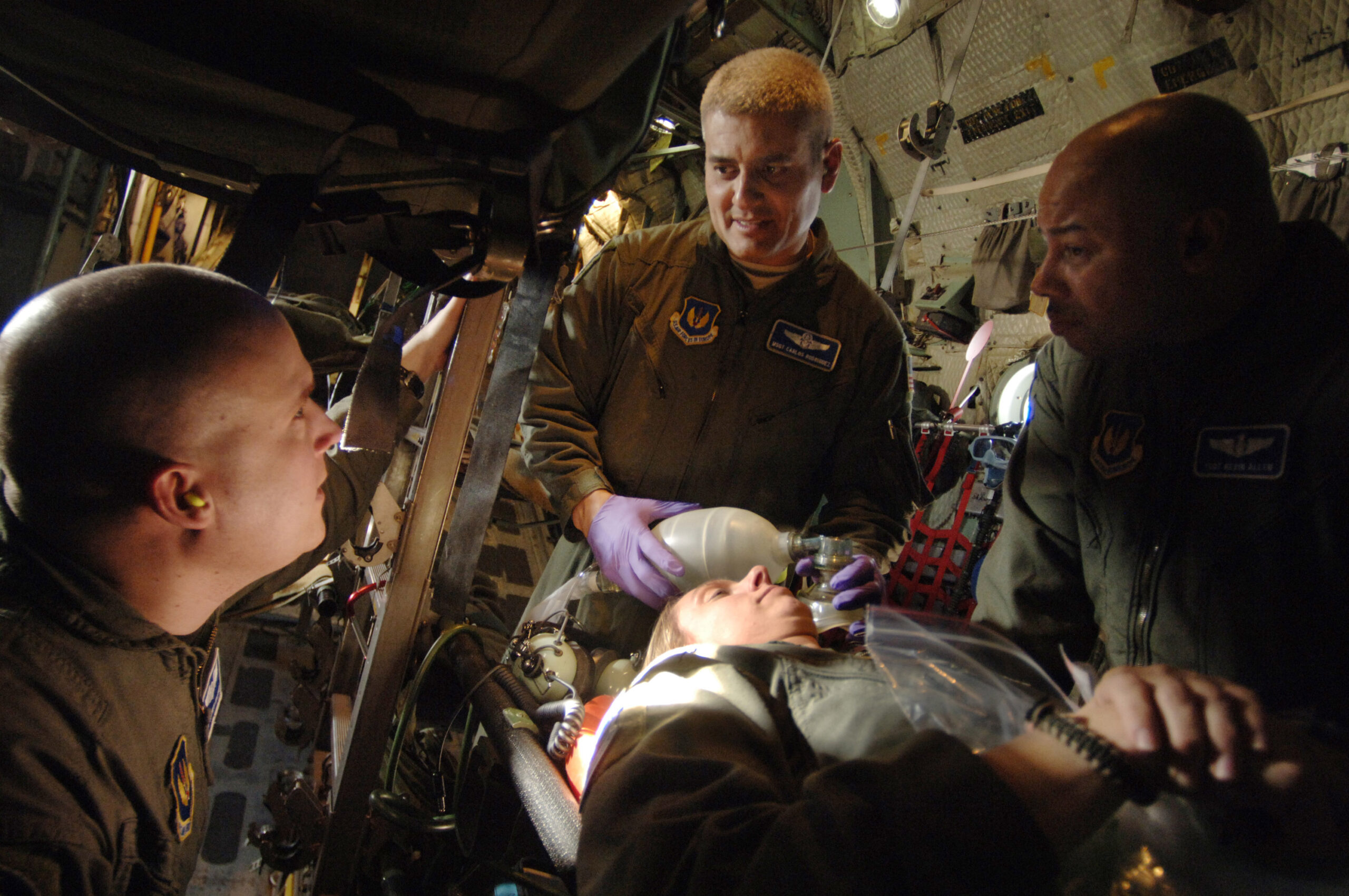
That reality shapes every decision about health IT in the military. The Joint Operations Medical Information System (JOMIS) bridges the operational battlefield environment back to conventional care systems and MHS Genesis. In the field, a tool called BATDOK lets medics log every treatment wirelessly — whether they have a live connection or not — so a full record travels with the patient from the moment of injury all the way through definitive care and rehabilitation.
Ferrara, who deployed several times himself, recalled a time not long ago when battlefield records were nothing more than a scrap of paper that might end up soaked with rain or blood before it ever reached the next level of care. Now, that documentation happens in real time. He attributes this progress — along with the Joint Trauma System, born out of the Global War on Terror — to the highest battlefield survival rates ever recorded.
The guiding philosophy behind battlefield technology, he said, is the same one behind ambient listening in the exam room: technology should stay out of the way.
“The IT should support the patient and provider, not get between them,” Ferrara said. “We face life-and-death situations on a regular basis. We take what would be extraordinary for most people and make it routine. When you’re in that moment, you can’t be distracted wondering, ‘did I hit the right button?’”
The patient always comes first
Across every scenario — from a routine pediatric visit at a military clinic to frontline trauma surgery — Ferrara keeps returning to one core belief.
“The patient is the number one stakeholder, period,” he said. “If the technology doesn’t work for the patient, then it’s fallen short.”
Practically, that means patients being able to schedule appointments easily, read their results in straightforward language, and walk out of a visit with a clear recap of what was discussed. It means providers dedicating their time to patients instead of paperwork. And it means protecting — and even deepening — the provider-patient relationship through the technology designed to support it.
Ferrara knows that the relationship between clinicians and health IT hasn’t always been smooth. But he’s convinced that’s changing in a fundamental way.
With MHS Genesis migrating to the cloud and AI tools growing at a rapid pace, Ferrara envisions a system that’s shifting away from being seen as an administrative headache and toward becoming a true ally in patient care — as outdated paper-based workflows and cumbersome electronic records gradually give way to genuinely supportive tools.
For him, measuring success is simple: Did the technology make it easier to care for a patient?
“That’s where IT can make a real difference,” he said. “And that’s where the staff will welcome it rather than resist it.”
Copyright
© 2026 Federal News Network. All rights reserved. This website is not intended for users located within the European Economic Area.
“`
