



On Thursday, the House Armed Services Committee passed a sweeping right-to-repair amendment despite opposition from the committee chair and several Republican members. This move sets the stage for a significant clash with defense contractors over the Pentagon’s access to technical data and software.
Introduced by Rep. Maggie Goodlander (D-N.H.) and Rep. Pat Harrigan (R-N.C.), the amendment would make “government-purpose rights” the standard for all technical data, software, and documentation provided under future Defense Department contracts. Contractors would only be allowed to claim more restrictive intellectual property protections if they can justify the need.
The amendment was approved by voice vote during the committee’s markup of the fiscal year 2027 National Defense Authorization Act, which was finalized late Thursday evening.
Under the new rules, any contractor claiming rights beyond government-purpose would need to submit a detailed inventory of the data or software they want to protect, prove the technology was developed with private funding, and specify any exclusions for unlimited rights. If a contractor fails to provide this documentation, the Pentagon would automatically gain government-purpose rights.
Additionally, the Pentagon would receive government-purpose rights to technical data, software, and documentation if the defense secretary finds that a contractor wrongly labeled information as proprietary or failed to exclude categories that should have unrestricted rights.
“For years, our troops have been stuck with a deeply flawed system—one that has made battlefield repairs impossible,” Goodlander stated. “It has undermined our military readiness and cost taxpayers billions. That’s why every service secretary who has appeared before this committee has backed our amendment and our push to establish a legal right to repair and fix this broken system.”
While the chairman’s draft already includes some right-to-repair provisions—such as creating a formal mediation process for IP disputes between the Pentagon and contractors—advocates for the amendment argued the department needs a broader solution.
“Section 842 … is the version contractors are comfortable with. It includes language that allows a company to bog down the department by labeling nearly anything as a trade secret. That’s not a right to repair—that’s a loophole with a help desk,” said Rep. Sara Jacobs (D-Calif.).
“You’ll hear claims that we’re seizing their intellectual property. We’re not. We’re paying a fair price to fix equipment we already own. The Army secretary put it clearly: ‘The Pentagon doesn’t want to take the data—it wants to buy it.’ All trade secret protections remain intact, and when the Government Accountability Office searched for even one instance where the government compromised a contractor’s IP, it found nothing,” she added.
Committee Chairman Mike Rogers (R-Ala.) countered that the amendment would “force companies to choose” between safeguarding their intellectual property and doing business with the Pentagon.
“Many will opt to protect their IP. The outcome will be fewer innovative firms in the defense sector, meaning fewer advanced capabilities for warfighters. And those companies that continue working with the department will raise prices to offset their IP losses, weakening the department’s purchasing power,” Rogers warned.
“For these reasons, we’ve heard strong opposition from the Aerospace Industries Association, the National Defense Industrial Association, the National Association of Manufacturers, the U.S. Chamber of Commerce, the Association of Equipment Manufacturers, and many others. There is a more balanced path forward. The chairman’s mark addresses IP concerns through targeted reforms developed in consultation with the Army, and the Army has expressed support for that approach,” he added.
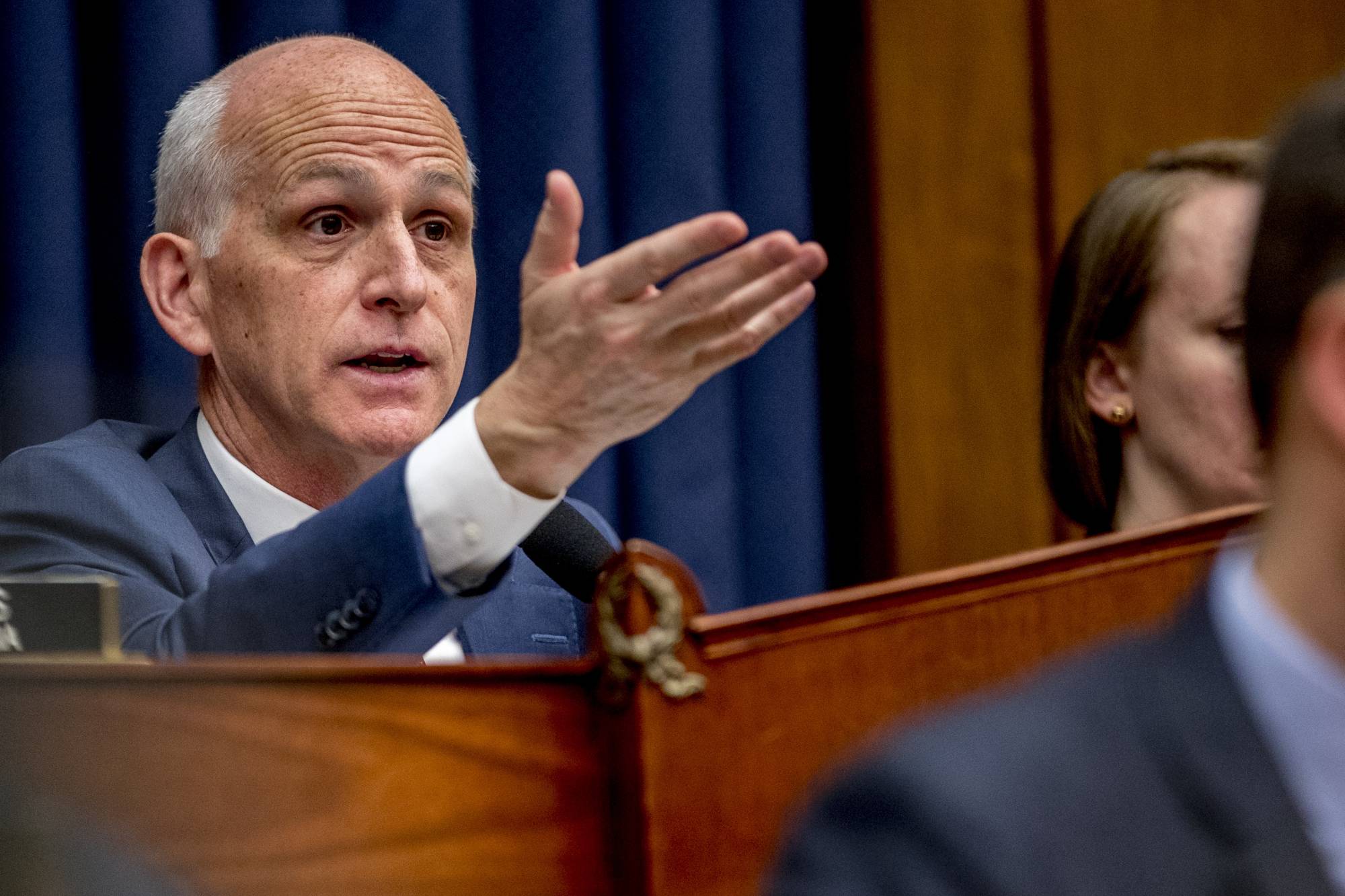
Ranking Member Adam Smith (D-Wash.) responded by clarifying that the amendment doesn’t eliminate IP rights—rather, it aims to find a middle ground between protecting corporate intellectual property and resolving long-standing Pentagon frustrations over contract restrictions that limit how service members repair and maintain equipment.
“Throughout the early 21st century, vendor lock-in was rampant, and IP was a major headache. Industry fully exploited defense contractors who negotiated terrible deals, locking us into arrangements that drove up costs enormously. I also recognize that IP matters—private companies are understandably sensitive about this, since it’s their competitive edge,” Smith said.
“This amendment doesn’t strip away IP rights. I’m supporting it because it pushes—but not too far. The sponsors have put in considerable effort to strike the right balance,” he added.
Last year, when right-to-repair reforms were gaining strong momentum with backing from the Trump administration, both chambers of Congress, and senior DoD officials, the provisions were ultimately removed from the 2026 defense policy bill following intense industry lobbying—defense groups spent tens of millions of dollars fighting the legislation.
Shortly after the amendment passed, the U.S. Chamber of Commerce released a statement supporting the chairman’s version while firmly opposing “any effort to impose a broader right-to-repair framework.”
“The long-term costs of such a policy would far exceed any short-term operational gains. Reduced industry participation, less innovation, and a weakened defense industrial base are consequences that no short-term benefit can justify,” wrote Keith Webster, president of the U.S. Chamber of Commerce’s Defense and Aerospace Council, in a letter to House Armed Services Committee leaders.
The bill now moves to the House floor, where lawmakers are expected to take it up before departing for the July recess. The Senate Armed Services Committee will begin marking up its version of the NDAA next week.
“There will be plenty more debate on this. We’ll go to conference and discuss it further, but at first glance, it appears that after years of searching for that difficult sweet spot, the amendment’s sponsors have found it,” Smith said.
If you’d like to reach this reporter regarding recent developments in the federal government, please email anastasia.obis@federalnewsnetwork.com or contact her on Signal at (301) 830-2747.
Copyright
© 2026 Federal News Network. All rights reserved. This website is not intended for users located within the European Economic Area.
